Glasses, in my opinion, are a special category. They incorporate art, technology, and medical properties and cannot be simply understood as being expensive or cheap. Nor can they be simply classified as being hugely profitable or price-friendly.
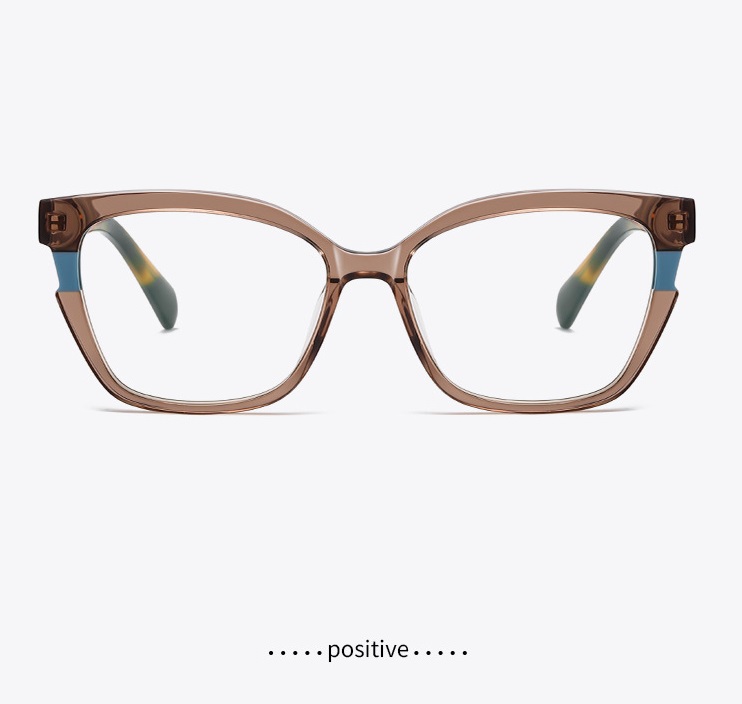
I've noticed a clear polarization among different groups. People who run optical stores often complain about how tough it is, while those who buy glasses feel they've been ripped off.
First of all, this needs to be discussed from the perspective of consumer views:
What do you think glasses are?
A decorative item that expresses and showcases oneself while also having optical functions; something that makes the world clear and visible, while also looking good. An art piece, and collecting them was my original intention. A conscientious product full of technological advancements that has changed human life.
Because everyone has different perceptions, it leads to various understandings about whether the glasses industry is hugely profitable, expensive, conscientious, or unscrupulous.
I believe many optical store owners would use economic thinking or accounting methods for comparison and put forward the view that: considering the daily wear and tear rate of glasses and their high usage frequency, the price seems high, but when averaged out, they are actually much cheaper compared to other categories.
For example:
Clothes are worn only a few times throughout the year, yet their prices can be several thousand or several hundred dollars. Glasses are worn 365 days a year without a break and can even be used for 2 - 3 years. How can selling them for a couple of hundred US dollars be considered expensive?
Food, like noodles, with a cost of $1 but sold for $15, has a profit margin of xx%. You don't think it's expensive either. Glasses cost only a few cents per day when calculated this way.
However, consumers generally don't buy into such explanations because few people would think in this way. They only consider that glasses and clothes are assets, and as long as they don't disappear or get damaged, they are things they spent thousands of dollars on.
In most discussions among friends, people would say, "I got these glasses for $200 at such and such place. They're so expensive." But they wouldn't say, "These glasses are of such good quality that I've got my money's worth." Because indeed, they spent a large sum of money.
Since the proportion of the cost to most people's salaries is relatively high, it hurts. So, for such analogies and examples, they only think the store owners are making far-fetched arguments.
But I've always thought that glasses are a very complex product. They are a consumable, but not a fast-moving consumer good. They're a bit like mobile phones, also a bit like computers, and especially like cars, but not exactly the same because they also have uniqueness (personalized customization) and can't be resold. So, from the moment you buy them, they are assets that keep depreciating.
Glasses:
Frequency: Used daily.
Functionality: Solves my visual perception problems.
Service life: After 3 years, they may get deformed, and the coating may get scratched. Then I need to replace them.
User experience: You can only experience it yourself. You can't convey the same feeling to others. At most, you can say they are lightweight and look good in style.
Value: Customized products are only valuable to you. To others, they're worthless.
Comparison:
Mobile phones (affordable models within $1000):
Frequency: Used daily.
Functionality: Mobile phones solve my communication problems and my entertainment needs.
Service life: After 3 years, they get so laggy that I need to replace them.
User experience: You can let your relatives and friends experience them, and they can immediately have the same feeling.
Value: You can still sell them to second-hand dealers for a few tens of dollars.
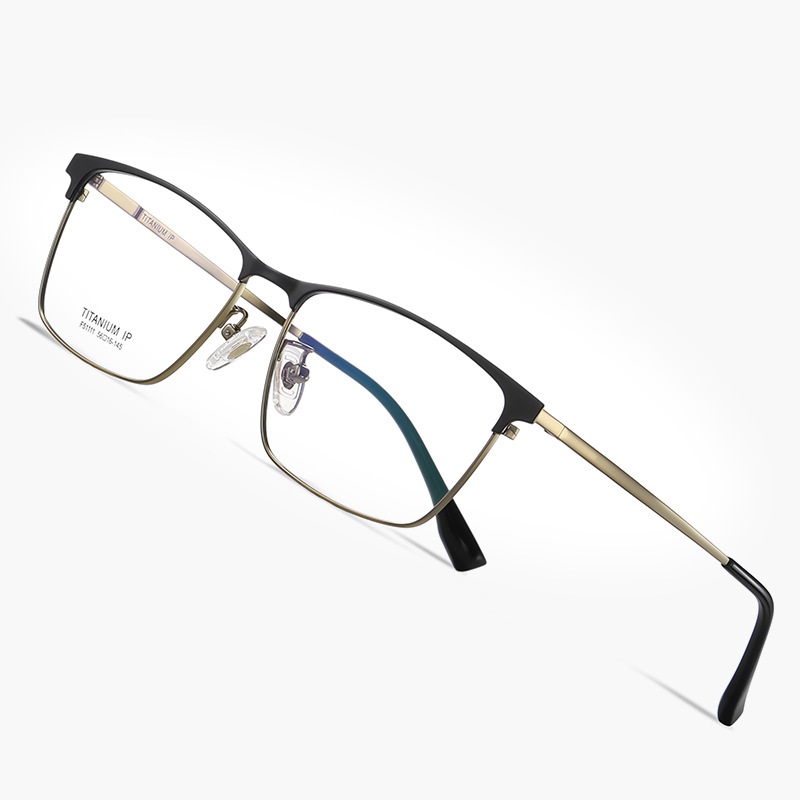
Who would say mobile phones are expensive? Why?
Even if they cost $1000, people don't think they're expensive because you think there's a lot of technology in mobile phones that you don't understand. You can't take apart a mobile phone. The feelings you get are from the apps, the convenience brought by Visa, PayPal, etc. What brings you the feelings are the apps, not the mobile phone itself. The mobile phone is just a carrier.
Similarly, glasses can also be regarded as a carrier. They enhance all your visual senses. People always take it for granted and don't realize what glasses have brought to them. They choose to overlook it. Just imagine if everything you see is blurry, you can't clearly see the smile of a long-lost friend, or the happy face when celebrating your daughter's birthday, and so on. If all the pictures recording the beautiful moments of your life are mosaiced, how would you feel?
At this time, some people would always say, "Glasses are just some plastic pieces and metal. Why are they so expensive?"
There's a reason for the high price. The difference between good glasses and cheap glasses is actually quite large. They're all called glasses, and it's a bit like cars. Some can be used with $20,000, and it's not unusual to have ones costing $300,000.
There are many differences in the technical barriers of lenses. For example, why don't some lenses make you feel tired when wearing them? Why don't some lenses get worn? Why don't some lenses get oily? Why are some glasses very clear? Why don't some glasses fog up? Why don't some glasses break? Why are some glasses heavy? Why do some glasses have a short service life? Why do some glasses damage your eyes and increase your degree?
All these are the products of the lifelong efforts of countless scientific and medical predecessors. When you buy glasses, they are medical devices and technological products, not just a commodity. And these optical technology companies have high patent fees added to the lenses you use. So the price of lenses increases sharply.
The design of frames includes the designer's design concepts, styles, means of personal expression (elements), comfort (materials), usage scenarios (special materials), and optical design (tilt angles). Here are another group of craftsmen who have put in their heart and soul. This is another point of price premium.
Making you wear comfortable glasses is also the goal that Glasses Magic pursues.
Just looking at the raw materials alone, perhaps the price is not high. It can even be said to be pitifully low. But for consumers, it's impossible for you to buy the raw materials and make glasses, make lenses, and apply coatings at home.
So, in terms of being hugely profitable, from a macroscopic perspective, it may seem so because the price of raw materials can be traced, but this has nothing to do with optical stores.
Optical stores, in terms of investment, are an industry with a relatively high threshold. If the store owners are responsible and care about every consumer's eyes, using first-class equipment, plus the costs of decoration and inventory, the expenses can amount to several hundred thousand or even over a million dollars.
The services provided by optical stores include environment (decoration, store location), sales (supply chain, inventory), optometry (a technical job), lens fitting (a technical job), maintenance (adjustment), etc.
Each step of the optometry and fitting process is interconnected. If any step goes wrong, the final user experience will be poor.
The experience of service staff varies. A good optometrist is a threshold. Depending on different frame types, the skills of lens fitting technicians are also highly required.
What about Glasses Magic?
So what we can do is try to reduce costs, shift from offline to online, and change from opening stores everywhere in the world to having a central factory for unified processing.
This not only reduces some costs but also enables more people to enjoy the services of professional and experienced lens fitting technicians.
However, what we can do is to reduce costs without compromising the quality of glasses, save expenses, rather than passing off inferior products as good ones, or even having lens fitting technicians who haven't received formal training.
So the difference between a $5 pair of glasses and a $50 pair is quite clear. After all, you get what you pay for.
What about the difference of glasses between $50 and $500?
When the price of a pair of glasses is much higher than the industry average, then it's more about brand premium.
This is Glasses Magic, sharing our views with everyone. Welcome to subscribe to our website to receive the latest discount information.