Differences between Sun Protection and Eye Protection
On sunny days, we often instinctively apply sunscreen and wear sun - protective clothing to shield our skin from UV rays. However, have you realized that our eyes also need careful protection, and sun protection and eye protection are not the same thing?
Sun protection mainly focuses on the skin, aiming to prevent issues like sunburn, tanning, photoaging, and even skin cancer caused by UV rays. The active ingredients in sunscreen can absorb or reflect UV rays, creating a protective barrier for the skin. But this doesn't mean our eyes are protected. The eyes are extremely delicate organs in the human body, and harmful UV light waves are a threat to eye health.
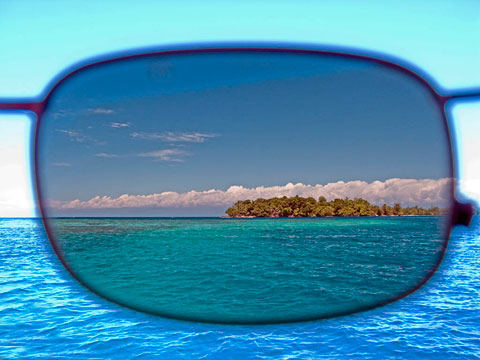
Long - term exposure to UV rays can damage different parts of the eyes, such as the cornea, lens, and retina, leading to a series of eye diseases like keratitis, retinal macular damage, and cataracts. According to relevant data, worldwide, there are over 2 million cataract patients caused by long - term sun exposure.
This is where sunglasses come in as an important piece of equipment for eye protection. A high - quality pair of sunglasses can not only effectively block UV rays but also reduce glare and strong light irritation, providing comprehensive care for the eyes. In the convenient online era, buying sunglasses online has become a choice for many consumers. So, how can we select suitable and professional sunglasses online? We need to understand some knowledge about sunglasses, especially avoid some common misconceptions.
Scenario - based Misconceptions: Hazards of Dark Gray Lenses in Driving
Many people think that the darker the sunglass lenses, the better the sun - protection effect. But in real - life scenarios, this idea can pose unexpected dangers. Take driving as an example. Dark gray lenses may seem to block strong light effectively and give a cool look. However, their excessive absorption of light can lead to serious visual problems.
A study published in "Optometry and Vision Science" shows that using dark gray lenses while driving reduces the contrast of traffic lights by 22%. This means that at critical moments, drivers may not be able to accurately determine the color of traffic lights, potentially causing traffic accidents with serious consequences. This data serves as a wake - up call, reminding us that when choosing sunglasses, we can't judge their suitability solely based on the color depth but should fully consider the actual needs of different scenarios.
Examples of Other Common Scenario - based Misconceptions
Besides driving, choosing the wrong lens color can also be a problem in other outdoor activities. In skiing, the snow reflects sunlight strongly, creating blinding glare. If the sunglass lenses are not suitable, like light - colored lenses with high light transmittance, they can't effectively block the glare, making it difficult for skiers to see the snow surface and increasing the risk of falling and getting injured.
When fishing, the reflection from the water surface can also interfere with vision. If the sunglasses can't filter the reflected light effectively, fishermen will have trouble seeing the movement of the float and may miss the best time to strike.
In high - altitude areas, due to the higher UV intensity, regular - lens sunglasses can't provide sufficient protection. Without choosing professional lenses that can effectively block UV rays, the eyes will be more severely damaged. These examples fully illustrate that different scenarios have different requirements for sunglass lens colors and functions. We must choose suitable sunglasses according to specific usage scenarios to truly protect our eyes.
Data Experiment: The Truth about UV Blocking Rates
To explore the real differences in the UV - blocking ability of sunglasses bought online, we conducted a rigorous experiment. In the preparation stage, we carefully selected a pair of sunglasses priced at only $9 from a low - cost platform and also purchased a $50 pair from a regular platform. Both pairs were labeled as UV400, claiming to block over 99% of UV rays.
During the testing process, we used a professional UV tester that can accurately measure the UV - blocking rate of sunglasses for different wavelengths. To ensure the accuracy and reliability of the experimental data, we set up the test environment in an indoor space with stable lighting and no other UV interference. We also tested the UV - blocking rate of each pair of sunglasses multiple times, with a certain time interval between each test to allow the tester to return to a stable state and avoid potential errors. Each time, we placed the sunglass lenses horizontally in the tester's detection area to ensure that the light hit the lenses vertically, which could best simulate the real - life usage scenario of sunglasses.
Shocking Test Results
After a series of strict tests, astonishing results emerged. Although both pairs of sunglasses were labeled UV400, the actual test data showed that the difference in their UV - blocking rates was as high as 38%. The $9 sunglasses from the low - cost platform had an actual UV - blocking rate far below the UV400 standard, only able to block about 60% of UV rays.
In contrast, the $50 sunglasses from the regular platform could meet the UV400 standard well, with a blocking rate close to 98%. This result clearly shows that low - price sunglasses have serious quality risks. If consumers choose such sunglasses just because of their low price, they won't be able to effectively protect their eyes from UV damage. Instead, since the lenses can't block UV rays, the pupils may dilate while wearing, allowing more UV rays to enter the eyes and causing greater harm.
When choosing sunglasses, we also can't blindly trust big brands. Sunglasses from big brands are often expensive, and a large part of the cost is due to brand premium. We should view the relationship between price and quality more rationally and choose platforms with guaranteed product quality and clear after - sales rules for purchase. In this way, we can select sunglasses that can truly protect our eyes and offer high cost - performance from numerous online products.
Using the UV Map to Select Lenses When Buying Sunglasses Online
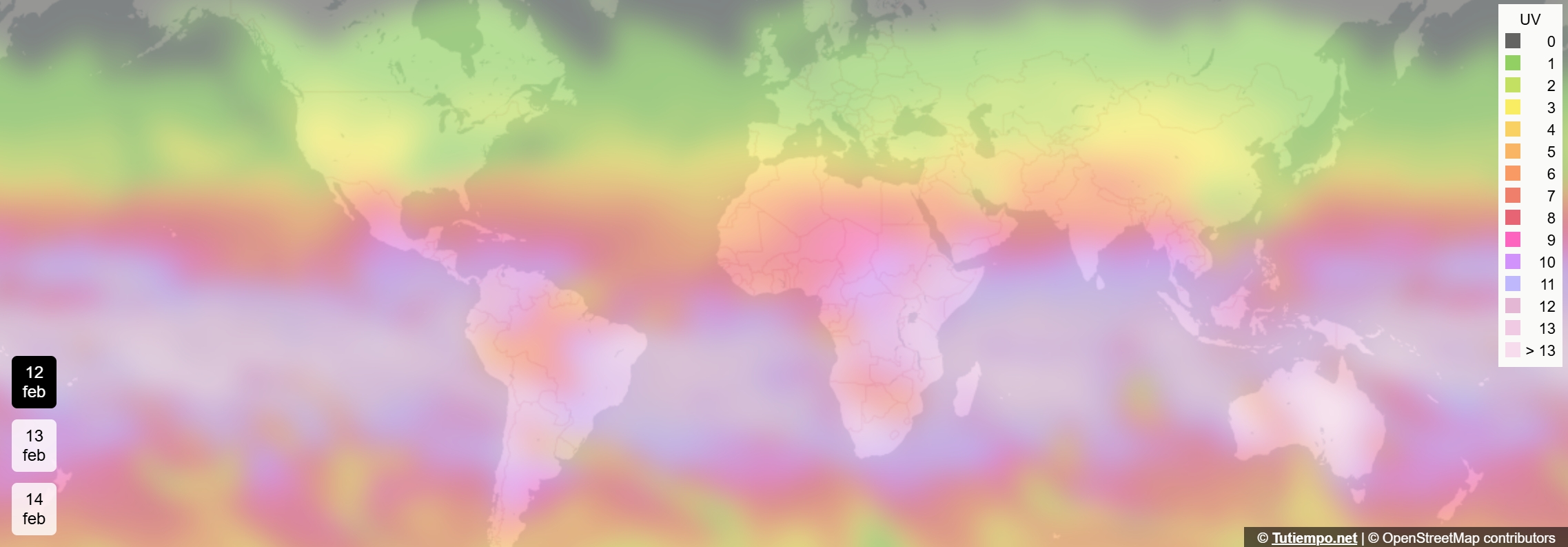
Facing numerous sunglass styles and colors, many people are confused about how to choose. In fact, there is a very useful tool that can help us solve this problem: the website https://en.tutiempo.net/ultraviolet - index/.
It provides real - time UV intensity maps of various regions around the world, allowing us to visually understand the UV situation in our location. Through this website, we can clearly see the changes in UV intensity in different regions and at different times, providing an important basis for choosing the right lens color when buying sunglasses online.
Recommendations for Lens Colors in Different Regions When Consumers Buy Sunglasses Online
In North America, most areas have distinct seasons, and the sunlight intensity varies in different seasons. In summer, when the sunlight is strong and the UV index is high, gray or dark green lenses are more suitable. Gray lenses can evenly absorb various color spectra, keep the colors of objects unchanged, effectively block UV rays, and reduce glare, making the vision clearer and more natural. Dark green lenses can not only block UV rays but also give a cool and comfortable visual experience, which is suitable for long - term outdoor activities. In spring and autumn, when the UV intensity is relatively weak, amber lenses are a good choice. They can enhance visual contrast, making objects look clearer, especially in overcast days or low - light environments, improving the visual effect.
Europe has diverse climates. The southern regions are sunny with strong UV rays, similar to the summer in North America, so gray and dark green lenses can be chosen. The northern regions have a relatively cool climate, and the length and intensity of sunlight vary greatly in different seasons. During strong - light periods, such as in summer in Northern Europe, the above - mentioned two colors of lenses can also be selected. In winter or on overcast days with weak light, yellow lenses are a good option. They can effectively filter blue light, enhance contrast, and enable the eyes to see objects clearly in low - light conditions.
Australia and New Zealand are located in the Southern Hemisphere with unique climates. Most of Australia has a dry climate and strong sunlight, with high UV radiation throughout the year. In this environment, brown lenses are a popular choice among local residents and tourists. Brown lenses can not only absorb a large amount of UV and infrared rays but also filter blue light, improving visual contrast and clarity. Wearers can easily see the surrounding environment in strong light without distorting the true colors of objects, with a comfortable visual experience.
New Zealand has a relatively mild and humid climate, but the UV intensity is still not to be underestimated. When doing outdoor activities, especially at the beach or in the mountains, blue lenses can be considered. Blue lenses can absorb some UV and scattered light, making the sky and ocean colors more vivid while reducing glare irritation to the eyes, providing a better visual experience for enjoying the scenery.
For high - altitude areas such as the Qinghai - Tibet Plateau and the Alps, due to the thin atmosphere, UV rays are less weakened, so the UV intensity is much higher than that in low - altitude areas. In these places, amber lenses are the best choice. Amber lenses can effectively block UV rays and enhance visual contrast, allowing wearers to more clearly distinguish the terrain and obstacles. For example, when climbing a mountain, wearing sunglasses with amber lenses can help climbers see the rugged mountain road and environmental changes more clearly, ensuring the safety of climbing.
Summary and Suggestions for Buying Sunglasses Online
When buying sunglasses online, we shouldn't be solely attracted by their stylish appearance. Instead, we should deeply understand their internal quality and suitability. We need to clarify the difference between sun protection and eye protection and recognize the importance of sunglasses for eye protection. Avoid scenario - based misconceptions, choose the right lens color according to different activity scenarios, and don't judge the quality of sunglasses just by the color depth.

At the same time, be vigilant against price traps. Don't just focus on the low price and ignore the UV - blocking ability of sunglasses. Try to choose products with quality assurance. Make good use of the UV map to select lens colors according to the UV intensity in our region, so that sunglasses can truly play their role in protecting our eyes.
Our eyes are the windows to our souls, and their health is related to our quality of life. Choosing the right sunglasses is an important step in protecting our eyes. I hope everyone can pay attention to this, rationally buy sunglasses online, and select suitable "protective umbrellas" for our eyes, so that we can enjoy the sunshine while maintaining a clear and healthy visual world.
If you think what I wrote is good, remember to subscribe to our website! So that you can enjoy the latest discount information.