Glasses Magic has recently received a lot of questions from customers about glasses frames. The most frequently asked one is to ask me to check if the frames they bought are suitable.
It's inaccurate to judge the suitability of a pair of frames solely based on the optometry data. Therefore, I have the idea of writing an article dedicated to choosing glasses frames, hoping that more people can choose suitable frames for themselves.
This article does not involve prices, does not recommend brands, and does no promotion. It simply focuses on the details to note and the pitfalls to avoid when choosing frames, so as to prevent spending money without getting suitable frames.
Let me first talk about my definition of a suitable pair of glasses frames. I think that in addition to considering the appearance and style of the frames, people should pay more attention to whether the frames are suitable for the prescription. Because whether a pair of glasses is suitable directly determines the quality of the entire glasses fitting. Glasses frames are not only clothing accessories but also medical devices. Just like dispensing medicine, the frames are crucial in determining whether the "medicine" is well-prepared.
I think a suitable pair of frames should be structurally stable, of appropriate size, comfortable to wear, and suitable for correcting vision (matching with lenses).
1.Improper selection of temple length
This is easy to understand. Just like wearing pants, it will be uncomfortable if they are too short or too long. All frames have the size of the temples, and the length generally ranges from 135mm to 150mm. It is usually marked on the temple, and you can check it by yourself.
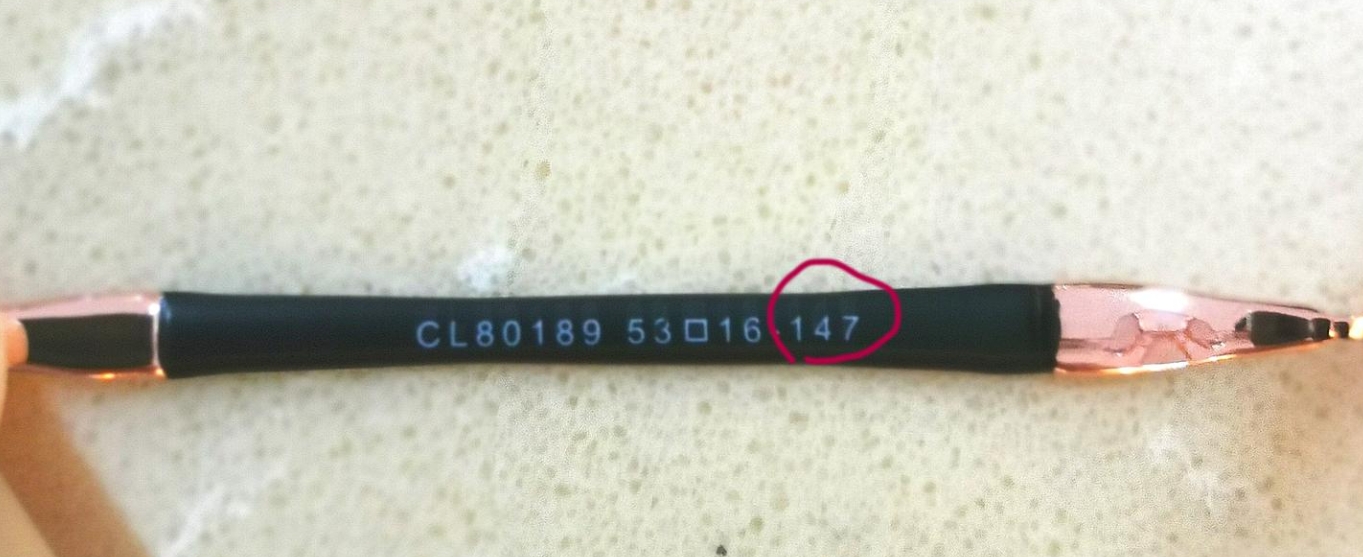
The most common pitfall I come across is an ill - chosen temple length. When this happens, the glasses can be too tight both in the front and back, severely affecting comfort. If you have a relatively large and full - faced shape, you must pay attention to the temple length and avoid choosing a pair that's too short.
The following case is examples of choosing temples that are too short.
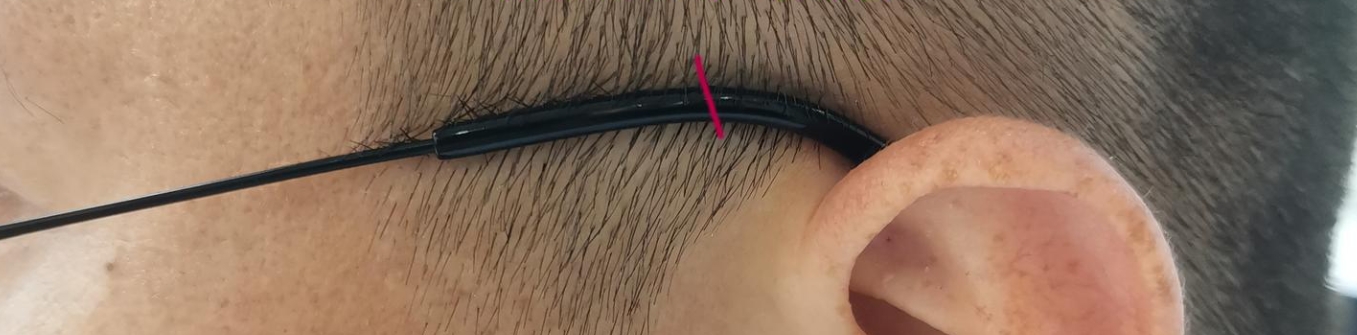
The bent part of the temple is not on the ear.
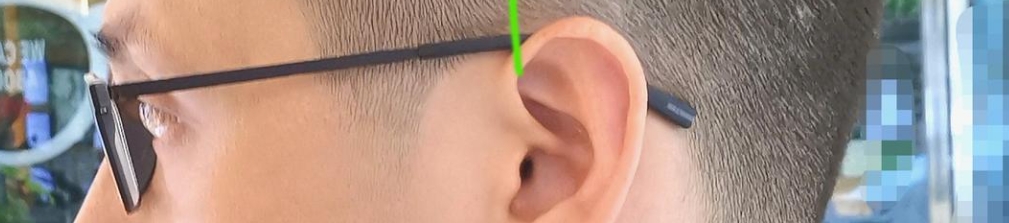
Now, let me show you a picture where the temple length is just right, and the bent part is exactly on the ear. I hope you can use this as a standard when choosing glasses frames.
2.Improper width of the temple
The width of the temple should match the width of the face. If it is too narrow, it will squeeze the forehead and temples. If it is too wide, the frame will be loose and slide down.
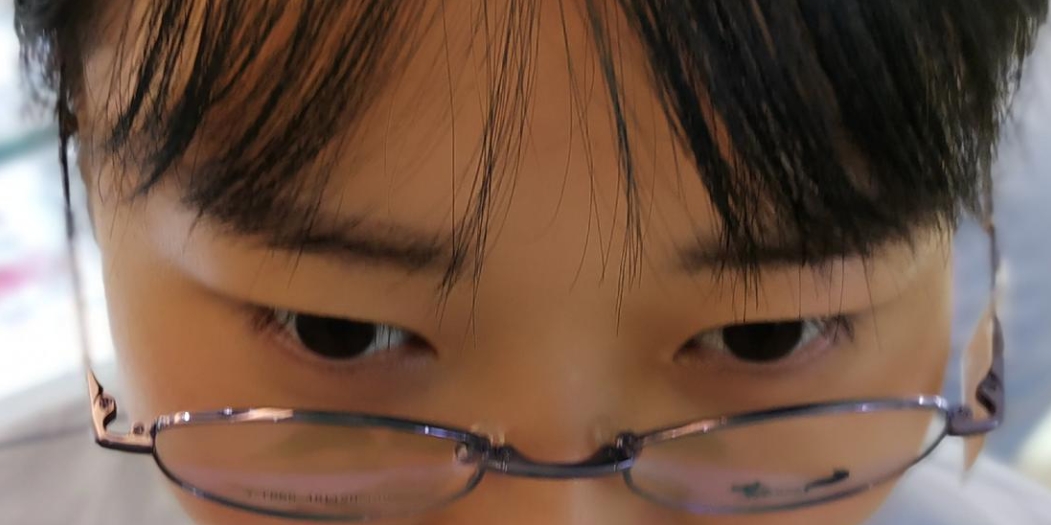
The width of the temples on both sides is too narrow, causing the nose pads to lift and the glasses to be unstable when worn.
So, when trying on glasses frames, you must pay close attention to the tightness on both sides. Whether it's too loose or too tight, it will make the frame unstable and affect comfort during long - term wear.
I often see many friends with deep indentations on their faces after taking off their glasses, which is quite shocking. This kind of situation is usually due to an improper choice of width. For example, in the case below, the temples are so tight that they've left deep marks.
3.The bent part at the end of the temple should fit the back of the head
This detail is often overlooked by many people when choosing glasses frames. However, the degree to which the bent part at the end of the temple fits the back of the head directly determines the stability of the glasses frame. In particular, whether the rear part of the temple can evenly bear the weight of the lens will affect the front-back weight distribution of the finished glasses and whether it is balanced.
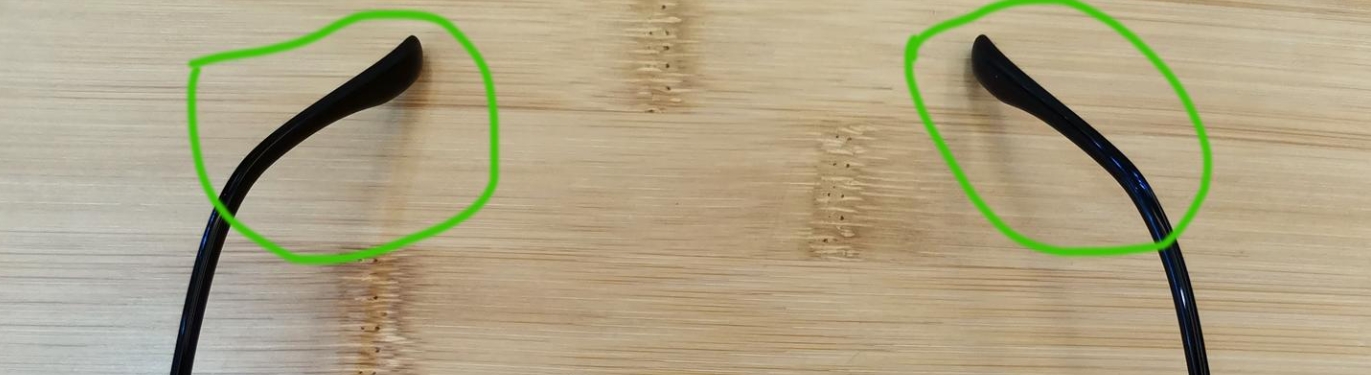
When choosing glasses frames, you must check whether the rear part of the frame fits your head shape. If it doesn't, be sure to adjust it properly, as many frames are adjustable.
A perfectly bent rear part of the temple should be like this. You can refer to the picture below. It fits the head perfectly, and you can hardly see the protruding temple from the back.
4.Be sure to pay attention to the fit of the nose pads
I'm not exaggerating when I say that at least more than half of people's nose pads don't fit their noses. If you don't believe me, take a look in the mirror.
Some of these are due to poor adjustment, while others are due to a poor choice of glasses frame, that is, not choosing the right type of nose pad according to one's face shape and nose shape.
There are mainly the following three types of nose pads on the market:
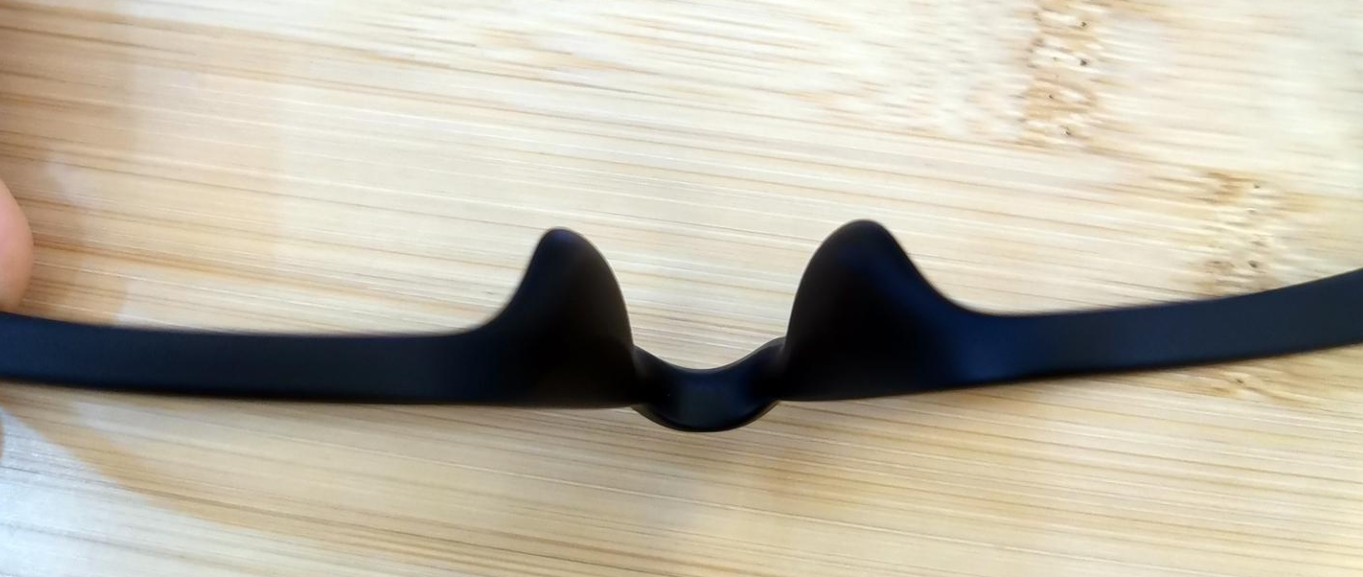
Fixed nose pads
The nose pad has a large area and is not adjustable. Precisely because it is not adjustable, you need to be careful when choosing to ensure that the shape of the fixed nose pad matches the surface of the nose. Otherwise, it will dig into the nose or fail to support the frame, making it really uncomfortable to wear.
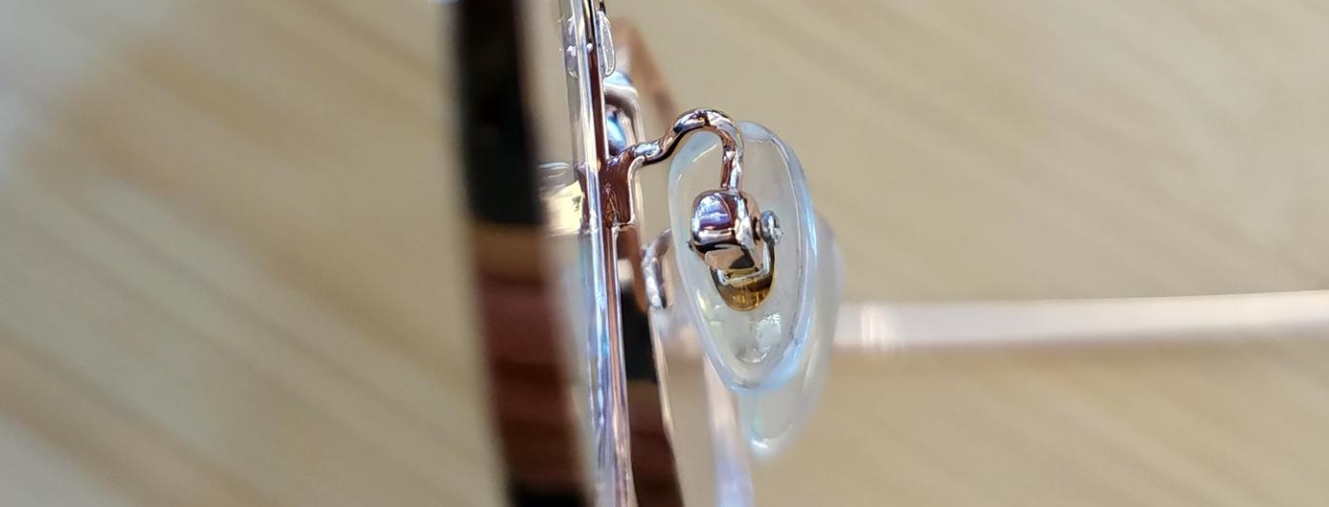
S - shaped nose pads (adjustable in front - back, left - right, and slant directions)
S - shaped nose pads are the most common type on the market currently. Their advantage is that they can be adjusted. They can be adjusted according to different people's face shapes, nose shapes, and types of lenses. If you have difficulty in choosing the right nose pad for your nose and can't tell what type of nose you have, it is recommended that you choose S - shaped nose pads.
However, some people with high noses had better not choose this type of nose pad. Because it will increase the vertex distance, causing greater distortion of vision, more intense shaking, a reduction in effective power, and resulting in blurred vision when looking into the distance.
A few days ago, I met a customer who had discomfort with two pairs of glasses he had previously bought. After examination, there was no problem with his eye prescription, and the processing parameters were also correct. Several people tried but couldn't find out what was wrong.
After eliminating suspicious items one by one, I finally determined that it was because his nose was too high and he chose S - shaped nose pads, which led to an excessive vertex distance and thus the failure of glasses fitting.
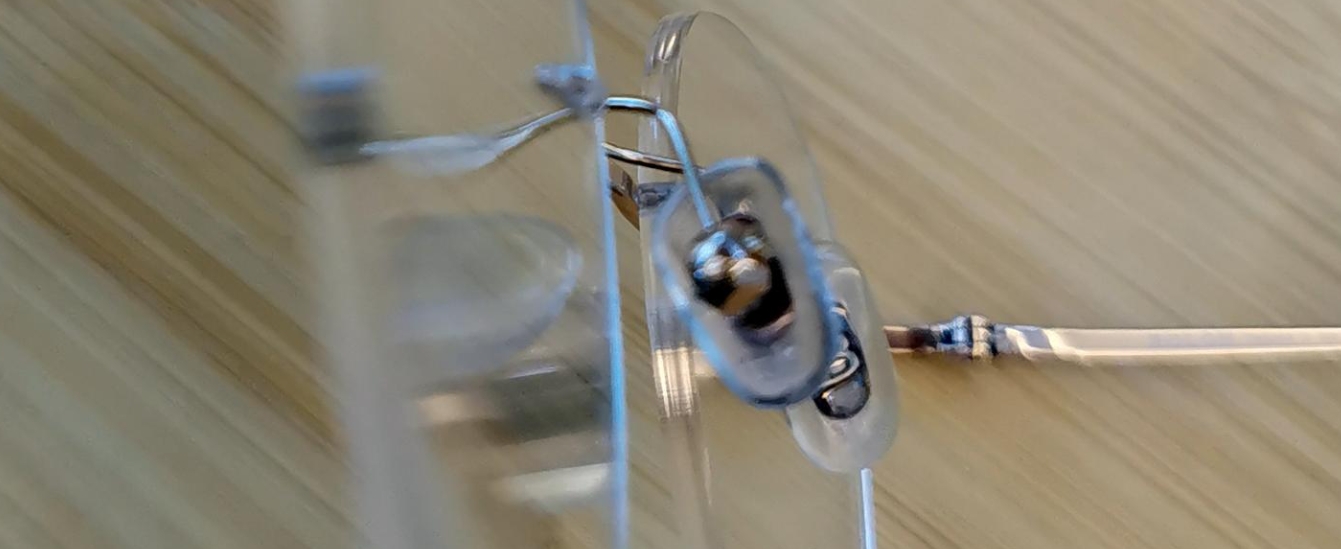
One - character - shaped nose pads
This type of nose pad gets its name because the metal connecting the nose pads is straight, resembling the Chinese character "一" (one). It is more suitable for those with a not - very - high nose bridge. However, due to the extremely small adjustable range of its inclined surface, it is very particular about face shapes. Only when the width of the nose and the inclined surface of the nose are just right can it be comfortable to wear.
Therefore, it is recommended that friends who haven't tried it on avoid this type of nose pad. The probability of buying it and having it fit the nose perfectly is very low. Moreover, this type of nose pad has relatively large elasticity and is prone to spreading open, so it is more likely to become loose.
Now, here comes the key point. Before choosing a nose pad, be sure to touch your nose to have a clear understanding of its shape.
You must try it on carefully to check if the nose and the nose pad fit well.
If the nose pad is not chosen properly, it may, at the least, leave deep marks on the nose. In severe cases, it can cause the frame to be unstable on the bridge of the nose, leading to fluctuating corrected vision, which can affect eye health and even cause an increase in refractive power.
If the nose pad doesn't fully and smoothly rest on the nose, but only its two edges press against the root of the nose, just imagine: if you have a high prescription and the glasses are relatively heavy, with such a small contact area, it's bound to leave two horizontal marks.
The comfort level will surely be far from ideal. If you have a high nose bridge or prominent bones at the root of the nose, I suggest you try on an integrated nose pad. This is because it can fit the nose very well.
Secondly, it won't, like the combination of a high nose bridge and an S - shaped nose pad, cause the vertex distance to exceed the normal range. An excessive vertex distance can lead to distorted and reduced object imaging, unclear vision when looking into the distance, significant side - to - side shaking, and even discomfort and nausea while wearing the glasses.
Don't underestimate the importance of choosing the right nose pads. Since at least half of the weight of the glasses rests on the nose, selecting the appropriate type of nose pads not only ensures comfortable wearing but also significantly improves the imaging quality.
5.Pay attention to controlling the vertex distance
The vertex distance can affect the effective power of the lenses. That is to say, the farther the vertex distance, the lower the effective power. Moreover, the greater the vertex distance, the more distorted the corrected visual quality will be. It will increase the peripheral distortion area, reduce the comfortable visible range, cause blurred vision and a strong sense of shaking.
So my advice is that, without compromising wearing comfort, aesthetics, the up - and - down movement of the eyelashes, or causing the lenses to fog up, the smaller the vertex distance, the better. This will result in higher clarity and better visual quality.
6.Don't set the pupil height too high
The pupil height refers to the distance from the point where the eyes look through the lens after putting on the glasses to the bottom of the frame.
If the pupil height is too high, the bottom of the processed lens will be relatively thick, the range of the optimal visual area will be reduced, and some may even experience blurred vision. The wearing experience will also be poor, as one may need to constantly look up or push up the glasses more frequently, increasing the fatigue and burden on the cervical spine.
The appropriate pupil height area is generally in the area three - quarters above the middle.
Note: The pupil height I mentioned here is a reference for general single - focus lenses and for common wearing habits.
If you are getting functional lenses, such as multi - focus lenses, these pupil - height references are of little significance. It needs to be determined according to individual circumstances. It is recommended that you listen more to the advice of professional opticians.
However, personally, I don't recommend getting complex functional lenses, such as multifocal lenses. This is because the technical proficiency of most optometrists is insufficient. It's difficult to ensure that the optometrist you encounter is highly skilled.
Moreover, after getting multifocal lenses, most people will experience discomfort and dizziness. At that time, apart from making simple adjustments, the optometrist will only ask you to wear the glasses for another week to get used to them. What they don't realize is that the eye has a strong self - regulating ability. If you follow the optometrist's advice, it will greatly increase the fatigue of your eyes.
Therefore, single - vision lenses are the simplest. As long as the basic data is correct, they won't cause eye fatigue. In the long run, they can effectively prevent your refractive power from increasing.
7.For people with high prescriptions, don't choose large round frames.
I've repeated this over and over again in many of my answers. Don't think it looks cute, like you can pout and look adorable. That's just wishful thinking. In fact, for most high - prescription wearers, the lenses will look like layers of glass bottle bottoms. They're extremely heavy, prone to slipping, offer extremely poor visual quality, and shake a lot.
Here I'm referring to high prescriptions. For those with medium or low prescriptions, as long as you strictly select frames according to the points I summarized above, the glasses should turn out fine and look cute.
This kind of frame is for those without vision problems to wear as an accessory and is not suitable for prescription lenses! These are popular online, but those with prescriptions who choose them will know the consequences.
For high - prescription wearers, apart from avoiding large round frames, there's another misunderstanding: blindly pursuing ultra - light frames, even deliberately focusing on the weight in grams, thinking that the lighter the better. In fact, this is wrong.
Using such frames for high prescriptions is very risky. Because in the pursuit of one - sided lightness, the stability and comfort of the frame are sacrificed. The resulting glasses often feel top - heavy and are very unstable, making them difficult to wear.
Most of the weight of a pair of glasses is determined by the lenses. As long as the area, weight, and thickness of the lenses are controlled, the glasses won't be too heavy. Instead of putting the cart before the horse and focusing only on the ultra - lightness of the frame, we should focus on the right aspects. How much lighter can the frame be? The main weight lies in the lenses.
The most important functions of a frame are to provide stable support and ensure comfortable wearing. It does affect the final weight, but not absolutely, and it's not the only factor. Nowadays, there are many frames with increasingly thinner temples and lighter weights. But can you ensure that after adding heavy lenses, the glasses won't feel top - heavy? Can the frame support the entire structure? Can you wear them stably?
Finally, I'll post several cases where I think the glasses are chosen extremely well. Especially in terms of the matching degree, the size and width of the frame match the face shape perfectly. It's for your reference.
No matter which one it is, the frame seems to be tailor - made. Of course, it's possible that they actually are. They all have nose pads that fit very well, the temple length is just right, the geometric center distance of the frame is very close to the pupil distance, and the pupil height is appropriate. Among public figures, these are the best - chosen frames I've seen, in terms of frame selection. The geometric center of the frame is almost equal to the pupil distance, optimizing visual quality and minimizing weight. The integrated nose pads are very suitable for them and provide great stability.
In conclusion, if you want to buy a pair of suitable glasses online, you can choose according to the size of the glasses you've worn before and found comfortable. Or you can try on frames offline first, write down the suitable size, and then buy online. Nowadays, the product description pages of online glasses are very clear. If you have more questions, you can ask the customer service. I'm sure they can give you a comprehensive answer.
That's all for today. I hope everyone can choose a suitable frame.
If you think what I wrote is good, remember to subscribe to our website! So that you can enjoy the latest discount information.