To figure out whether blue light-blocking glasses are necessary, we need to consider whether blue light really needs to be vigorously "blocked".
Visible light consists of various colors, just like the Calabash Brothers.
The wavelengths of visible light of different colors vary. For example, the wavelength of red light is between 600 and 700 nanometers, and that of yellow light is between 500 and 600 nanometers.
In comparison, the wavelength of blue light is only between 400 and 500 nanometers. Due to its short wavelength, it has higher energy and stronger penetrability.
However, although blue light has strong penetrability, our eyes are not defenseless. After millions of years of evolution, as long as we don't directly look at extremely intense light, visible light won't cause us any harm, and the blue light within visible light won't pose any danger either.
But!
Seeing such a short paragraph and drawing a conclusion, you must know that there will be a turn.
During the millions of years of human evolution, it was calculated correctly that our eyes could adapt to visible light, but it wasn't predicted that in just a few decades, LED light sources and various electronic products using LEDs as light-emitting sources would become so widespread.
In our daily lives nowadays, LEDs are everywhere, from daily lighting to screen displays. Unlike the "combined light of seven colors" emitted by fluorescent lamps or incandescent lamps in the past.
Nowadays, LED lights only have three colors: red, green, and blue, and blue light is predominant. If the brightness needs to be increased, the intensity of blue light has to be enhanced.
This results in modern people being exposed to a much higher amount of blue light than before.
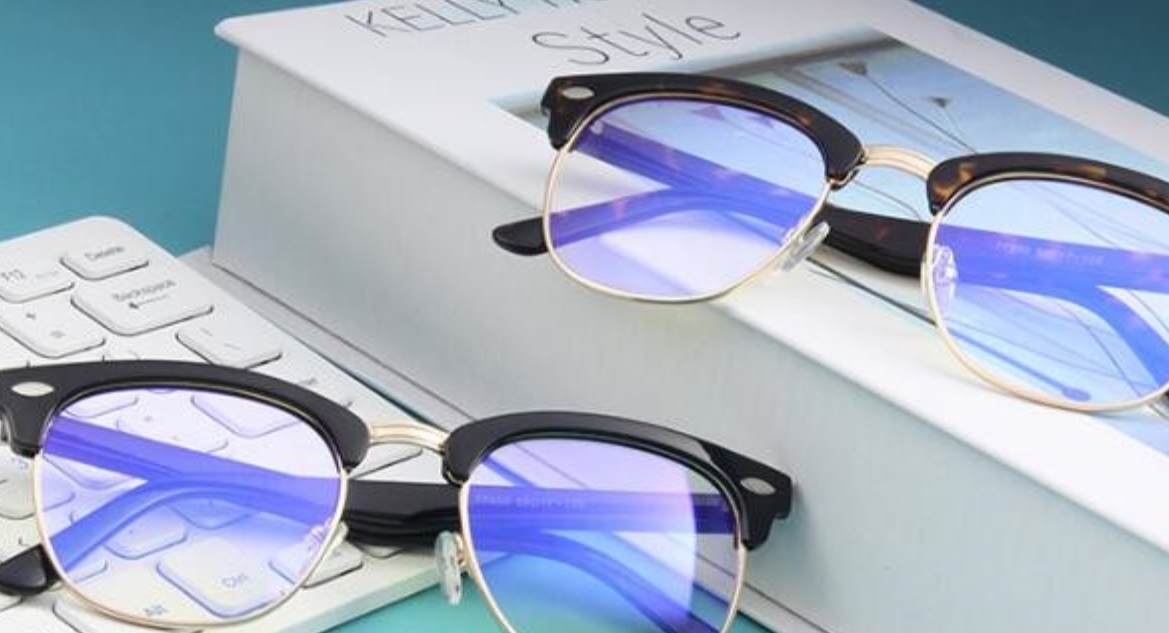
And as mentioned earlier, because blue light has a short wavelength, it is particularly powerful.
Therefore, many people are worried that the significantly increased blue light in life will harm our eyes.
There is some truth to this statement.
When the peak spectral wavelength of blue light is between 460 and 500 nanometers, the illuminance exceeds 1500 lux, and the retina cells are directly irradiated for more than 3 hours, the cell viability will significantly decline and apoptosis will occur.
"lx" stands for lux, which is a unit of illuminance and reflects the intensity of light.
From this perspective, blue light can cause certain harm to the retina.
Besides potentially harming the retina, blue light can also cause visual fatigue.
Because blue light has high energy, it has a higher probability of scattering when encountering tiny particles in the air. It is easy to cause glare and can also make the image that was originally focused precisely on the retina be focused in front of the retina, resulting in color vision deviation.
This is why many people feel that things look a bit blurry after staring at a computer screen for a long time.
Looking at it this way, blue light seems to be very harmful! Should we buy blue light-blocking glasses immediately?
However!
The second turning point alert!
Remember one of the sayings of Dr. Ding Xiang: Talking about toxicity without considering the dose is just nonsense!
When considering the harm of blue light, we must pay attention to two factors: illuminance and irradiation time. In other words, only when both the intensity of blue light irradiation and the irradiation time reach a certain level will it cause harm to human eyes.
For example, in the above experiment on the harm of blue light to the retina, it was only after high-intensity blue light of 1500 lux directly irradiated the retina for 3 hours that retinal damage occurred.
The illuminance of daily indoor lighting generally does not exceed 600 lux, and many LED lights are structurally packaged and adopt backlight or side-light emission modes, so the intensity of blue light is far lower than the level that would cause damage.
Meanwhile, human eyes can automatically adjust the amount of light entering the eyes, and the lens can also filter out part of the blue light.
So as long as the LED lights are of qualified quality, then when working or studying normally in an environment surrounded by such LED lights, the blue light we are exposed to will hardly cause any harm to our retinas.
However, for people who stare at electronic products for a long time, visual fatigue caused by blue light will still occur.
But at this time, paying attention to eye hygiene may be more important than wearing blue light-blocking glasses.
It is necessary to reduce continuous eye use time, adhere to the "20-20-20" rule (that is, after using your eyes for 20 minutes, stare at a place at least 20 meters away and rest for at least 20 seconds), and use reasonable eye use methods to relieve fatigue.
Of course, for some special groups of people, such as those with retinal lesions or those who have undergone cataract surgery, their ability to filter blue light is relatively low, and they need to pay more attention to protecting against blue light than normal people. They can choose to wear blue light-blocking glasses or similar products.
So, to sum up in the end:
- During normal work and study, don't be too sensitive to the harm of blue light, and there's no need to wear blue light-blocking glasses every day.
- Qualified blue light-blocking products can reduce the harm of blue light to the eyes to a certain extent, but for people who stare at electronic screens for a long time, paying attention to eye use habits is the key.
After all, there are many bad habits that can harm our eyes.
We can't blame everything on blue light.
If you think what I wrote is good, remember to subscribe to our website! So that you can enjoy the latest discount information.