Why do we need to conduct slit lamp exam?
Those who don't know how are mostly because many optometrists in stores nowadays are not from professional optometry backgrounds. I don't mean they can't do optometry well, but they lack a good platform and sufficient continuous time to learn how to use the slit lamp and common eye health issues.
Of course, many people think that for optometry, just measuring the degrees is enough, and slit lamp examinations are unnecessary.
I want to say that the slit lamp examination before optometry is extremely important. It not only enhances our professionalism and builds trust. From the customer's perspective, it also provides a comprehensive understanding of their eye health.
We all know that inquiry is crucial during optometry. I think the slit lamp is like an inquiry without the customer having to speak. Sometimes, it can tell us more about their eyes and eye - using habits than what the customer says. This is very helpful for our subsequent optometry. Not to mention that during the examination, we might discover some eye problems that the customer is unaware of, sounding the health alarm in a timely manner. How important this is for the patient!
I remember not long after I entered the industry, a young boy came to my store with his father for an eye exam. His father said his son often squinted to see things. They had been to other optical stores before, where they were told it was astigmatism and got glasses. This time, the glasses were lost and they wanted to get a new pair.
I followed the normal optometry process.
First, I massaged his eyes to relax them, and then started the routine slit lamp examination. I hadn't done the computerized refraction yet because I'm used to understanding the anterior segment of the customer's eye first and then doing the refractive examination.
When examining the corneal shape, I found that his corneal curvature was very steep, which was highly likely keratoconus. This made me take a deep breath. After the computer - based objective refraction, I was more certain of my guess - high irregular astigmatism. I immediately advised the customer to go to the hospital for a further corneal topography examination.
He needed to be fitted with RGP rigid gas - permeable contact lenses to stabilize the development of keratoconus. If not detected in time, it could lead to blindness and require a corneal transplant, which would be a different story.
Although in the end, I didn't fit him with a pair of astigmatic frame glasses, and it seemed that the store had lost a customer and some business. However, later the boy introduced many of his relatives and friends to my store for glasses. We still keep in touch. He often asks me some eye - related questions and is very grateful that I detected the problem for him and gave him the right advice.
He said that other optical stores had never examined him like this and had only given him expensive custom - made high - astigmatism frame glasses.
This is a personal experience of mine. I believe many of my colleagues have had similar experiences to some extent.
The slit lamp examination is not redundant or a mere formality.
The slit lamp examination is a basic operation for judging the customer's eye health, and it is also the most intuitive and simple one. So we should all do this seemingly simple and boring routine examination carefully.
Why do we need to conduct slit lamp exam?
To give customers healthier optometry advice.
The Role and Significance of the Slit Lamp
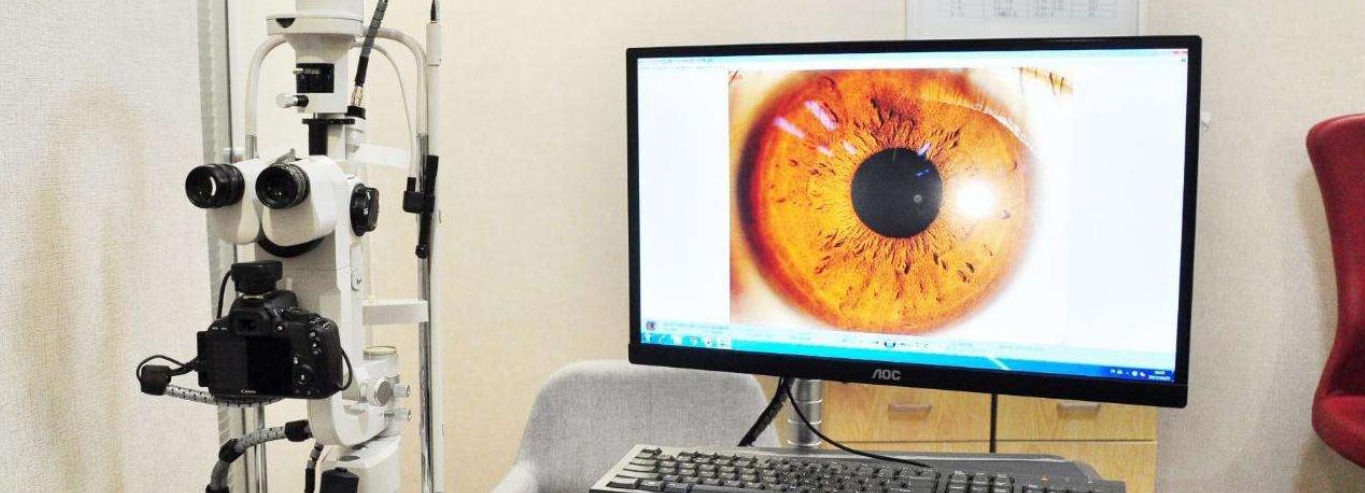
The slit lamp microscope is one of the most commonly used diagnostic instruments in ophthalmology. It is used to examine the anterior segment of the eye, including the eyelids, conjunctiva, sclera, cornea, anterior chamber, iris, lens, and the anterior part of the vitreous body.
With some attachments, it can be used for fine examinations of the anterior chamber angle, the macula area of the fundus, and the peripheral part of the fundus. Since it can make a light section of the eye, it can determine the changes in each layer of the eye, which provides convenience for accurately judging the location of intra - ocular lesions, something that other instruments can hardly achieve.
The slit lamp can provide a detailed observation of the anterior segment of the eye.
Slit Lamp Exam Procedures
The examination sequence follows from the right eye to the left eye, from the healthy eye to the affected eye, and from the temporal side to the nasal side. Each eye is examined for about 2 - 3 minutes. The time should not be too long, as long - term illumination can cause great discomfort to the eyes.
The approximate order of examination parts is: eye appearance - eyelids - eyelid margins - eyelashes - lacrimal apparatus - eyelid conjunctiva - bulbar conjunctiva - conjunctival sac - corneoscleral limbus - tear film - cornea - anterior chamber - anterior chamber angle - iris - pupil - posterior chamber - lens.
-
Eyelids
Insert the diffuser plate of the slit lamp into the optical path and use diffused light for examination. Adjust the light intensity of the slit lamp to medium, the light source angle to 45 degrees, and the microscope magnification to 10x or 16x. Instruct the patient to close their eyes during the examination, and control the examination time between 5 - 8 seconds.
We should focus on observing whether the palpebral fissures of both eyes are symmetrical, and check for any palpebral fissure defects, epicanthus, entropion, ectropion, and lagophthalmos.
-
Eyelid Margins and Eyelashes
Insert the diffuser plate of the slit lamp into the optical path and use diffused light for examination. Adjust the light intensity of the slit lamp to medium, the light source angle to 45 degrees, and the microscope magnification to 10x. Observe from the nasal side to the temporal side. Instruct the patient to look straight ahead during the examination, and control the examination time between 5 - 8 seconds.
Focus on observing whether the eyelid margins are smooth, if there is congestion, and if there are attached scales. Check if there are eyelash defects, whether their position and arrangement are normal, and look for any congenital abnormalities such as trichiasis, distichiasis, or misdirected eyelashes. Pay special attention to whether there are oil particles, blockages, or redness and swelling at the openings of the meibomian glands.
-
Lacrimal Puncta
Insert the diffuser plate of the slit lamp into the optical path and use diffused light for examination. Adjust the light intensity of the slit lamp to medium, the light source angle to 45° from the temporal side, and the microscope magnification to 10x or 16x. Instruct the patient to look towards the temporal side. Observe both the upper and lower lacrimal puncta of the patient, and control the examination time within 10 seconds.
Observe for any abnormal changes in the lacrimal gland and lacrimal duct area. For example, check if the lacrimal gland is swollen, whether the lacrimal puncta are in the correct position and open, if the skin in the lacrimal sac area is red and swollen, and if there is epiphora. When examining the lacrimal sac, press the anterior lacrimal crest with the index finger to check for tenderness, fluctuation, and whether there is pus flowing back from the lacrimal puncta or into the nasal cavity.
-
Tear Film
Insert the diffuser plate of the slit lamp into the optical path and use diffused light for examination. Adjust the light intensity of the slit lamp to medium, the light source angle to 45° from the temporal side, and the microscope magnification to 10x or 16x. Instruct the patient to look forward and observe whether the tear film is intact and the tear - film break - up time.
To observe the tear - film break - up time, instruct the patient to blink hard once and then start timing until the tear film breaks or the patient blinks again. The normal time is between 15 - 45 seconds.
-
Bulbar Conjunctiva and Palpebral Conjunctiva
First, adjust the slit lamp to diffused light to check the overall condition of the palpebral conjunctiva. Then, adjust the light of the slit lamp to slit light and examine it carefully one or two times from the nasal side to the temporal side of the patient. Adjust the light intensity of the slit lamp to medium, the light source angle to 45 degrees, and the microscope magnification to 10X - 16X. Instruct the patient to look down when examining the upper palpebral conjunctiva and look up when examining the lower palpebral conjunctiva. Pay attention to the technique when flipping the eyelid. If congestion, papillae, or follicles are suspected, increase the magnification for observation.
The key is to check for congestion, smoothness, and the presence of pinguecula, pterygium, follicles, papillae, and concretions.
-
Corneal Examination
Adjust the slit lamp to slit light, and set the brightness to medium or high. Adjust the angle and width of the slit - light source. Examine from the nasal side to the temporal side of the patient, and observe from the corneal epithelium to the basic thickness of the cornea. We can also use a pen - light for a general examination of the cornea to check for inflammation and congenital abnormalities, and use the slit lamp for further examination if necessary.
-
Anterior Chamber Examination
Adjust the slit lamp to slit light, and use a narrow light source. When the lens aperture is set to large, adjust the light intensity of the slit lamp to high, the width of the slit lamp slit to about 2mm, select different angles, and set the slit lamp magnification to high.
The normal anterior chamber is filled with completely transparent aqueous humor. However, after intra - ocular inflammation or trauma, the aqueous humor may become turbid, or there may be hyphema, hypopyon, or foreign bodies. Mild turbidity cannot be observed with the naked eye. If there is a significant degree of turbidity, it can make the cornea appear dull. When the iris is inflamed, KP (keratic precipitates) and the Tyndall phenomenon can be observed, which are generally examined using a slit lamp.
-
Iris and Pupil Examination
Focus the slit light on the iris. First, use diffused light to observe the overall condition of the iris, and then narrow the slit to observe specific details. When the lens aperture is set to medium, adjust the intensity of the slit to observe the pupil's reaction to light. The light source angle is 45 degrees from the temporal side. Set the slit lamp magnification to low. Instruct the patient to look forward, observe the shape of the iris, and check if the pupil contracts when stimulated by strong light.
Examine the color of the iris, whether the pupillary line is smooth, if there are any inflammatory nodules on the iris surface, iris defects, persistent pupillary membrane, and iris tremors. When examining the pupil, pay attention to its size, position, shape, number, and whether the edge is regular.
-
Lens Examination
Adjust the slit lamp to slit light, set the light intensity of the slit lamp to high, the angle of the slit - light source to 10 - 45 degrees, and adjust the microscope magnification from low to high. Instruct the patient to look forward, set the width of the slit lamp slit to 2mm, use a narrow light source, aim at the pupil area, and focus on the lens for scanning to observe the condition of the lens in the pupil area.
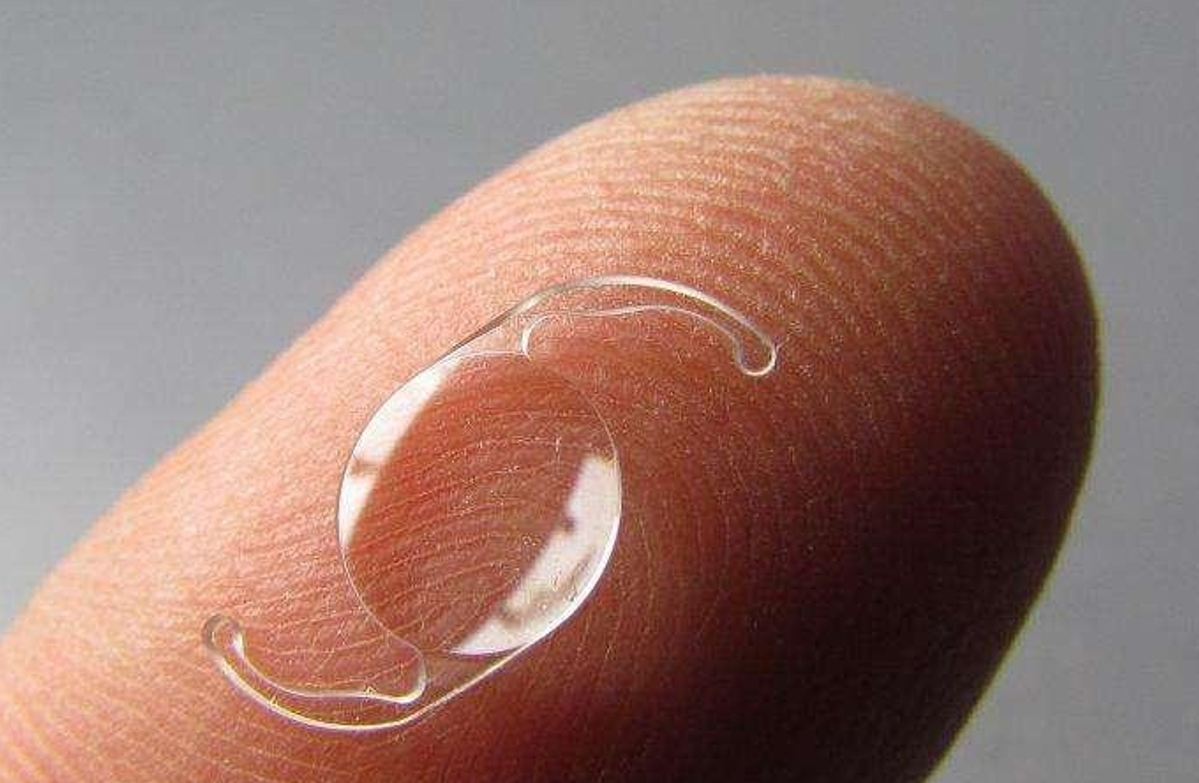
Expanded Knowledge: The hardened and cloudy lens is removed during cataract surgery, and an intraocular lens is implanted.
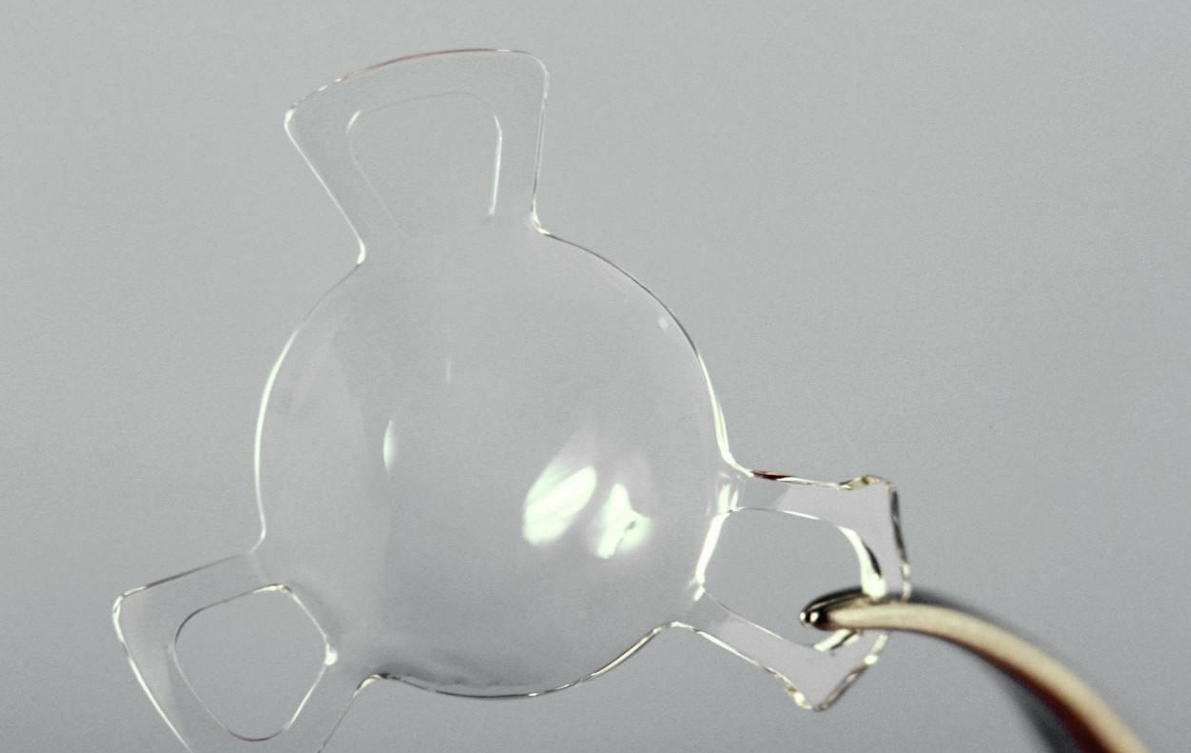
Expanded Knowledge: The implanted intraocular lens
Summary: As the most important optical instrument for anterior segment examination, we must study the slit lamp carefully and thoroughly understand its principles. At the beginning of the examination, you may feel unfamiliar with it and not notice any problems. Remember not to have the mindset that you won't find anything, because then you'll become lazier and lazier in using it, and eventually think it's just a formality that you have to do as required by the company.
Every time a customer sits at the optometry station, they entrust their eyes to you, along with all their trust.
We can spend 5 minutes helping them with a slit lamp examination. Maybe you'll detect a problem they're not aware of. Because of this short 5 - minute examination, they can benefit for a lifetime. Your professionalism can help people.
If you think what I wrote is good, remember to subscribe to our website! So that you can enjoy the latest discount information.