II. Pitfalls in Buying Spectacle Frames
1. Blindly Pursuing Frame Weight
Nowadays, many online sellers promote their products by highlighting how light the frames are, claiming that a frame weighs only 8 grams or even less. However, many people find that after getting the lenses fitted, the glasses don't seem much lighter. Some even feel heavier and more pressing on the bridge of the nose, and some tend to slide down.
This is because sellers don't tell you that the weight of a pair of glasses is mainly influenced by the lenses, not the frame. Sellers only remove the lenses to show you how light the frame is, leading you into a misunderstanding. You end up repeatedly comparing the weight of frames, thinking that the lighter the better.
The most important aspect of a frame is its stability. Sacrificing stability for the sake of lightness is putting the cart before the horse. The glasses you buy won't be light, and they won't stay in place, constantly sliding down.
My advice: The width of the frame should not exceed the width of your face. For people with medium to high myopia, the sum of the frame's lens width and the bridge size should not exceed the pupillary distance by more than 8 millimeters. When choosing a frame, don't just focus on the frame's weight alone. Instead, ask the optician about the final weight of the glasses with the lenses. Always try on the frame before buying. You won't know if it's comfortable until you put it on. Pictures can be deceiving.
2. Medium to High Myopia Should Avoid Large Round Frames as Much as Possible
Many people are actually unaware that in a glasses prescription, there is a monocular pupillary distance, and frames also have a monocular pupillary height, a parameter that many have never heard of. Some may even tell you that pupillary height doesn't matter at all, and they've never had their pupillary height measured, and they feel fine. As I mentioned before, the adaptability and tolerance of the human eye are extremely high. Some people can wear glasses with a significant difference in pupillary distance for two or three years. Although they felt uncomfortable at first, they eventually got used to it.
For comfort and visual quality, especially for large round frames, pupillary height must be measured. Let me explain what pupillary height is. Pupillary height is the height of the point where the human eye looks out horizontally through the frame.
We need to align the optical center of the lens as closely as possible to the pupillary height when making glasses.
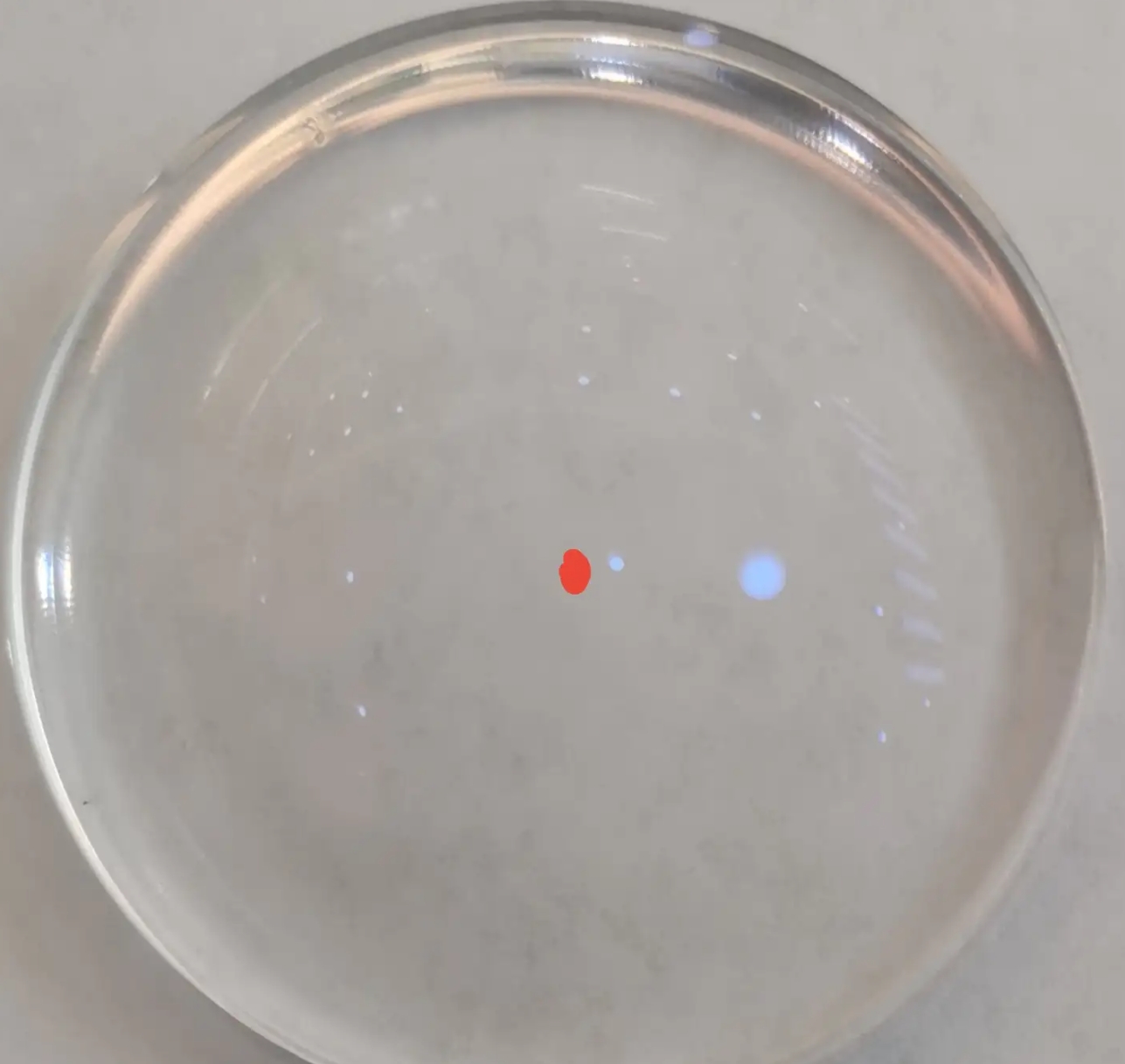
Please don't buy those very large and round frames just to follow the trend! In the eyes of professionals like us, this is not cute at all. Especially for myopic friends with 400 degrees or more (medium to high myopia), if the pupillary height is too high, the optical center of the lens must be adjusted upwards accordingly. This makes the bottom of the glasses very heavy and thick. Since myopic lenses are concave lenses, they are thicker towards the edges.
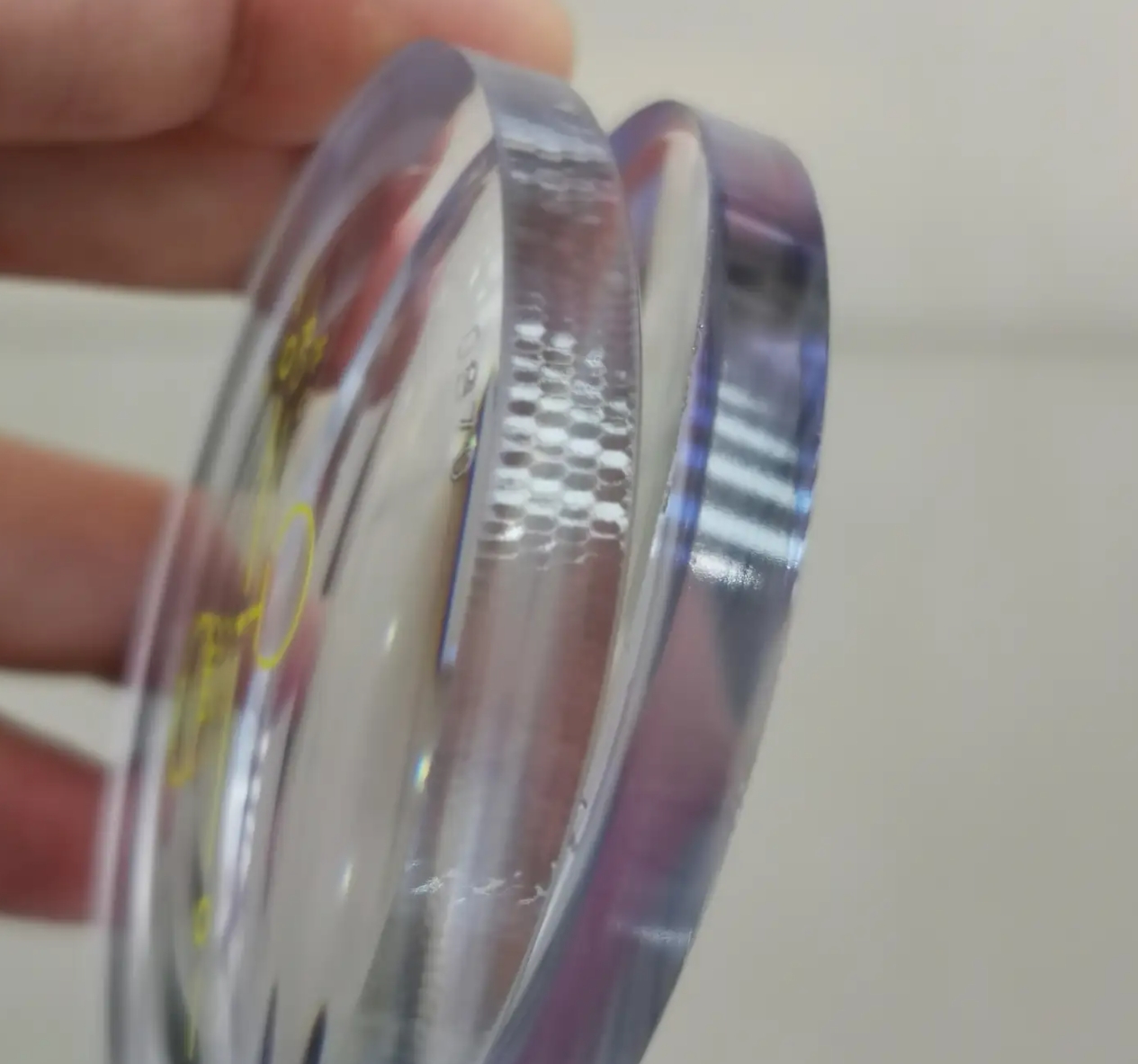
The best optical area of a lens is its thinnest part. A lens has only one optical center, usually at the geometric center of the lens. The closer to the center, the thinner the lens; the closer to the edge, the thicker it is. This optical center should be aligned with your pupil. However, with large round frames, our pupil points are usually very high.
If the entire lens center has to be moved upwards to match the pupil of the eye, the thickest part of the lower half of the lens will be included in the frame, increasing the weight significantly and affecting wearing comfort and the stability of the glasses. But if you don't measure the pupillary height, the visual quality will decrease, and other discomforts may occur. So, it's a dilemma. It's best to avoid large round frames.
Worst of all, many online sellers these days won't tell you whether it's healthy or not. They'll just say that this frame is the most popular this year and looks cute on you. To avoid making the bottom of the lens too thick and getting negative reviews, sellers don't measure the pupillary height.
Anyway, customers don't know. If the customers feel dizzy, the glasses shake, or things seem to jump left and right, or the view of near objects appears distorted when they get the glasses home, they'll be told, as usual, that this is normal for new glasses and that they should go back and get used to this defective optical product.
I appeal again for you to be cautious when choosing large round frames. If you must choose a large round frame, make sure to measure the pupillary height parameters accurately. If you're buying glasses online, provide your data to the seller.
My advice: When choosing a frame, listen to the professional advice of the optician. Ask if the frame will be comfortable, if it will shake a lot, or if it will feel too heavy. In terms of appearance and needs, people with low myopia can try large frames, those with medium myopia should be cautious, and those with high myopia should avoid large frames. For the sake of visual quality and the weight of the glasses, choose the smallest - sized frame that you find comfortable and acceptable in appearance.
Myopic friends with high myopia can refer to the following article of mine, "Prescription Principles and Precautions for High Myopia," for more precautions when buying glasses. It's a must - read:
Principles and Precautions for Fitting Glasses for High Myopia
3. Blindly Chasing Brands While Ignoring Frame Comfort
When choosing a frame, you should focus on the frame itself rather than the brand. Over - emphasizing the brand may make you spend a lot more money, but it doesn't necessarily improve your comfort experience significantly.
There are significant differences among frames, and the brands are quite diverse. Some brands from the clothing, automotive, or even food industries also produce glasses. Basically, these are all OEM products with a high price premium. A frame may cost $80 without the brand, but $800 with the brand. Sticking a brand label only costs a few cents, but the price increases several times. This brand premium doesn't have much real meaning, except for increasing sales and profits.
Most importantly, when you're wearing glasses, do you really care about what brand others are wearing? Not really. People generally don't pay much attention to the brand of others' glasses. The brand - consciousness of glasses isn't that high. But only you know if the glasses are comfortable. Pay less attention to what others think and more to your own comfort.
From a cost - saving perspective, I don't recommend buying glasses from brands outside the eyewear industry. Most of them are just fake products with a slightly higher price. Comfort should be the top consideration when choosing a frame. Everything else can be put aside for now.
For how to choose a frame that fits your size and style, you can read the following article, "How to Choose a Suitable Frame," which will definitely be helpful to you:
How to choose glasses frames? All the key points for choosing glasses frames.
4. Buying an Over - priced Frame
When it comes to getting the short end of the stick, price is definitely a factor. Moreover, many people consider over - paying as a loss. If you treat frames like fast - moving consumer goods, similar to clothes, and want to get the lowest price, then you have to spend time shopping online, like through overseas shopping platforms.
For friends who plan to buy glasses online, I recommend going to professional stores like Glasses Magic, which is my store. With over ten years of industry experience, I can definitely help you choose the most suitable glasses. This is why I like to share professional industry knowledge.
If you don't do your homework and learn some relevant knowledge, even if you buy high - quality frames and lenses with a good price - to - performance ratio, it doesn't mean the glasses will be comfortable or healthy to wear.
A good pair of glasses = good frame + good lenses + professional fitting technology. So, when buying a frame, don't over - compare. Find a price range that suits you and get the service that meets your expectations. That's what matters.
III. Pitfalls in Buying Lenses
1. Higher Refractive Index Doesn't Mean Better Lenses
Many people think that the higher the refractive index of a lens, the better, right? This perception is mainly created through marketing by merchants and institutions, both online and offline. Sellers tell you that since your degree is so high, you should use a lens with a high refractive index, so they can sell it at a higher price. Generally, the higher the refractive index, the more expensive the lens.
The refractive index has little impact on the overall optical performance of the lens, such as the lens's hardness, light transmittance, clarity, coating functions (UV protection, anti - radiation, anti - reflection, blue - light protection, anti - glare), and service life. Sometimes, the clarity of the lens may even decrease as the refractive index increases.
The refractive index only affects the edge thickness of the lens, but it is directly related to the price. That's why sometimes you don't need to be overly concerned about the refractive index. Because of its direct link to the price, it is highly recommended by merchants and institutions, and that's all.
Some people may ask, if a higher refractive index really makes the lens thinner, then it's normal for the price to be higher. Yes, I'm not saying you shouldn't choose a lens with a high refractive index. I'm suggesting that you don't get caught up in the refractive - index trap. I've even seen someone with only 200 degrees of myopia wearing a 1.74 refractive - index lens. This is over - emphasizing the refractive index.
The person said the merchant told him this lens was the lightest and thinnest. Such merchants are really bad. They keep telling people to choose the lens with the highest refractive index in the world, claiming it will be the thinnest and lightest, thus closing a high - value deal.
Yes, what the merchant said is correct. Under the same frame conditions, a 1.74 refractive - index lens is indeed the thinnest and lightest. But from a conscience perspective, the difference between a 3 - mm - thick lens edge and a 2.25 - mm - thick lens edge is hardly noticeable to the human eye. Do you think it's worth spending more money for such a slight difference? Is it worth spending an extra $400 for a lens that's only 1 gram lighter?
This doesn't apply to friends with financial freedom.
The final thickness of the lens is affected by factors such as pupillary distance, pupillary height, frame width, lens refractive index, and the degree of edge - cutting of the finished product. The lens refractive index only accounts for a small part.
Of course, it's not completely absolute. Some people have a small pupillary distance and a very high degree, and they can't find a frame whose geometric center size is close to their pupillary distance (a wide - faced person with a small pupillary distance and high myopia). In this case, within the budget, they can choose the highest refractive index. Especially when buying glasses online, without professional guidance on frame selection, people usually choose large frames. In such cases, it's better to choose a higher refractive index to reduce the risk of getting a bad - fitting pair of glasses.
So, I've always believed that the frame is of utmost importance. It should be the top priority. Instead of blindly paying more for a high - refractive - index lens, wouldn't it be better to save the money and buy some ribs?
However, if you don't choose the right frame and have a poor starting point, then you may have to spend a high price on an ultra - high - refractive - index lens to make up for the defect. In that case, I suggest choosing the highest refractive index possible.
Here's a suggestion. Excluding the most important factor of the frame, you can make the following general references based on your degree:
-
For 0 - 300 degrees, you can consider lenses with refractive indices of 1.50, 1.56, or 1.60.
-
For 300 - 600 degrees, you can consider lenses with refractive indices of 1.56, 1.60, or 1.67.
-
For 600 - 1000 degrees, you can consider lenses with refractive indices of 1.67 - 1.74.
-
For over 1000 degrees, you can consider lenses with refractive indices of 1.71 - 1.74.
Optical fitting is a complete technical service system. It requires considering the optometry degree as a whole, optimizing the degree according to individual needs, choosing a suitable frame based on the degree and face shape, adjusting the frame, selecting the right lens (not necessarily the most expensive one), processing and assembling, trying on and debugging, and finally providing worry - free after - sales service that solves problems immediately without any excuses.
Only in this way can you get a pair of glasses that are reassuring, comfortable, and clear.
Of course, I know that many optical stores still rely on simple price differences of products to make a profit, remaining in the era of information opacity from 20 years ago. Instead of relying on providing professional fitting technology and careful fitting services, they focus on marketing rather than professional fitting services. For such stores, I think it's better to buy glasses online.
2. Lenses Being Swapped / Encountering Fake Products
Based on my understanding of the current industry, there are still a few black sheep in the industry. Swapping customers' lenses is a common occurrence, especially in some small, information - isolated areas or among some individual merchants.
I've also had customers say they got a certain brand of lenses from another place, but when I took a look, it was clearly not the lens from that manufacturer.
These are usually unregulated stores with low customer traffic. When a customer comes in, they'll try to keep you. If you're not satisfied with the price of the frame and lenses you like, it doesn't matter. You can bargain until you're satisfied. Then they'll replace the good lenses you chose with others. From my observation, such stores still exist and manage to survive.
You may ask, "Wouldn't I know if the lenses were swapped?" Well, you might not, and even I might not.
To avoid such pitfalls, we need to be careful when choosing a store. Try to choose regular stores, especially those with a good reputation and a focus on service, like Glasses Magic. Here, I'm promoting my store again. Also, be cautious of stores where you can bargain without limit. Generally, regular stores have a minimum discount, and they won't sell below that.
3. Buying Stock Lenses
Have you ever encountered a situation where your glasses have been worn for a year, but the lenses have turned yellow? Some people find that after wearing them for a while, one lens turns yellow while the other doesn't, or one lens has its coating peeling off.
Here's the thing. The processing room of each company will prepare a lot of lenses in advance, and there may be several lenses for each degree. For example, a 500 - degree lens has been in stock for a long time and hasn't been sold. Maybe it's been sitting there for two years, and if you happen to have the same degree, this lens will be fitted for you.
Nowadays, most lenses are resin lenses. From the moment they come off the production line, resin lenses are affected by the environment. Over time, the optical performance of the lenses gradually deteriorates.
At this point, you may understand why there are rumors of lenses being sold by the pound. Besides those lenses with factory - produced defects (which can't be thrown away and must be disposed of through some channels), there are also those stock lenses that have been produced for many years.
4. Are More Expensive Lenses Always Better?
I keep telling everyone that to avoid being deceived and overpaying for low - quality lenses, I strongly recommend buying lenses from major manufacturers. Don't be dazzled by the fancy functions of lenses. Go back to the essence of lenses.
What is the essence of lenses?
As an optical correction device, the essence of lenses is to correct vision, have good light transmittance, be clear, and provide good protection.
As a daily decorative item, the essence of lenses is to have high hardness, be durable, not easy to break, and have stable quality.
For example, take the currently very popular blue - light - blocking lenses. To find new profit - growth points and meet the growing demand for electronic products, manufacturers have integrated the upstream and downstream of the industry, continuously advertised, exaggerated the existence and harm of blue light, thus creating the current booming blue - light - blocking lens market.
Even if I don't want to sell blue - light - blocking lenses, customers come to ask me every day if I have them, forcing me to sell them. From a business perspective, it's very successful.
However, objectively speaking, although blue - light - blocking lenses can be sold at a higher price, I don't think everyone needs to rush to buy them. You should consider your own needs. Blue - light - blocking is not a panacea.
The regular electronic products we use now have all passed blue - light tests. The amount of blue light is not as much as the lens manufacturers claim, and the harm is not as serious either. Under normal use, there's no need to worry about these harms. It's like saying there's a risk of water intoxication from drinking water. It's only a theoretical possibility, but do people stop drinking water because of that?
If you're really worried about blue light, wouldn't it be better to turn on the blue - light - blocking mode on your phone?
For when you need to wear blue - light - blocking lenses, you can refer to my article
Is the blue-light-blocking lens really useful or just a gimmick?
When buying lenses, you must control your budget. Generally, this won't go wrong. I personally don't recommend impulsively buying very expensive lenses just because a salesperson recommends them. In fact, for ordinary single - vision lenses, most lenses from major manufacturers can meet the basic vision - correction needs.
For most consumers, they hope to get a pair of good - quality lenses. If you just want to buy a single - vision lens and don't want to spend too much, believe me, customized laboratory - made lenses are a good choice. They offer great value for money. If you don't mind the cost, go for well - known brands. The quality is definitely guaranteed, but the price is relatively high.
In conclusion, there is no such thing as the best lens. There is only the most suitable lens.
If the above content still can't solve your specific problems and doubts about buying glasses, you can come to me for advice. I'll tell you everything I know and make sure you gain a clear understanding, avoid detours, and save unnecessary expenses.
If you think what I wrote is good, remember to subscribe to our website! So that you can enjoy the latest discount information.