What does optometry involve?
Before getting into glasses fitting, let's talk about optometry first. The importance of optometry is self-evident. The purpose of wearing glasses is to restore clear vision. Even if you have the best frames and lenses, it's useless if the prescription is inaccurate. So an accurate optometry prescription is very important.
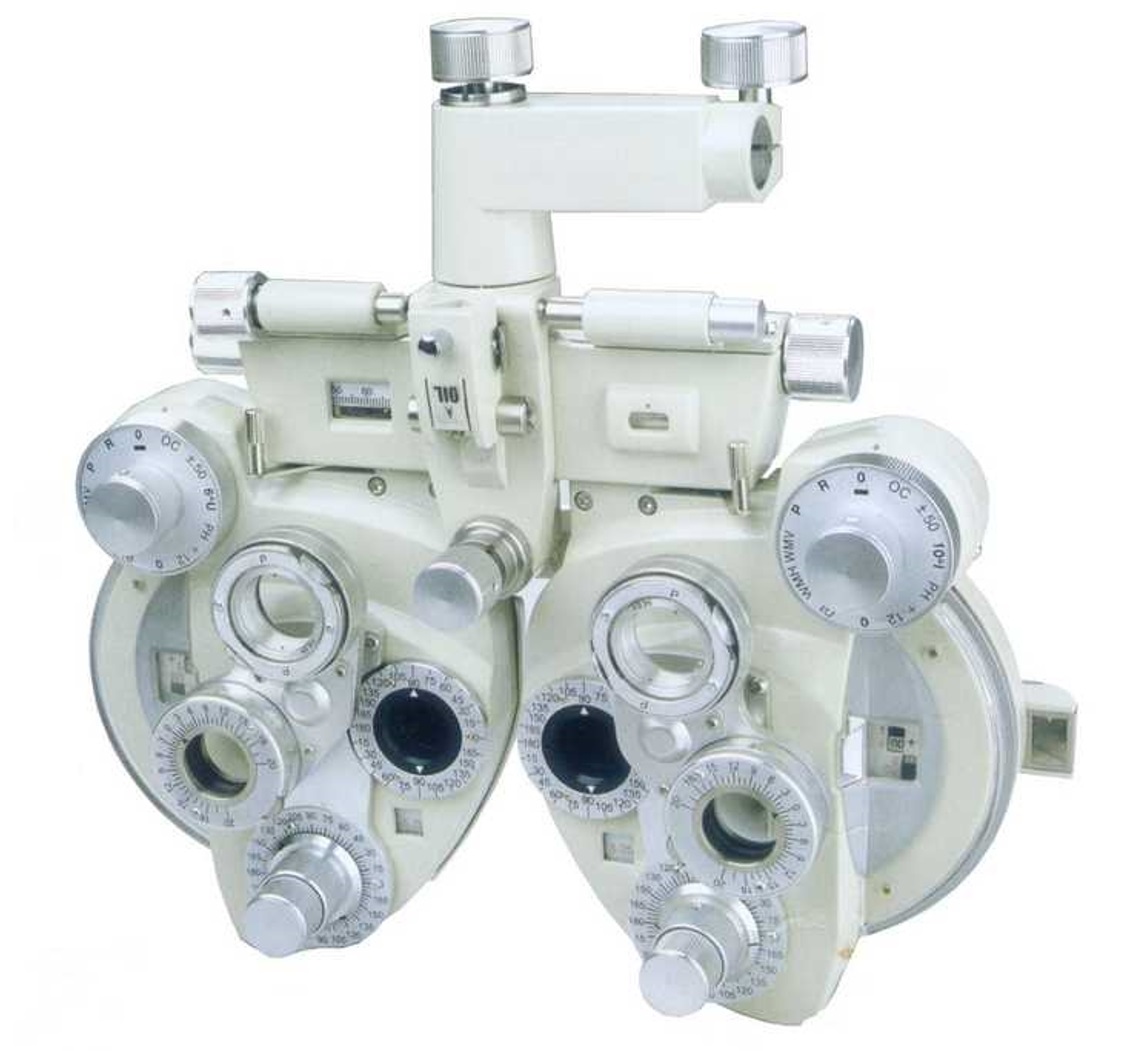
It is recommended that you go to large general hospitals or specialized ophthalmic hospitals for paid optometry. The charges are not high, and the facilities are relatively complete, and the quality of optometry technicians is also relatively guaranteed. In comparison, even the optometry equipment in branded optical shops may only have a single computer optometry instrument, and relying solely on computer optometry is far from enough. There must be an optometrist who uses a comprehensive optometry instrument for manual adjustments.
However, the levels of optometrists in optical shops vary greatly. Some use the data from computer optometry directly for glasses fitting, and some add astigmatism directly to the myopia degree for glasses fitting.
What information should an optometry prescription at least include? There are two points to note. First, most people are fitted with distance glasses (that is, to enable clear vision when looking at distant objects). When measuring the interpupillary distance, both eyes must look straight ahead; otherwise, the measured interpupillary distance will be inaccurate. Second, sometimes the optometry sheet given by the hospital does not contain interpupillary distance information. If it is omitted, remember to ask the doctor to measure the interpupillary distance (there are specialized interpupillary distance rulers and detectors).
In the formal optometry process, the computer optometry instrument is only the first step of optometry, which is used to obtain a rough degree for the optometrist's reference. At the same time, you may also be asked to measure the degree of your old glasses for reference. Next, the optometrist will use the comprehensive optometry instrument to make various adjustments or use trial lenses to configure various correction degrees.
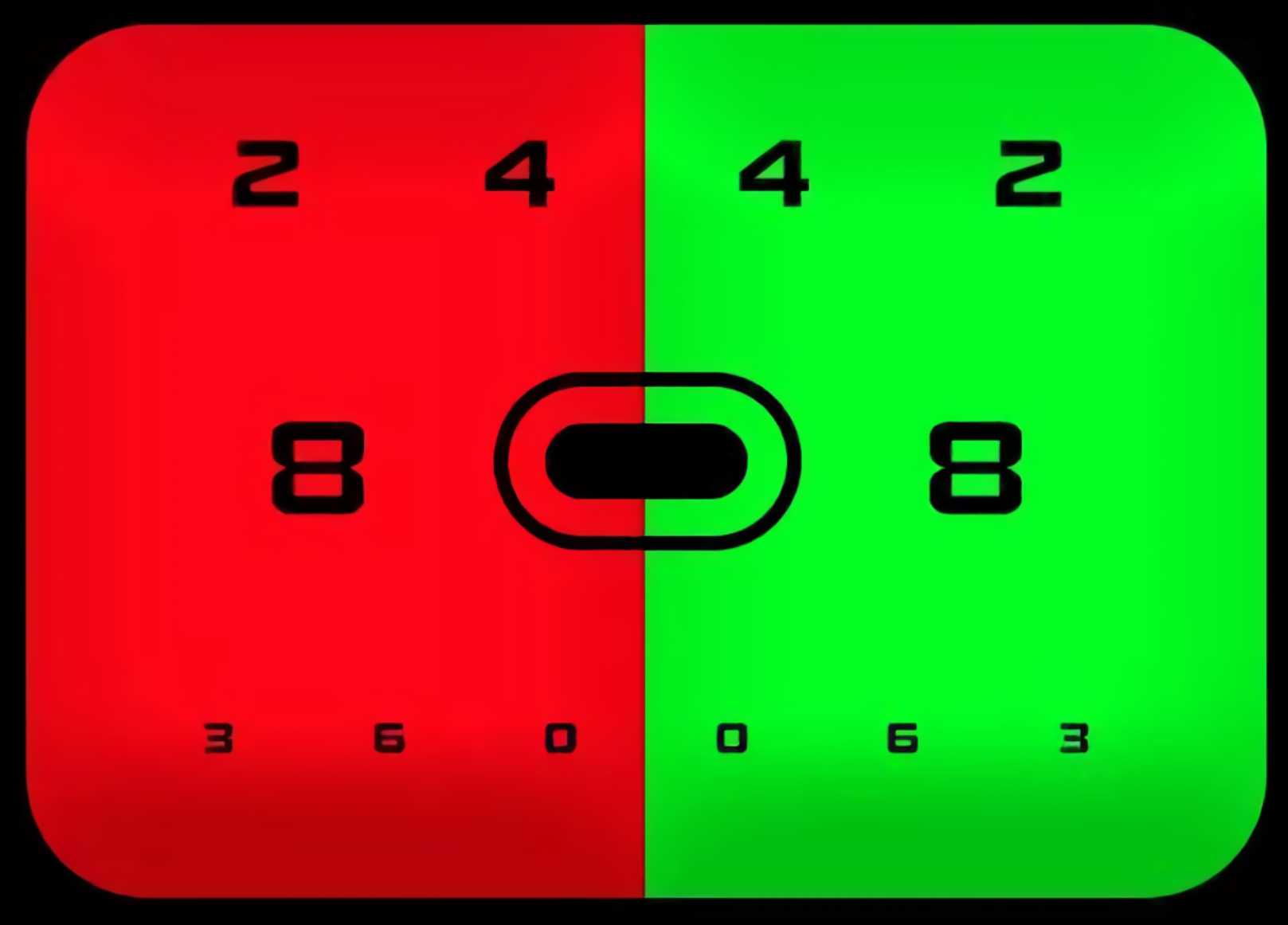
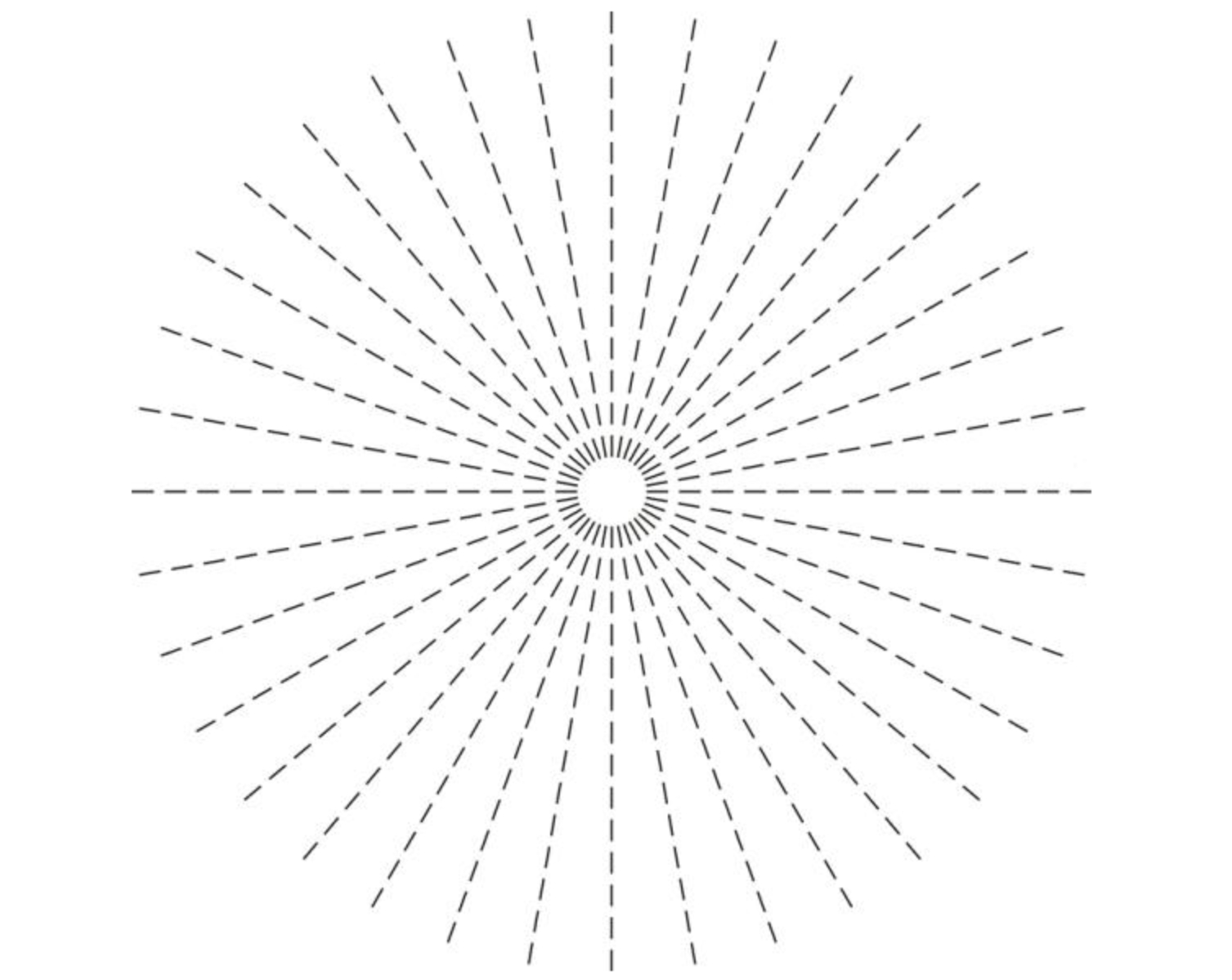
They will ask you whether you can see the symbols on the visual acuity chart on the opposite wall or on the screen. During this process, the red-green test will be done several times to determine whether the degree has been over-corrected. If there is astigmatism, the astigmatic dial will be used to determine the axis position, and there is also a more precise cross cylinder lens that can accurately determine the axis position.
Red-green side view and the astigmatic dial.
I am about 500 degrees myopic with about 100 degrees of astigmatism. I went to two different hospitals for optometry and got two different sets of optometry data. The corrected visual acuity was 1.2 for both. Finally, I chose the prescription with the smaller fitting parameters.
It should be noted here that different optometrists may produce different results, especially for the astigmatism axis. If the astigmatism degrees in the two prescriptions are different, the corresponding axis positions will also deviate.
The basic principle is: when the corrected visual acuity is the same, choose the prescription with smaller fitting parameters.
What are the secrets of eyeglass lenses
After getting a reliable optometry sheet, you can officially start shopping for glasses online. Glasses are composed of lenses and frames. Personally, I think the importance and technological content of lenses are higher than those of frames. Here, I'll first give you an introduction to several basic technical indicators for measuring the quality of lenses:
Basic Technical Indicators of Lenses
- Refractive Index: One of the most important indicators of lenses, it reflects the thickness of lenses. Common refractive indices are 1.56, 1.59, 1.61, 1.67, 1.74. For glass lenses, there are also high refractive indices such as 1.8 and 1.9 available. The higher the refractive index, the thinner the lens and the more expensive it is.
- Abbe Number (Dispersion Coefficient): It reflects the imaging quality of lenses. The higher the Abbe number, the smaller the dispersion of the lens and the better the imaging quality. Generally, the Abbe number of lenses is between 30 and 60, and the larger the better. Strong dispersion will cause the prism effect, resulting in dizziness and discomfort.
The above two parameters affect each other: the higher the refractive index, the lower the corresponding Abbe number. So you can't blindly pursue a high refractive index, because a high refractive index will inevitably sacrifice imaging quality. It can be seen that the lens with a refractive index of 1.5 has an Abbe number as high as 58, which beats all others. However, for a lens with a refractive index of 1.5, with the same degree, it has the thickest thickness, and most of them are spherical lenses, and there are fewer coated ones.
There are actually no strict regulations on what kind of lenses should be matched with what degrees. Some optical shops will recommend using lenses with a refractive index of 1.67 for those with 500 - 600 degrees or above. But this is at the cost of sacrificing imaging quality in exchange for a slightly thinner lens. What's more, lenses with a refractive index of 1.67 are much more expensive than those with a refractive index of 1.6. When I talk about frames later, I will specifically talk about several factors that affect the thickness of lenses. In fact, the influence of the refractive index in this range on the thickness of lenses is not as big as expected. A difference of 3 - 5 in the Abbe number is hardly noticeable by the human eye in theory, but a difference of 10 or 20 is quite obvious. - Coating: Nowadays, all lenses are coated. This is where high-end brands distinguish themselves and also the area that is most likely to deceive people, because there is no unified standard to measure the performance of coatings of different brands, and it can only rely on subjective evaluation. Currently, the coatings on lenses have various names and a wide variety of functions. The most basic coating can make up for the deficiencies in the physical imaging of lenses, enhance optical transparency, and reduce reflected light. Generally speaking, it can be anti-fall, anti-abrasion, anti-radiation, waterproof, anti-fog, and anti-blue light.
You can choose the corresponding coating according to your own needs. I think among these functions, only anti-reflection and increased transparency are necessary, and the other functions are just icing on the cake. Here I just want to give my opinion on the anti-blue light function. At present, even the anti-blue light lenses of Zeiss and Nikon can only reduce about 10% of blue light without changing the color of the lenses. Personally, I think the effect is not very obvious in terms of technology at present, and it is more of a gimmick by manufacturers. - Transmittance Ratio: It measures the anti-ultraviolet performance, that is, the ratio of the total amount of the ultraviolet spectrum to the total amount of the incident spectrum of the lens. It is divided into UV-1, UV-2, and UV-3, among which UV-1 is the highest grade. In this regard, since most mainstream brand lenses are coated nowadays, the parameters of mainstream brands are relatively similar, so I won't go into details here.
Differences in Lens Materials, Curvatures and Introduction of Special Function Lenses
- Materials: In fact, lenses are made of many materials. Generally speaking, they can be divided into two categories: glass and non-glass (PC, resin, etc.).
The disadvantages of glass lenses are that they are heavy, fragile and not easy to coat. Their advantages are that they are wear-resistant and there are ultra-high refractive index lenses available for people with high myopia (above 1000 degrees). Resin lenses are light and thin, but they are also fragile and have poor wear resistance and are easy to coat. PC material is light, has high hardness, and is said to have an impact resistance 10 times that of ordinary resin lenses. It is also easy to coat. PC is widely used in lenses with a refractive index of 1.6, and its actual refractive index is 1.59. However, PC has a fatal disadvantage that its Abbe number is too low and needs to be coated to solve the dispersion problem. - Spherical and Aspherical: The advantages of aspherical lenses have been widely advertised by major optical shops: reducing aberration, making it less likely for objects seen at the periphery of the lens to be distorted; being thinner and flatter than spherical lenses, etc. Of course, it doesn't mean that aspherical lenses have no curvature at all. That would violate the optical principle. It's just that the curvatures are different.
However, if you have been wearing spherical lenses and switch to aspherical ones, you may experience discomfort because your eyes have adapted to spherical lenses. Now major foreign manufacturers have double-sided aspherical lenses available for selection. Theoretically, double-sided aspherical lenses can achieve less aberration and be thinner and lighter than aspherical lenses. - Single Vision Lenses and Special Function Lenses: Single vision lenses, also known as single-focus lenses, have only one focus throughout the entire lens. They are the most common type of lenses and also the type that lens manufacturers produce in the largest quantity. Finished lenses are also called stock lenses. There are certain limitations in the choice of degrees, especially for astigmatism degrees. Generally, it is required that myopia be less than 800 degrees and astigmatism be less than 200 degrees. If it exceeds this limit, custom-made lenses must be used, and the corresponding cost will increase significantly.
Now there are also many special function lenses, the most common ones being photochromic lenses, progressive lenses, anti-fatigue lenses, anti-fog lenses, etc. Different from the coating principle, such special function lenses achieve corresponding functions by changing the lens material or optical structure. Such lenses usually need to be custom-made, so the price is relatively higher.
What are the secrets of frames?
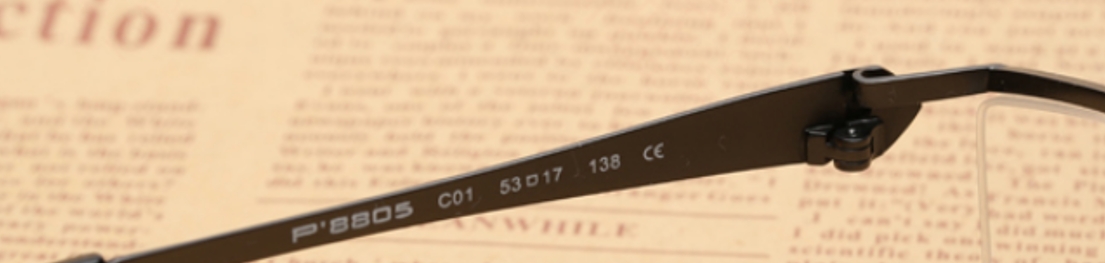
There are not so many hard indicators for frame selection. After all, frame selection is mainly based on subjective feelings. Feeling that it looks good on you is the most important thing. It is recommended that friends go to physical stores to try them on first to determine the styles that you may like and are suitable for you, and then conduct a wide selection online according to this. Generally, the width of the frame will be printed on the nose bridge bar or the temple of the frame.
As shown in the following figure, 53 is the lens width, 17 is the nose bridge width, and 138 is the temple length.
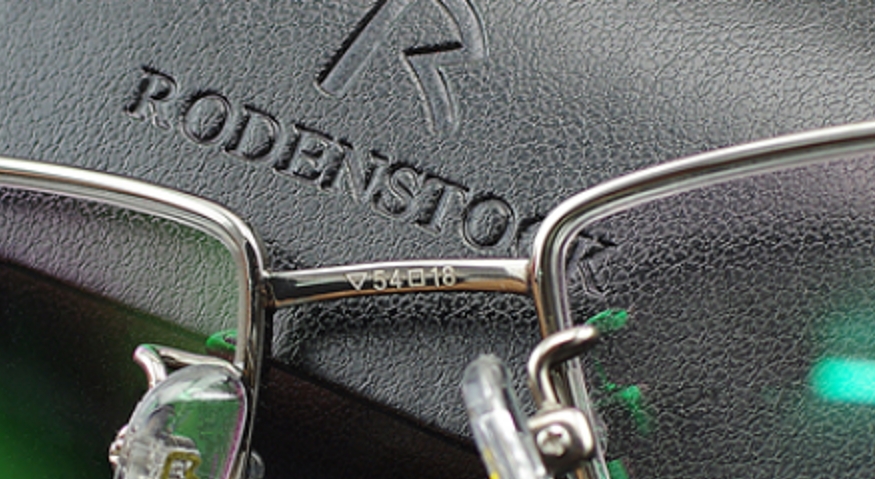
Frame Width
Unfortunately, none of the frames directly indicate the specification that may be the most important for online frame shoppers: the frame width. It directly determines whether the glasses can be worn on your head.
Fortunately, online stores usually have relatively detailed specification descriptions in the product descriptions.
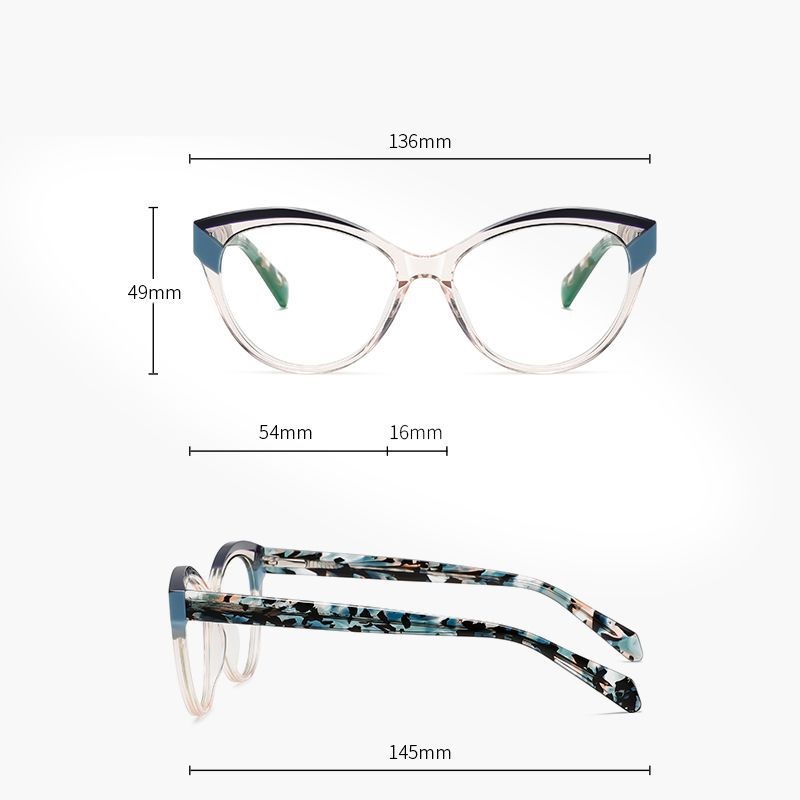
When it comes to frame specifications, it should be noted that sometimes the frame width indicated by the store owner may be the width of the plane of the glasses lens (let's call it the outer width of the frame). But what actually contacts your head is the inner side of the frame. If the temples are elastic, the actual inner width of the frame may be much larger than the outer width. If you have an old pair of glasses on hand, you can measure the inner width of the frame that suits you to facilitate your next choice.
Frame Inner Width
In addition, for friends with high degrees, try not to choose too wide lenses, because the wider the lens, the thicker the lens will be when it is made.
Here is a popular science on several factors that affect the thickness of lenses:
Degree: The deeper the degree, the thicker the lens. The higher the astigmatism, the thicker the lens.
- Refractive Index: The lower the refractive index, the thicker the lens.
- Curvature: Spherical lenses are thicker than aspherical lenses.
- Lens Width: The wider the lens, the thicker the edge of the lens.
- Interpupillary Distance: The smaller the interpupillary distance, the thicker the lens.
The thickness of the lens is the result of the combination of the above several factors.
What Are the Mainstream Frame Materials?
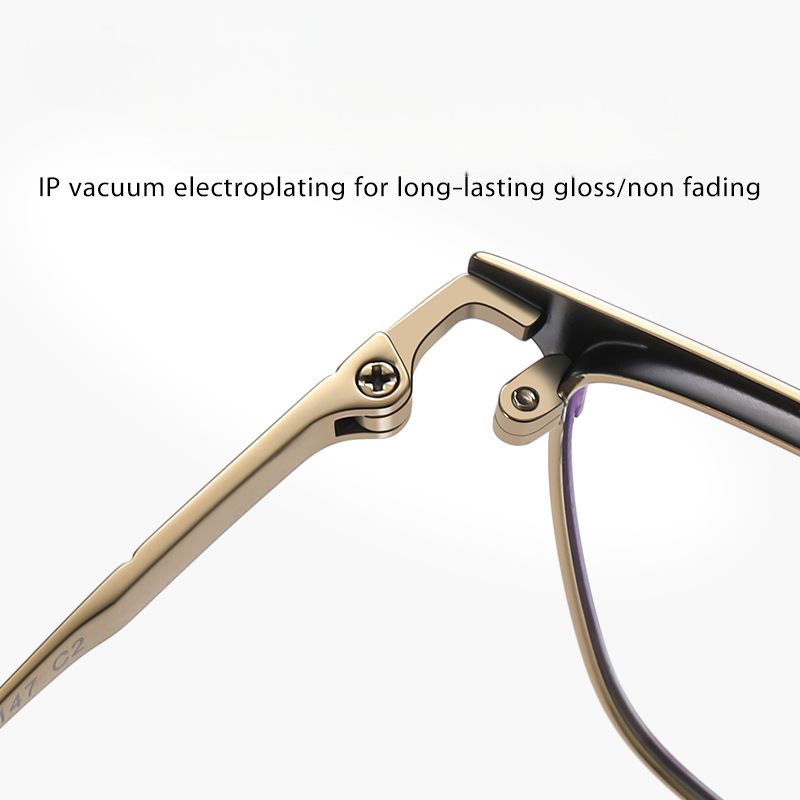
In terms of materials, the mainstream ones are currently divided into titanium (including pure titanium and titanium alloy) and plate materials. There are also hybrid models where the frame is made of pure titanium and the temples are made of plate materials.
Personally, I prefer pure titanium ones. They are light in weight, sturdy and not easy to deform. Plate frames have more personalized styles, mostly full-frame ones. For the temples, if you don't choose pure titanium, try to choose the TR90 material as much as possible. It is elastic and has good affinity, and your skin won't be allergic to it.
Having said so much, in fact, what matters most is your subjective preference. Good workmanship can be felt. Try on several pairs and you will have a general feeling. I think the technical content of frames is not that high. Even if it's a replica, as long as the quality is up to standard, the design is reasonable and it suits you, it's okay.
Finally, I hope everyone can get a pair of satisfactory glasses. If you think what I wrote is good, remember to subscribe to our website! So that you can enjoy the latest discount information.