Sunglasses are all too familiar to everyone. Especially in midsummer, many people like to wear a pair of sunglasses when they go out. Their original intention is to avoid the harm of strong light to their eyes. However, do you know that if sunglasses are worn improperly, they can do more harm to the eyes instead.
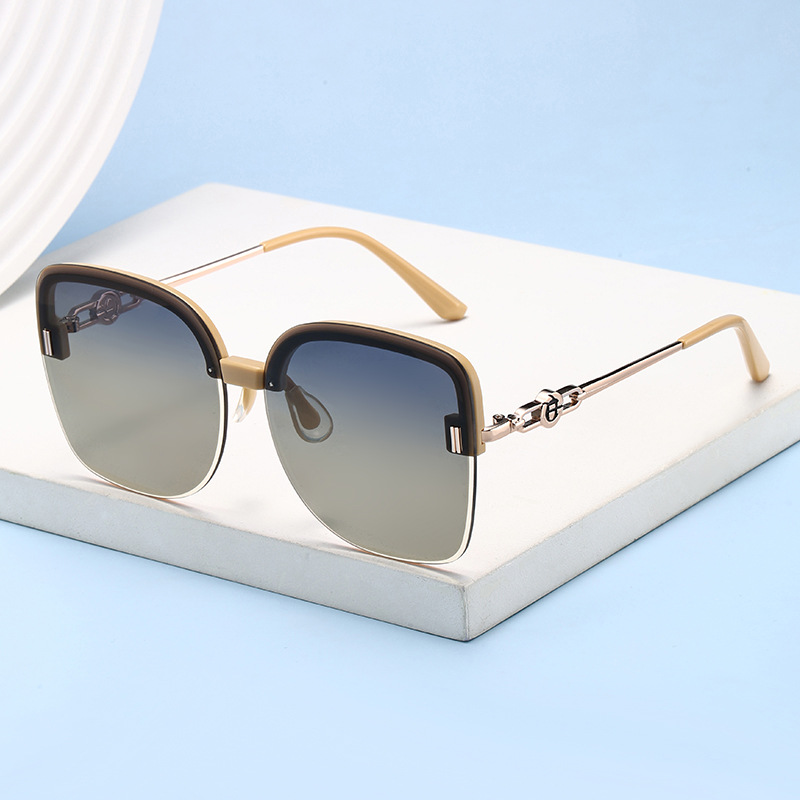
Most people wear sunglasses to block the ultraviolet rays in sunlight. Ultraviolet rays can not only cause skin aging and increase the risk of skin cancer, but also do great harm to the eyes. Intense ultraviolet irradiation may induce various eye problems such as cataract, macular degeneration, pterygium, and conjunctivitis.
Eye diseases that may be caused by ultraviolet rays:
Photokeratitis
It is an acute damage to the eyes caused by intense sunlight. Generally, it is caused by the burn of the cornea due to ultraviolet radiation. There are often symptoms such as severe eye pain, tearing, a foreign body sensation, conjunctival congestion, edema, and blurred vision.
Retinopathy
Ultraviolet rays, especially long-wave ultraviolet UVA, can penetrate to the fundus of the eye and cause retinopathies such as macular degeneration. Meanwhile, they will also increase the probability of macular degeneration and the probability of age-related macular degeneration.
Cataract
The wavelength of ultraviolet rays is 290 - 400 nanometers, which will make the soluble proteins in the lens cross-link and aggregate, causing the lens to age or become opaque, and then lead to the appearance of cataract.
Pterygium
Ultraviolet rays will cause the degeneration of conjunctival tissue and produce pterygium. Pterygium usually grows from the corner of the eye towards the pupil and will affect vision in the later stage.
Since ultraviolet rays have such a great impact on the eyes, when ultraviolet rays are intense, especially in places with strong solar radiation such as low latitudes and high altitudes, more attention should be paid to eye protection from the sun. However, wearing sunglasses for a long time is also bad for the eyes.
Since the eyes are always in relatively dark light, the pupils will dilate subconsciously. Over time, it will cause vision degradation. In addition, the lenses of inferior sunglasses, which are uneven in thickness, uneven in color, and have poor optical properties, will all cause harm to the eyes.
How to choose sunglasses?
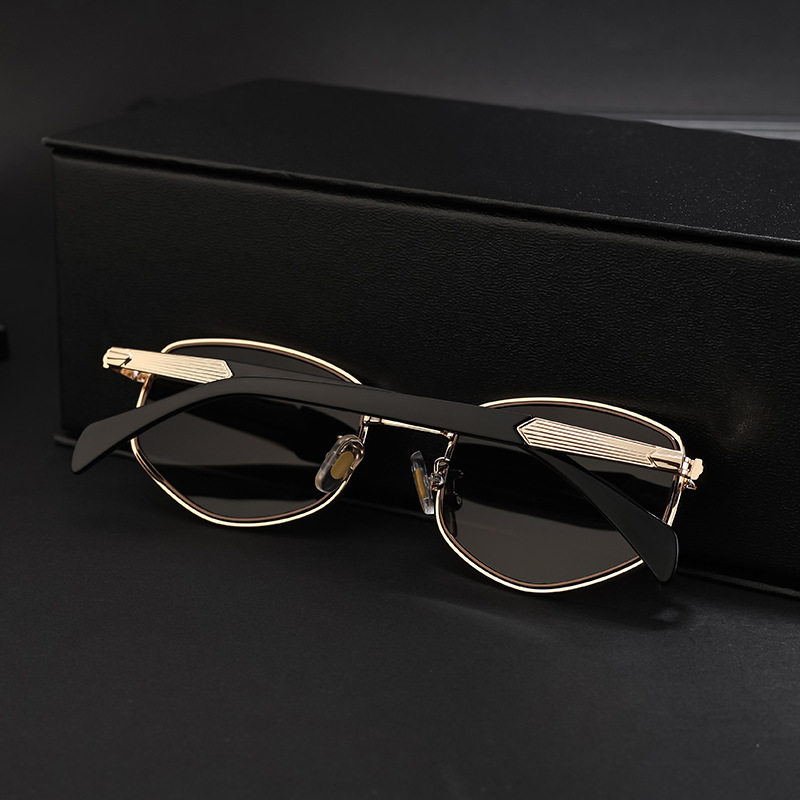
When choosing sunglasses, the following aspects can be considered:
They should be lightweight and comfortable to wear, be able to filter 75% - 90% of visible light, and there should be no distortion or distortion of vision.
They should be able to block 95% - 100% of UVA (ultraviolet rays with a wavelength of 320 - 400nm) and UVB (ultraviolet rays with a wavelength of 280 - 320nm).
When looking at sunglasses under the light, there should be no distortion or wavy appearance at the edges of the lenses.
The color of the lenses is not necessarily the darker the better. Generally, medium-depth colors can be chosen. Gray, brown, and green are more suitable.
Gray lenses
They can absorb infrared rays and most ultraviolet rays, effectively reduce light intensity, and do not affect color vision.
Brown lenses
They have a good absorption effect on blue light, can increase the contrast between the sky and ground objects, make vision softer, and are helpful for people with red-green color blindness, but will worsen the vision of people with deuteranopia.
Green lenses
They can absorb infrared rays and most ultraviolet rays, but some colors will be changed, so they are not suitable for people with color vision deficiency.
Yellow lenses
They can block harmful blue light, make the scenery seen clearer, have a relatively high contrast sensitivity, and can still keep the line of sight clear during rapid movements, but will affect night vision and the identification of traffic lights.
Red lenses
They can increase contrast and have a good blocking effect on light with relatively short wavelengths, and are suitable for environments under intense sunlight such as skiing.
People who are not suitable for wearing sunglasses for a long time:
Children under 6 years old

The visual function of children under 6 years old has not reached the adult level. Wearing sunglasses for a long time may lead to amblyopia.
People with glaucoma/people over 40 years old
The lens nucleus of older people begins to harden and the cortex begins to expand, which will lead to a shallower anterior chamber. Patients with glaucoma also have situations such as a shallow anterior chamber and a narrow anterior chamber angle. After putting on sunglasses, the visible light entering the eyes is reduced, the pupils will dilate, and it is easy to block the outflow channel of aqueous humor, which is likely to induce the acute attack of angle-closure glaucoma.
All of our sunglasses are manufactured to a level higher than international standards. You can purchase them with confidence.
If you think what I wrote is good, remember to subscribe to our website! So that you can enjoy the latest discount information.