People attach great importance to the optometry session. The quality of optometry is the most crucial part of a successful eyewear fitting experience and serves as the foundation for all such experiences.
Just as a tall building starts from a solid foundation, optometry is the cornerstone of everything.
A pair of high - quality lenses, without personalized professional optometry, precise processing and assembly based on monocular pupillary distance and monocular pupillary height, and adjustment of the frame according to the customer's face shape, fails to fully realize its maximum value. It's like buying the best ingredients but having the worst chef; the probability of failure is high.
Whether a pair of glasses is comfortable or not is determined by personalized and accurate optometry, a well - sized and comfortable frame, precise processing of monocular pupillary distance and height. The lenses, which many people think are the most important, actually only play a supplementary role.
Eyewear fitting is a comprehensive process. What's the point of buying an expensive pair of lenses alone, detached from other professional steps?
A small error in one link can completely nullify the advantages of good lenses.
Next, based on my work experience and professional knowledge, I'll talk about what I think a good optometry process should be like.
-
Before optometry, thoroughly relax the eyes
Due to the current eye - using environment, which mainly involves looking at mobile phones or continuously staring at computers, the eyes are prone to tension, and it's difficult for the accommodation to relax. Whether it's objective computerized optometry or subjective optometry with a phoropter, the data obtained may have slight deviations due to eye tension.
Some people have very flexible accommodation and find it hard to relax, which also increases the workload and communication difficulty for optometrists during the subjective optometry process with a phoropter and may interfere with the optometry process to some extent.
Therefore, I particularly suggest that before optometry, don't rush. Slow down the pace. It's best not to continuously look at mobile phones or computers.
If possible, do about 15 minutes of eye massage to relax the eyes thoroughly before optometry, eliminating the interference of eye fatigue and accommodation on optometry, making the entire optometry process smoother and easier.
Especially for friends who wear contact lenses, be sure to take them off and close your eyes to rest for a while. Don't optometry immediately.
It's especially important to note that for children's optometry, children have good accommodation sensitivity. A good relaxation is the basis for accurate optometry. For teenagers, eye relaxation can be achieved through massage, sufficient fogging relaxation, and for children's first optometry, atropine drug relaxation can also be considered.
Of course, I know that in today's fast - paced era where every bit of time is precious, many stores may not spend that much time allowing you to relax due to lack of conditions. But at least you can do your part by looking at your phone as little as possible before optometry and getting a good rest the night before, avoiding over - fatigue.
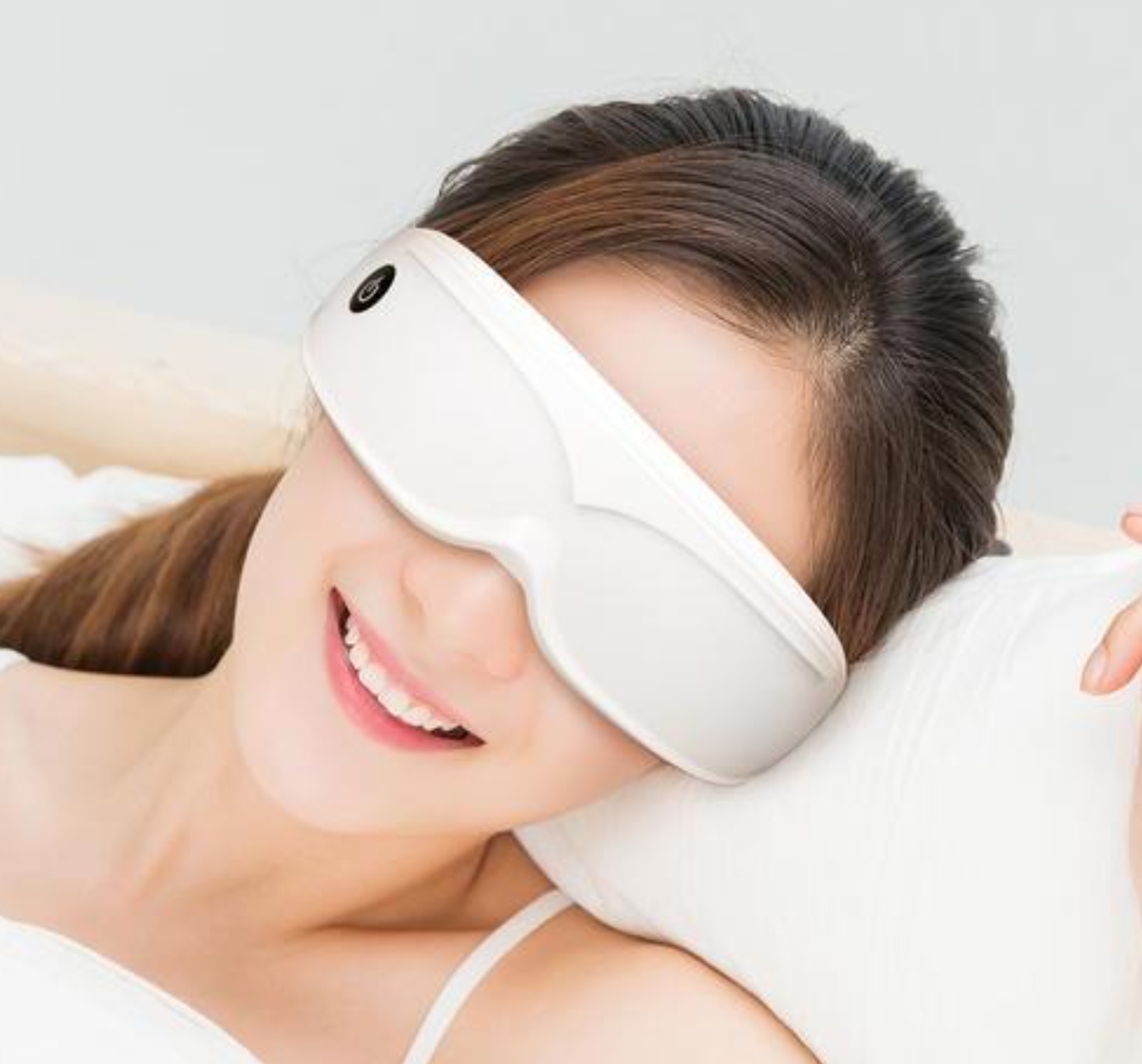 Adequate eye relaxation contributes to the accuracy of optometry and the smoothness of the process.
 -
Standard optometry process
The standard optometry process we refer to here is the process of determining the minimum degree of lenses required to achieve the best vision for the customer.
Most of the time, this process is relatively objective. Without operational errors, there shouldn't be significant differences in the optometry test results.
For example, it's like the physical fitness test we had in school. One of the tests was measuring vital capacity. This maximum vital capacity test is somewhat similar to the MPMVA (Minimum Plus to Maximum Visual Acuity) test. Everyone's maximum vital capacity is actually fixed. However, due to differences in testing instruments, communication levels, and judgments of testers, there may be slight differences, but generally, they should be similar.
I think there's no significant difference between 99 points and 100 points. But if it's between 99 points and 80 points, it's certain that there must be an error in one of the tests, and re - measurement is needed.
This is why many customers report that one store measures their degree as 700 degrees, while another store measures it as 725 degrees. They wonder which one to believe. In my opinion, both are the same. Both 725 degrees and 700 degrees can relatively accurately reflect the customer's actual degree.
To help you evaluate whether your optometry process is careful and professional, I'll tell you what instruments are used or what steps should be included in the standard optometry process.
It may not be exactly the same, but knowing this will give you an idea.
I. Computerized optometry
Computerized optometry is roughly used to measure the degree of the eyes. Some optometrists use a skiascope instead of computerized optometry. In fact, the principles are the same, which is to generally understand the situation of your eyes.
At this time, the machine will print out an optometry sheet.
Remember, this optometry sheet cannot be used for glasses anywhere. This optometry sheet may produce different results due to operational, machine, human, and accommodation reasons. It is very rough.
Computerized optometry is just a rough reference.
II. Interview
If you want to use the simplest way to judge whether an optometrist is careful, the interview is a very good method.
Why conduct an interview and what's its significance?
The interview is to fully understand the customer's eye history, the development of myopia, physical condition, eye - using environment, eye - using needs, and even the customer's temperament and personality.
All interviews are for the purpose of finally modifying the personalized vision correction plan. Therefore, the more detailed the interview, the more it shows that the optometrist wants to understand all aspects of your eyes clearly, so as to provide you with the most suitable eyewear - fitting plan, rather than just measuring your myopia degree routinely and ending the optometry.
If you encounter such an optometrist who starts optometry as soon as they come up, only asks you if you can see clearly here or there, then performs a series of quick operations, and finally writes out a prescription for glasses. In fact, fitting glasses is like getting medicine. Would you dare to take the medicine prescribed without any consultation? The same principle applies to optometry.
I also hope that our colleagues can conduct more detailed interviews to provide customers with personalized eyewear - fitting plans.
Only through an interview will you know:
This customer has recently taken high - blood - pressure medication, and the refractive state in the eye is not real. Testing should be done after stopping the medication.
This customer has been wearing the old glasses for 10 years, and their degree has increased by 200 degrees. The correction should be done in batches, otherwise, they won't be able to adapt, and the money spent on glasses will be wasted.
This customer is a programmer who works with a computer every day, doesn't drive, works a 996 schedule, and is 35 years old with poor accommodation ability. So it's better to prescribe 25 or 50 degrees less, not fully correct, and leave a little reserve, which is convenient for him to write programs, reduces the eye's accommodation, and thus improves the eye's endurance.
This customer is a large - truck driver who needs to drive at night. The prescription for glasses must be fully corrected, especially the astigmatism must be fully corrected. It's best to do a dark - room vision test to check for night myopia and minimize night glare and halos.
This customer is very satisfied with the current vision. At 40 years old, even if the test shows a 75 - degree increase, the degree should not be changed because the presbyopia reserve for the next few years needs to be considered to maintain satisfactory vision for both far and near viewing.
This customer has had myopia surgery. The original degree was 900 degrees, and now there is a 150 - degree rebound. Considering his high - degree fundus and near - viewing needs, the correction degree can be appropriately lower, otherwise, it will be more difficult for him to see near.
This customer is a 12 - year - old student who is still in the stage of eye development. When the visual function is normal, it's best to fully correct and then use defocus lenses to assist, so as to minimize the increase in degree as much as possible under the same eye - using environment.
This customer is a surgeon who doesn't drive usually. The degree can be lower to make her feel less stressed during several - hour - long surgeries. It's best to match anti - fog lenses to prevent fogging when wearing a mask.
There are many, many different cases...
Without a detailed interview, what's the difference between us and the testing machine?
How can we possibly provide the most suitable degree for the customer?
Without a detailed interview, we can only solve the problem of clarity, not the problem of comfort.
Reminder: If during the optometry process, your optometrist doesn't take the initiative to ask you about your eyes, you must take the initiative to tell your optometrist about your wearing time, the situation of your previous pair of glasses, your eye - using environment, eye - using intensity, eyewear - fitting needs, and the problems you want to solve. This helps to make the glasses - prescription more personalized and suitable for you. Remember, the more information, the better. This is very important!!!
A detailed interview is the prerequisite for a personalized eyewear - fitting plan.
III. Measuring MPMVA (Minimum Plus to Maximum Visual Acuity) with a phoropter
With the basic data from computerized optometry and detailed interview information, the next step is the phoropter optometry that we are most familiar with.
During this process, we will first test the degree of the customer's old glasses and the vision when wearing the old glasses.
Then we will test the right eye first, and then the left eye. The testing process for the right and left eyes is as follows: fogging → using the astigmatism chart to determine the presence of astigmatism → red - green contrast → using the JCC (Jackson Cross - Cylinder) to test the direction and magnitude of astigmatism → red - green contrast again → obtaining the best visual acuity of a single eye → testing the dominant eye → finally, binocular balance.
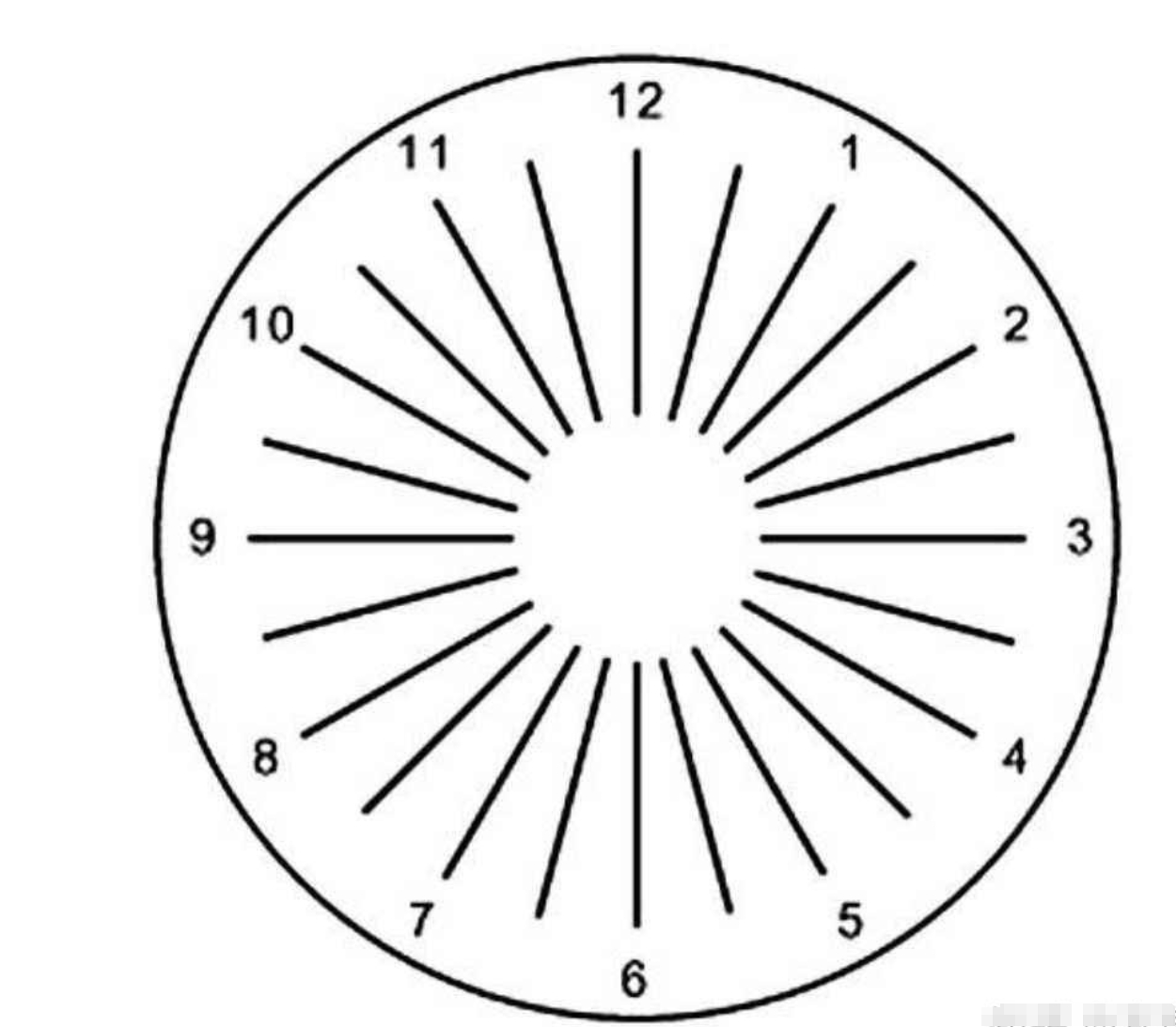
This astigmatism chart is used to test for astigmatism.
If there is astigmatism, we should then use the JCC to accurately measure the magnitude and direction of your astigmatism.
The cross - cylinder on the phoropter is used to determine the direction and magnitude of astigmatism by flipping and comparing the two sides.
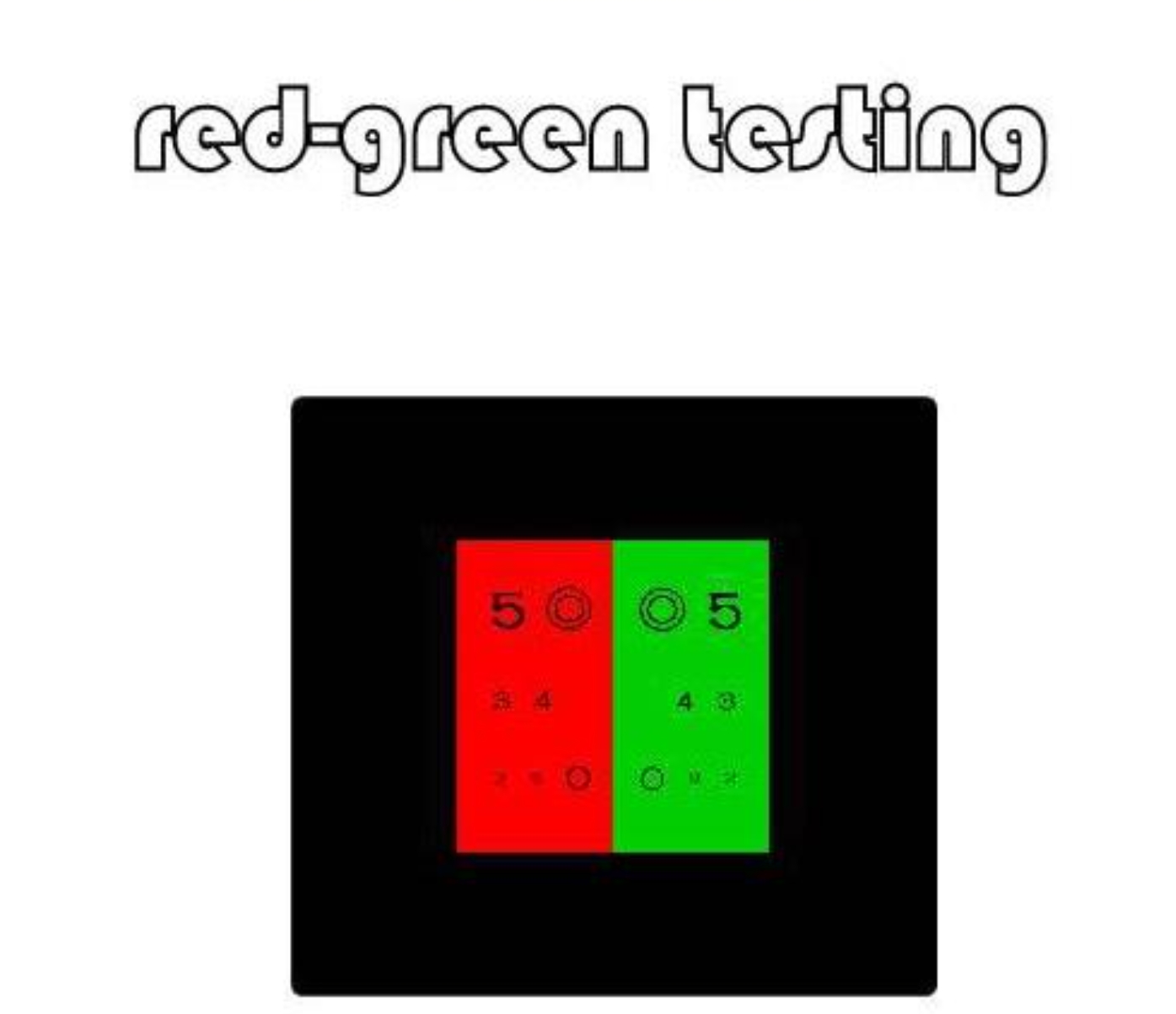
The red - green visual target contrast test is mainly to check whether the degree is over - corrected. If the numbers in the green area are clearer than those in the red area, it means the myopia degree is too high and needs to be reduced. If the numbers in the red area are clearer than those in the green area, it means it is still under - corrected.
Finally, the dominant eye is tested, and based on the dominant eye, binocular balance is achieved, maintaining the vision of both eyes as clear as possible. If it's really impossible to make them equally clear, then keep the dominant eye clear, and the difference between the dominant and non - dominant eyes should be minimized.
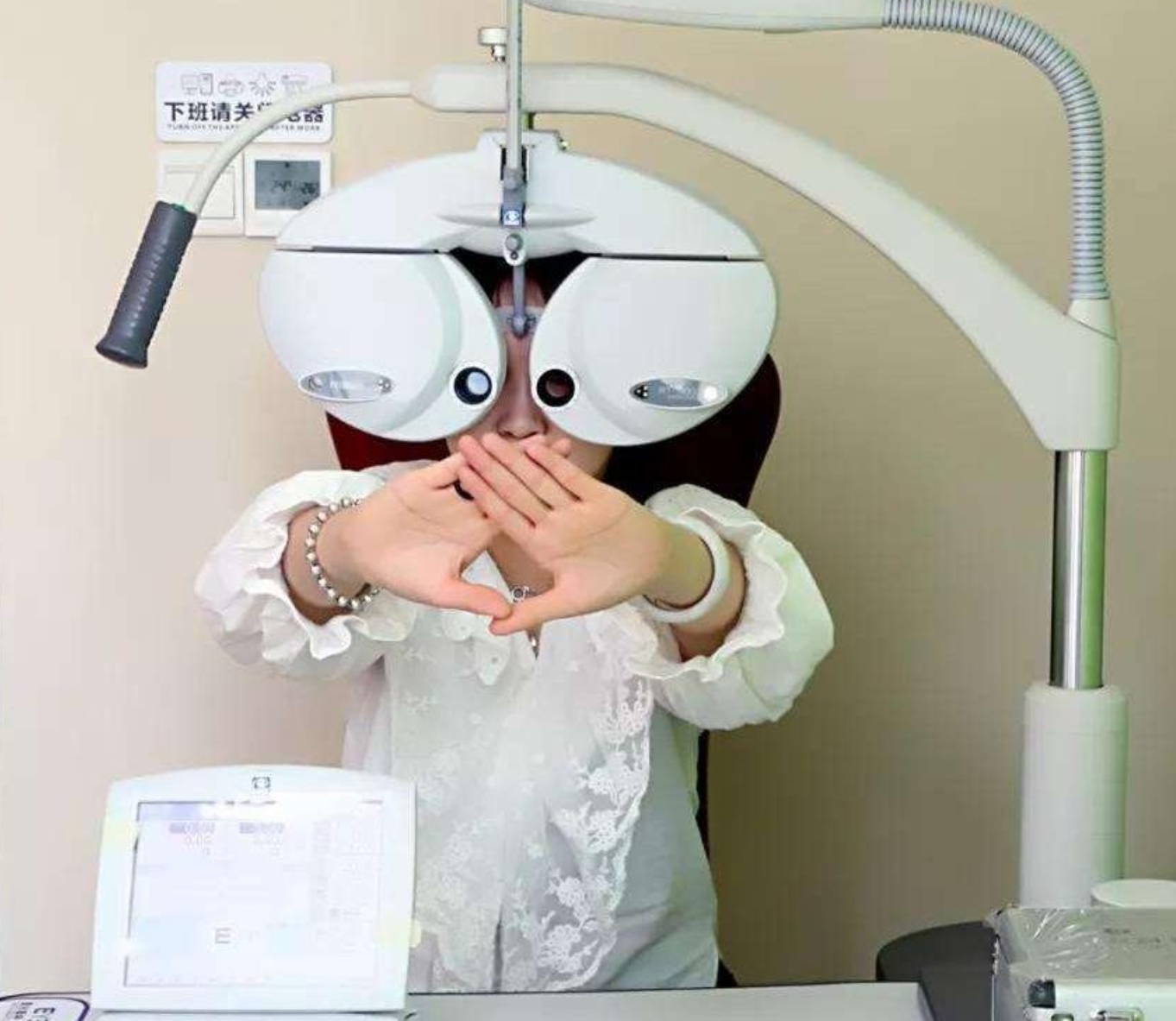
The dominant - eye test is different for everyone, similar to the concept of being left - handed or right - handed.
Note: It has been found that many hospitals or optical stores have shortened the optometry process. They just do a computerized optometry + using a stick to point at the visual targets up, down, left, and right, and then quickly determine the degree. If you encounter such optometry, it is recommended to go to another place for re - verification. Although some optometrists with very high skills and rich experience can do a good job with the trial - lens optometry, they are in the minority. In fact, most of them just want to be quick and save time, which has nothing to do with technology.
IV. Binocular visual function test
The two eyes of a person do not simply work as a superposition of monocular vision. Instead, they work together to provide a good stereoscopic visual experience based on the binocular accommodation and movement functions.
The examination of the eye's accommodation and movement functions is called the binocular visual function examination, which includes multiple tests such as NRA (Negative Relative Accommodation), PRA (Positive Relative Accommodation), BCC (Bifocal Cross - Cylinder), and measurement of convergence ability.
The previous optometry only determines the degree needed for the eyes to see clearly, addressing the issue of clarity.
However, for the normal operation of the eyes, not only do both eyes need to see clearly, but they also need to converge, accommodate, and fuse images according to different distances. The visual function examination checks the ability of the two eyes to work together.
So what is the significance of the visual function examination?
By examining the binocular visual function, we can clearly understand the customer's binocular convergence position, binocular positive and negative accommodation abilities, accommodation amplitude, accommodation speed, and fusion ability. Then, according to the visual function situation, we can modify the binocular prescription obtained in the third step, making the two eyes cooperate more comfortably in different environments and at different distances.
Note, it's about comfort, not just clarity. It's what customers often say, that this pair of glasses is very comfortable to wear and not easy to cause fatigue.
Even for the same person with the same myopia degree, if the visual functions are different, the final corrected eyewear prescription or vision solution may be different, and the final eyewear prescription will be different.
Here are a few examples to help you understand.
-
If there is unrelaxed accommodation (low NRA), it is necessary to relax the accommodation, reduce the prescription, and re - optometry, or it may indicate under - correction. If NRA is high, it may indicate over - correction, and the degree needs to be reduced.
-
If the accommodation ability is poor (low PRA), anti - fatigue glasses can be prescribed along with accommodation training. Children and adolescents are more likely to have an increase in degree.
-
For high AC/A (Accommodative Convergence to Accommodation ratio) and convergence excess, the degree should be reduced or progressive lenses should be prescribed.
-
For convergence insufficiency, it is best to fully correct, not reduce the degree. Glasses must be worn for near - viewing, and convergence training should be increased.
Of course, some people say that the visual function examination is not a mandatory item, because doing a full set of examinations takes a lot of time. I think we can add examination items according to the interview with the customer, such as positive and negative relative accommodation, AC/A, and the eye position for far and near viewing, especially the eye position, which is better to measure.
The visual function examination can not only optimize the final eyewear prescription but also help analyze the situation of the eyes, especially the reasons for the increase in degree.
If the optometrist takes the initiative to test these visual function items for you after measuring the degree to optimize your eyewear - fitting degree, I think he is very professional. Now many stores have separate optometry packages, and generally, the packages with visual function tests are a bit more expensive, indicating that the visual function test has certain positive significance for optimizing the eyewear prescription.
V. Slit - lamp examination - simple eye disease screening
Although the examination of eye diseases has nothing to do with measuring the degree of the eyes, basic eye disease screening is very helpful for customers to understand their eye health, especially for customers who wear contact lenses.
Why do we do a slit - lamp examination?
To provide customers with healthier optometry advice.
The specific content and process of the slit - lamp examination are described in detail in another article of mine, so I won't repeat it here.
Friends who want to know can click on the following link:
What kind of optometrist is a responsible one?
Everyone who buys glasses hopes to meet a good optometrist. However, in fact, optometrists are in short supply in China, and good optometrists are even more scarce.
Mainly because there was no ophthalmic optics major in our country before. Although many junior colleges and vocational colleges have opened this major now, compared with the growing number of myopic people, optometrists are still in short supply.
Even in recent years, many schools have opened the ophthalmic optics major. However, a good optometrist is not just someone who graduates after two years of study. Because optometry is an experience - based skill. It requires time to temper, accumulation of cases, repeated practice, and even reflection on many failed cases to become an experienced optometrist. Time is of particular importance.
If you want to quickly select a good optometrist, you can initially screen from the level. This method may not be completely accurate, but the probability of success is relatively high.
Now optometrists are divided into five levels from high to low, and the time required also decreases accordingly. They are national first - level optometry technician, national second - level optometry technician, national senior optometrist, national intermediate optometrist, and national junior optometrist.
Although now, as long as one has some working experience, they can basically pass the optometrist certification exam. But at least there are restrictions on the working years. Especially for the technician level, in addition to passing the exam, there are requirements for working years and education background. At least a junior college degree is required. It takes at least eight or nine years for a technician - level optometrist to emerge, and they have a long working time and a large number of optometry cases.
Don't laugh. In fact, there are many optometrists with only a junior high school or even a primary school education. It's true.
Basically, choosing an optometrist with an intermediate or senior optometrist level, or a national second - level or first - level technician level, the probability of error is very low, and they can measure the actual degree of the eyes.
Why not say accurate? Because even the most skilled optometrists may make mistakes sometimes.
I'll briefly talk about my own thoughts on optometrists for your reference.
In my mind, I divide optometrists into three types.
The first type: Those who can provide an "optometry prescription" according to the standard optometry process.
These optometrists can, based on their training knowledge, use computerized instruments and phoropters to detect the customer's actual eye degree, that is, the actual situation of the customer's eyes. In other words, they prescribe the degree according to what they measure. They can do basic optometry and measure the degree.
The second type: Those who can provide a "life prescription" according to the customer's actual eye situation.
Optometrists of this level will fully understand the customer's glasses - wearing history
If you think what I wrote is good, remember to subscribe to our website! So that you can enjoy the latest discount information.