Every parent hopes that their children are flawless, and it's the same when it comes to myopia. No parent wants their children to wear glasses because of myopia at an early age. However, in real life, quite a number of parents actually have a fluke mentality when they first find out that their children are myopic.
When dealing with their children's myopia, they hesitate and waver. Many children with high myopia are the result of their parents' "wait-and-see" attitude. According to statistics, 80% of children with high myopia suffer from their parents' "waiting". Some parents think that their children are still young and they will correct their vision when the children grow up a bit.
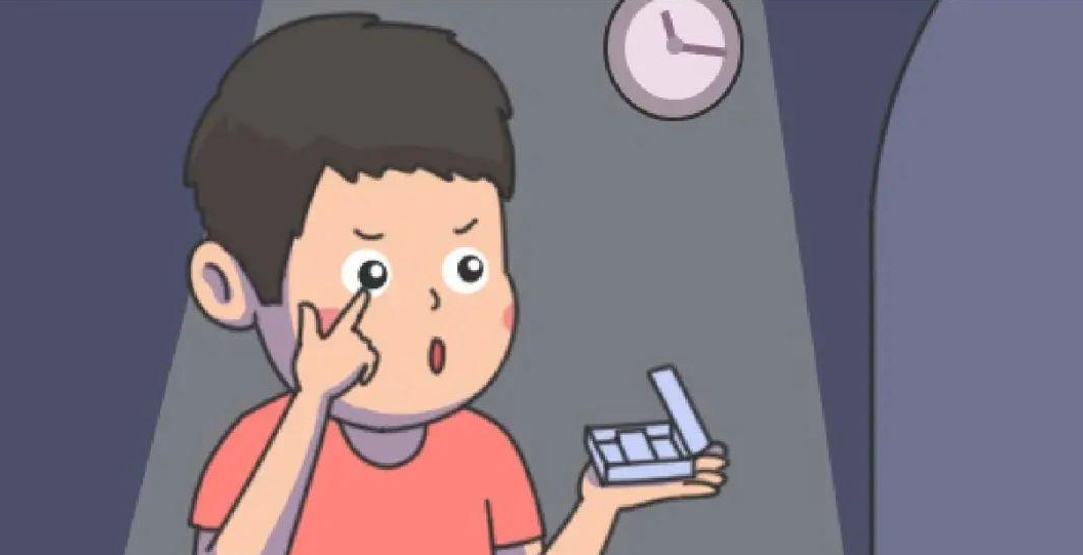
As a result, the children miss the better correction time, and their vision gets worse and worse until they develop high myopia. It should be noted that high myopia (myopia over 600 degrees) is a major culprit for eye complications. Eye diseases such as floaters, cataracts, retinal detachment, glaucoma, and vitreous lesions are all common complications of high myopia. Patients with high myopia should avoid strenuous exercise, otherwise, it will increase the risk of retinal detachment and other diseases.
Three Development Stages of Myopia
- Pseudomyopia StageIn the pseudomyopia stage, if certain scientific eye training methods are adopted to relieve the spasm of the ciliary muscle and restore its regulatory function on the lens, the eyeball can return to its original state, block the development of myopia, and avoid the transformation from pseudomyopia to true myopia. If it is not well prevented and controlled at this time and leads to the elongation of the eye axis, it will gradually evolve into true myopia. Generally, if parents can detect and handle it in time when children are in the pseudomyopia stage, it can be controlled.
- True Myopia Stage
In patients with true myopia, the eye axis is longer than that of normal eyes. For every 1 mm increase in the eye axis among myopic patients, the myopia degree increases by 300 degrees. Usually, myopia below 300 degrees is classified as low myopia, myopia between 300 and 600 degrees is called moderate myopia, and myopia above 600 degrees is referred to as high myopia. The characteristic of myopia development in children and adolescents is that it progresses rapidly, with an average annual growth rate of 75 to 150 degrees until the age of 18! Some even have an annual growth rate of over 200 degrees! - High Myopia Stage
As the eye axis of adolescent myopia patients grows, the anteroposterior diameter of the eyeball continues to expand. During the process of eyeball enlargement, the sclera and choroid can grow continuously according to the internal signals of the eye, but the retina cannot grow accordingly. In order to adhere to the enlarged sclera and choroid, the retina will have many cracks or lattice degeneration in the peripheral part, creating precursor lesions for future retinal detachment.
How to Effectively Inhibit the Increase in Myopia Degree?
Currently, clinically, for effective myopia prevention and control, in the "prevention" stage, it is to increase the effective outdoor activity time and then limit the close-up eye use load. In the "control" stage, generally, when it is found that a child has myopia, two aspects need to be considered.
The first is that after wearing glasses, the child should be able to see clearly, that is, the degree should be appropriate.
The second is that after wearing these glasses, they also have a certain effect of inhibiting the progress of myopia. Among the glasses with the effect of inhibiting the progress of myopia, some frame glasses with special optical designs are more commonly used in clinical practice. For example, myopia correction lenses with peripheral defocus correction have been clinically proven to have the effect of inhibiting myopia.
In addition, combined with the living needs of children, orthokeratology lenses are also relatively widely used and have certain clinical experience. Because orthokeratology lenses don't need to be worn during the day and are worn when sleeping at night, they get rid of the inconvenience brought by wearing frame glasses during the day in daily life. This is considered in combination with the living needs of children and also has a good effect on inhibiting the increase in myopia.
There is also low-concentration atropine, an eye drop that can effectively inhibit the increase in myopia, which has been applied in recent years. Clinically, we usually use two concentrations, 0.05% and 0.01%. Generally, when using low-concentration atropine, it is recommended to use it for 1 to 2 years to help children get through the stage with the fastest continuous increase.
When children first become myopic, they are mostly in the pseudomyopia stage, which is the golden period for correction. Many parents don't start to pay attention to their children's vision until the children can't see the blackboard clearly.
However, by the time the children can't see the blackboard clearly, they basically need to wear glasses with about 200 degrees. What's more, some children even have a myopia degree as high as over 500 degrees. When children just show signs of myopia and it is handled in a timely manner, they can recover quickly.
Once myopia is formed, it is like a fierce beast, with an average annual increase of 75 to 150 degrees! Early prevention, early detection, and early correction are relatively appropriate solutions for solving adolescent myopia.
If you think what I wrote is good, remember to subscribe to our website! So that you can enjoy the latest discount information.