Misunderstanding 1: Using eye drops whenever your eyes feel a bit uncomfortable.
This is extremely wrong!
In the outpatient clinic, we have encountered quite a number of such patients. At first, when their eyes were a bit red and itchy, they saw a doctor and used the hormonal eye drops prescribed by the doctor, and the symptoms were relieved. But when the same situation occurred again after some time, they were too lazy to see the doctor again. Instead, they used the medicine by themselves at home or bought the same eye drops from the pharmacy and used them on their own.
Dear friends, this is absolutely unacceptable!
We doctors have come across cases where patients developed hormone-dependent glaucoma and even went blind due to long-term self-use of hormonal eye drops.
Think about it. The causes of eye discomfort may not be the same every time. The type of eye drops needed and the duration of use are also different. So, when you feel uncomfortable, it's better to see an ophthalmologist instead of randomly using eye drops at home!
Misunderstanding 2: Not knowing exactly where to drop the eye drops.
Eye drops should not be dropped onto the black part of the eye (the cornea). Instead, you need to pull down the lower eyelid and drop the eye drops into the conjunctival sac below the eye.
Drop them here!
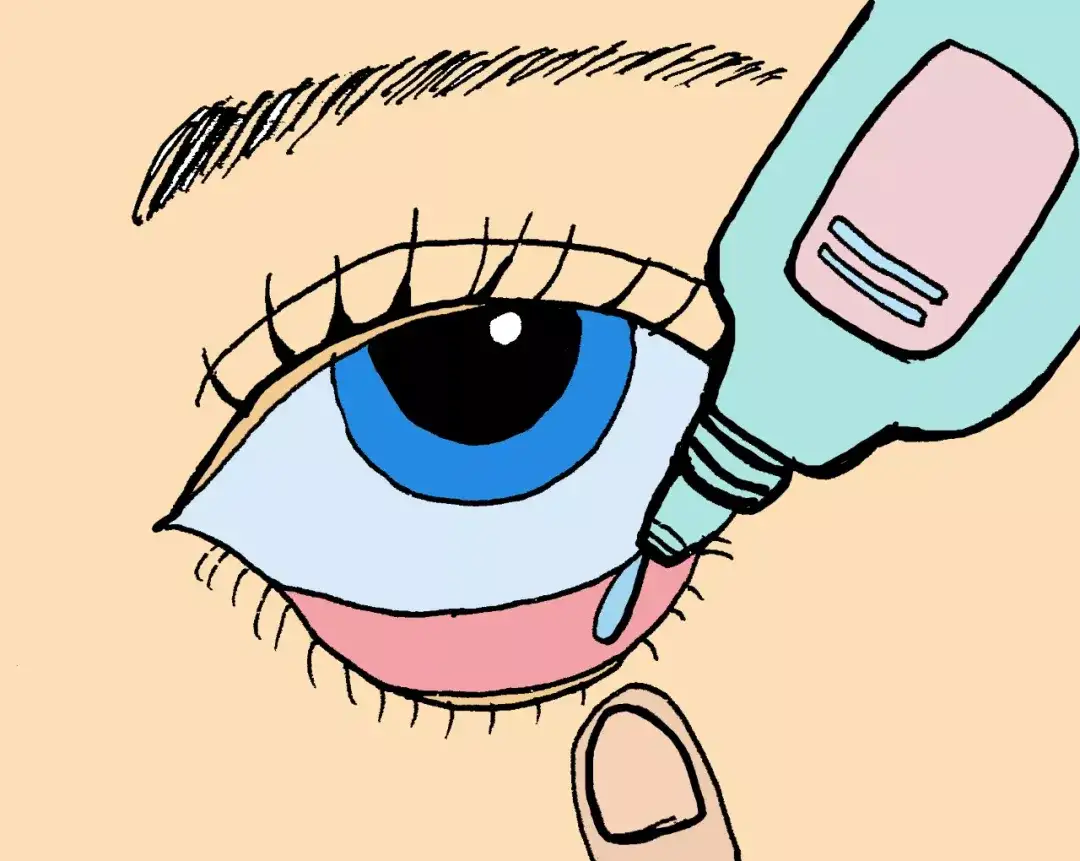
Because the cornea, which is the black part of the eye, is rich in a large number of trigeminal nerve endings and is very sensitive. If the eye drops are dropped onto the cornea, your eyes will immediately feel uncomfortable.
Think about it. In the past, when you dropped eye drops onto the eyeball, didn't your eyes reflexively close? And once you close your eyes, the eye drops may be squeezed out, which means you've dropped them in vain!
Misunderstanding 3: Thinking that dropping a few more drops of eye drops will ensure that some of them will get in.
Many people will ask ophthalmologists in the outpatient clinic: How many drops of eye drops should be used at a time?
When used correctly, one drop is enough!
Because the volume of one drop of eye drops is definitely larger than the volume of our conjunctival sac. If you use too many drops, they will just flow out and be wasted! Moreover, even if you pour the whole bottle in, it will still have the effect of only one drop!
Misunderstanding 4: In order to aim accurately when dropping eye drops, holding the tip of the eye drop bottle close to the eyes.
No! Whether the eye drops have been used by others or are for your exclusive use, it's not okay! Whether it touches the eyes or the eyelashes, it's unacceptable! Because once the tip of the bottle touches the patient's eyelashes or skin, the eye drops will be contaminated. Wouldn't it mean that you are dropping contaminated eye drops into your eyes the next time you use them?
The correct operation is: Hold the bottle in the air, with the tip about two to three centimeters away from the eyes. After dropping the drops, quickly put the cap back on!
Misunderstanding 5: Should you close or open your eyes after dropping eye drops?
A: Surely you should close them. Sometimes you can't even open them if you want to!
B: I think you should open them. Only by opening them can the eye drops be absorbed. If you close them, won't the drops flow out?
The correct action is: After dropping the eye drops, gently close your eyes (remember, gently! Closing your eyes forcefully will not only squeeze out the eye drops but also easily cause wrinkles!). At the same time, gently press the inner corner of the eye with your fingers for two or three minutes. This can both reduce the amount of eye drops drained through the tear ducts, increasing the curative effect, and reduce the side effects of the medicine on the whole body.
Misunderstanding 6: When you need to use multiple eye drops, can you use them randomly or is there a specific order?
If you need to use several kinds of eye drops at the same time, there is no specific order. It doesn't matter which one you use first or second.
However, it should be noted that the time interval between using two different eye drops must be more than five minutes. If the time interval is too short, the previous eye drops haven't been absorbed yet, and the ones dropped later will wash out and dilute the previous ones, which is also like dropping them in vain!
Misunderstanding 7: Not knowing whether to use eye drops or eye ointment first.
If the doctor prescribes both eye drops and eye ointment, you should use them like this: First, use the eye drops, and then use the eye ointment ten minutes later.
If you use the eye ointment first and then the eye drops, the eye drops will easily dilute the eye ointment! And the eye ointment will be used in vain!
Misunderstanding 8: Thinking that eye drops can be used as long as they are within the expiration date.
This is also a common misunderstanding among many patients. We doctors often encounter some elderly people in the outpatient clinic who are still using eye drops that were opened one or two years ago. Dear friends, most eye drops can be used within one month after being opened. Some small-dose eye drops without preservatives can only be used once after being opened, and very few specially packaged eye drops can be used within three months after being opened.
However, to know exactly how long the eye drops you are using can be used after being opened, you need to carefully read the instructions first and follow the instructions!
Because after being opened and in contact with air for a certain period of time, bacteria will grow in the eye drops. Don't think about not wasting them and keep using the eye drops that have expired for a long time!
It's a small thing if the eye drops don't work after you use them. But delaying or even worsening the condition is a serious matter!
Misunderstanding 9: Just casually putting the eye drops on the cabinet at home.
Although I know that you won't read the instructions, from now on, please read the instructions after buying eye drops. For example, some eye drops need to be refrigerated.
Misunderstanding 10: Using artificial tears whenever your eyes feel uncomfortable.
No! Artificial tears are substitutes that mimic the components of human tears and can play a role in moisturizing the eyes. In particular, patients with Sjogren's syndrome often use them because their eyes are often dry. But now some people use artificial tears as a "health product" to relieve eye fatigue in daily life, which is also not okay!
After all, artificial tears are also a kind of eye drops, and commonly used artificial tears usually contain preservatives. Long-term use of them will also do harm to the eyes. So, even for artificial tears, it's recommended to use them under the advice and guidance of doctors.
If you think what I wrote is good, remember to subscribe to our website! So that you can enjoy the latest discount information.