Simply saying whether it's good or bad is, in my opinion, unscientific. It depends on the specific situation. Next, Glasses Magic will break down the common types of myopia so that you can match your situation and directly check which type you belong to.
People with Moderate to High Myopia (with myopia degree above 200 degrees)
People within this range, you'd better wear your glasses all the time and make sure to wear them for a long period!
Many people must have a question: Why do people with a 200-degree myopia also need to wear glasses?
People may think that 200 degrees of myopia isn't high. However, according to the adjust formula A = 1/D, for people with 200 degrees of myopia, objects will start to look blurry when they are more than 50 centimeters away.
When objects beyond half a meter are already blurry, this kind of blurriness will aggravate eye fatigue and increase the burden on the eyes. In order to see clearly, people will squint their eyes or squeeze their eyeballs to look at things. All these kinds of eye fatigue will lead to an increase in the degree of myopia and also consume the eyes themselves.
Wearing glasses for a long time for those with moderate to high myopia can relieve eye fatigue and slow down the increase in the degree. Moreover, wearing glasses can not only make vision clear but also make a person's adjustment close to that of normal people, enabling the convergence function and the adjustment function to be coordinated and eliminating eye fatigue to the greatest extent.
Although people with 200 degrees of myopia can see clearly when looking at nearby objects like reading books or using a computer without wearing glasses, due to myopia, the eyes hardly use any adjustment when looking at nearby objects. As a result, the convergence function of both eyes is weakened (if there's no adjustment, the eyes can't converge inward). The adjustment and convergence are completely out of balance, which makes it more likely for the eyes to deviate outward and cause strabismus or a large amount of exophoria.
I've met quite a number of adults whose eyes are very fragile and sensitive and are more prone to visual fatigue. When looking at nearby objects, their eye positions show a large amount of exophoria. A large part of them is caused by wearing progressive lenses for a long time when they were teenagers. Progressive lenses were very popular ten years ago.
Progressive lenses mean that the upper part of the lens is for distant vision with a certain degree, and when looking at nearby objects, the degree is reduced by 150 degrees. It's just like people with 200 degrees of myopia can see clearly when wearing glasses to look at nearby objects.
At first, many experts believed that the main reason for the increase in myopia was excessive adjustment of the eyes when looking at nearby objects. So they designed these glasses that hardly use any adjustment when looking at nearby objects.
After so many years, numerous cases have proved that completely relaxing the adjustment when looking at nearby objects can't relieve the increase in the degree. Instead, it will make the eye position abnormal when looking at nearby objects, cause greater visual fatigue, and even make the degree increase faster. These lenses are only suitable for a small number of myopic people with excessive convergence and esophoria, and this group of people is not large, with a very small proportion.
Since this article is written for many lay friends, I'll draw a diagram for easy understanding so that you can get a general idea:
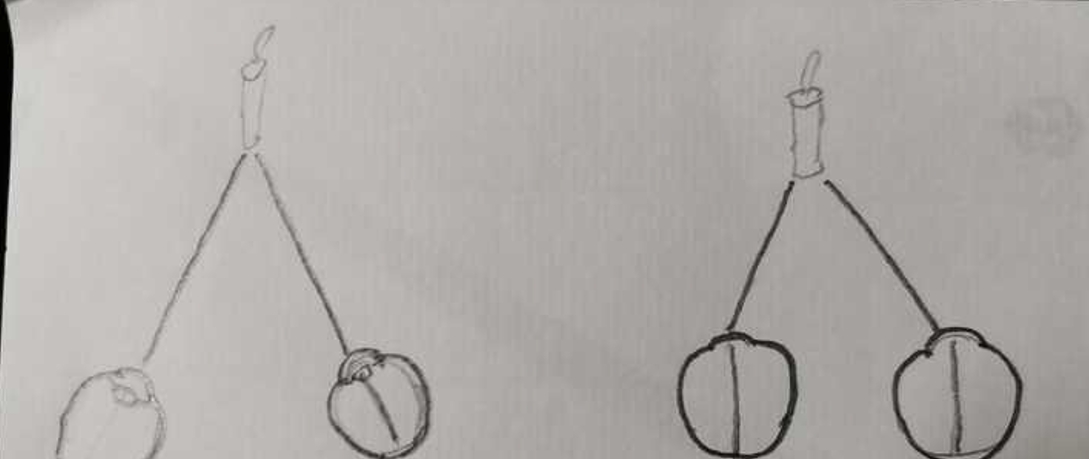
The left side shows people without myopia looking at nearby objects, and the right side shows people with moderate to high myopia looking at nearby objects without wearing glasses.
People with Low Myopia (with myopia degree between 50 and 200 degrees)
Whether people within this degree range should wear glasses, especially when looking at nearby objects, is the most controversial issue.
First of all, to put it bluntly, if you can't see clearly in the distance, you must wear glasses. There's no controversy about this. The state of being unclear and blurry will make the human eyes uncomfortable, which will increase the burden on the eyes and cause the degree to increase.
Moreover, because the degree is low, many people just squint their eyes and press their eyeballs a little bit to see clearly. So this method has become the first choice for many people because it's simple, convenient, and has an immediate effect.
Yes, it has an immediate effect. Just squint your eyes and you can see clearly. However, due to long-term pressure on the eyeballs, it's also quite direct to cause asymmetric corneal curvature and induce astigmatism.
In order to maintain a completely relaxed and clear state when looking at distant objects, you must wear glasses when looking at distant objects, especially when you need to drive or look at the blackboard. In this way, you can not only get clear vision but also stabilize the degree and prevent the increase in astigmatism.
Many people with low myopia say that they can see when driving. Well, that's just being able to see, not being able to see clearly.
According to my usual observation, there are a lot of such people, really a lot. That's why I'm always very careful when driving. Just because you can see clearly doesn't mean others can.
So should people with low myopia wear glasses?
This is the most controversial.
My answer is that it depends on the situation. We should analyze it according to the specific situation. This is scientific, instead of relying on feelings or listening to what some friends say.
The first situation: For myopic friends with poor accommodation, insufficient accommodation flexibility, exophoria when looking at nearby objects, and insufficient convergence function, you must wear glasses when looking at nearby objects, and don't deliberately reduce the degree. If possible, you can combine it with accommodation training.
The second situation: For myopic friends with excessive accommodation, accommodation tension, accommodation spasm, esophoria when looking at nearby objects, and excessive convergence, you can choose not to wear glasses or reduce the degree when looking at nearby objects.
Many friends will say that this is too professional. I don't even know which type my eyes belong to.
It's recommended that those who have the conditions go to the optometry center of a hospital to take a visual function test and then you'll know.
Although it's very simple to test visual function nowadays, I believe that the vast majority of people have never taken such a test. Are there any empirical rules that can be referred to?
Yes, there are.
For friends who don't have time to do such a detailed eye examination, based on my usual experience, I'll give a general opinion. The reason why I say it's general is that these are also empirical rules and can't guarantee 100% accuracy.
The eye conditions of the vast majority of myopic people belong to the first type, that is, accommodation lag plus exophoria. Although you can see clearly whether you wear glasses or not, after wearing glasses, the eyes are adjusted and the eye positions are converged inward. The adjustment and convergence are relatively balanced. Generally speaking, it's more beneficial than harmful to the eyes. So just wear them. There's no harm.
For friends with a relatively low degree, such as those with myopia within 100 degrees, I think regardless of whether their eyes are in the first situation or the second situation, because the variables caused are very small (within 100 degrees of myopia), the impact of potential accommodation and convergence imbalance is very small. It'll be more comfortable for your nose and you'll feel more at ease if you don't wear glasses.
So I think you can choose to wear them or not. You can make a judgment based on your own comfort level and make your own decision according to your mood. If you forget to take them off when looking at the blackboard in class one day, don't worry about whether the degree will increase because your variables are really very small.
Astigmatism and Hyperopia
Always wear glasses whether looking at distant or nearby objects.
Astigmatism is not an accommodation problem, so the visual fatigue caused by astigmatism exists all the time whether looking at distant or nearby objects.
Astigmatism mainly brings about double images. This kind of visual torture is even more maddening than blurriness. That feeling of being clear yet not clear, blurry yet not blurry, with double images all the time and the eyes constantly adjusting is really annoying.
So I suggest that friends with astigmatism should wear glasses whether looking at distant or nearby objects.
Astigmatism mainly shows as double images and is very likely to cause visual fatigue.
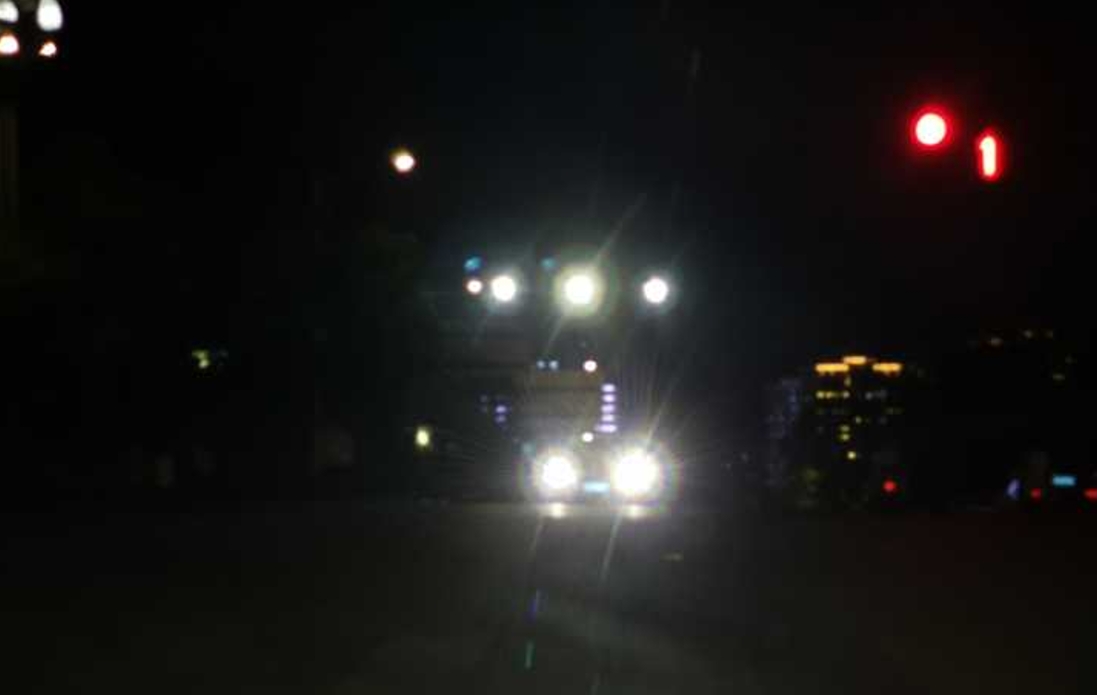
Without astigmatism when looking at distant objects
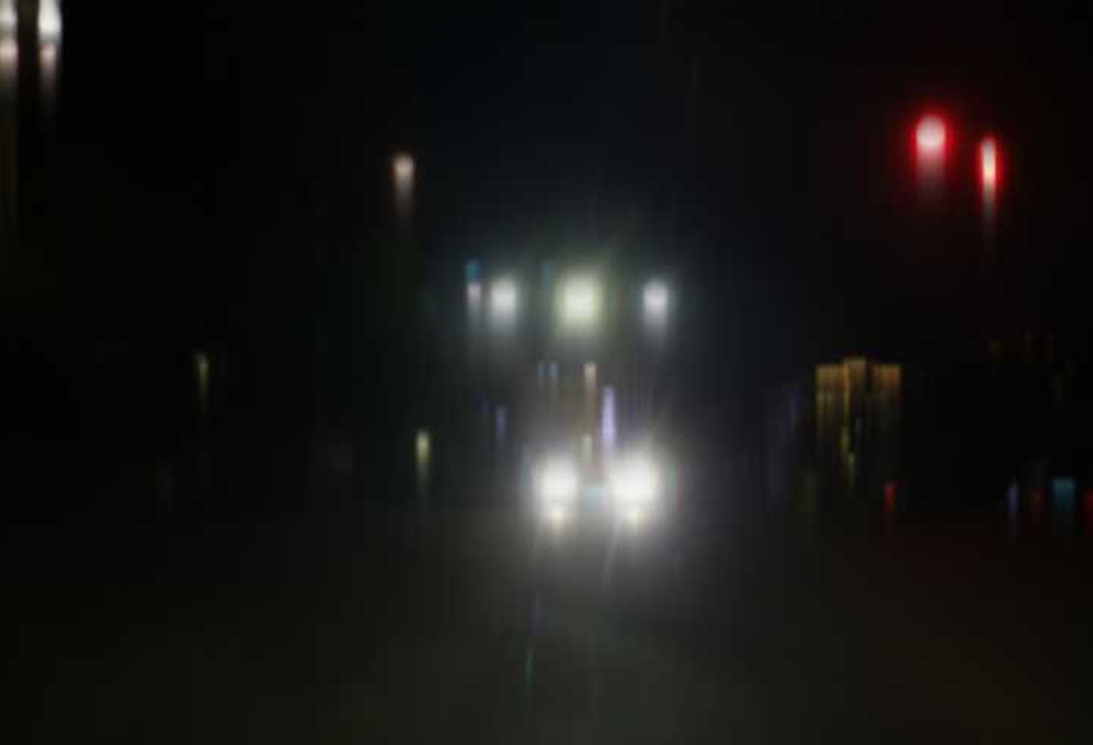
With astigmatism when looking at distant objects
Hyperopia means that when parallel light rays enter the eyes, the focal point is formed behind the retina, and external objects can't form a clear image on the retina. Patients subjectively feel that it's blurry when looking at distant objects and even blurrier when looking at nearby objects.
Although mild hyperopia can be adjusted through the lens, the lens is constantly adjusting except when sleeping every day. Due to the long time of adjustment, the burden on the lens is still quite large. Because of the constant adjustment of the lens, it will also cause abnormal eye positions and aggravate visual fatigue.
As people grow older, the accommodation ability declines, and symptoms such as visual fatigue and blurred vision will become more and more serious. So my suggestion is not only to wear glasses for a long time but also to start wearing them early. There's no need to say much about moderate to high hyperopia. You must keep wearing them. Just look at Wang Feng and you'll know.
The above eye conditions should cover most people. Everyone can actively check which situation they belong to.
If you think what I wrote is good, remember to subscribe to our website! So that you can enjoy the latest discount information.