Recently, many people have been asking Glasses Magic this question. As a professional in the industry with over 10 years of experience, running an online store named Glasses Magic and also operating physical stores for a long time, having fitted tens of thousands of pairs of glasses, and being a glasses enthusiast myself who changes glasses every few months and buys new products from manufacturers as soon as they come out, I can't help but chip in and get these thoughts off my chest.
I've also tried on lenses from all major manufacturers currently, and have carefully compared and experienced each type. Maybe my experiences can help you, the reader, avoid some losses and pitfalls.
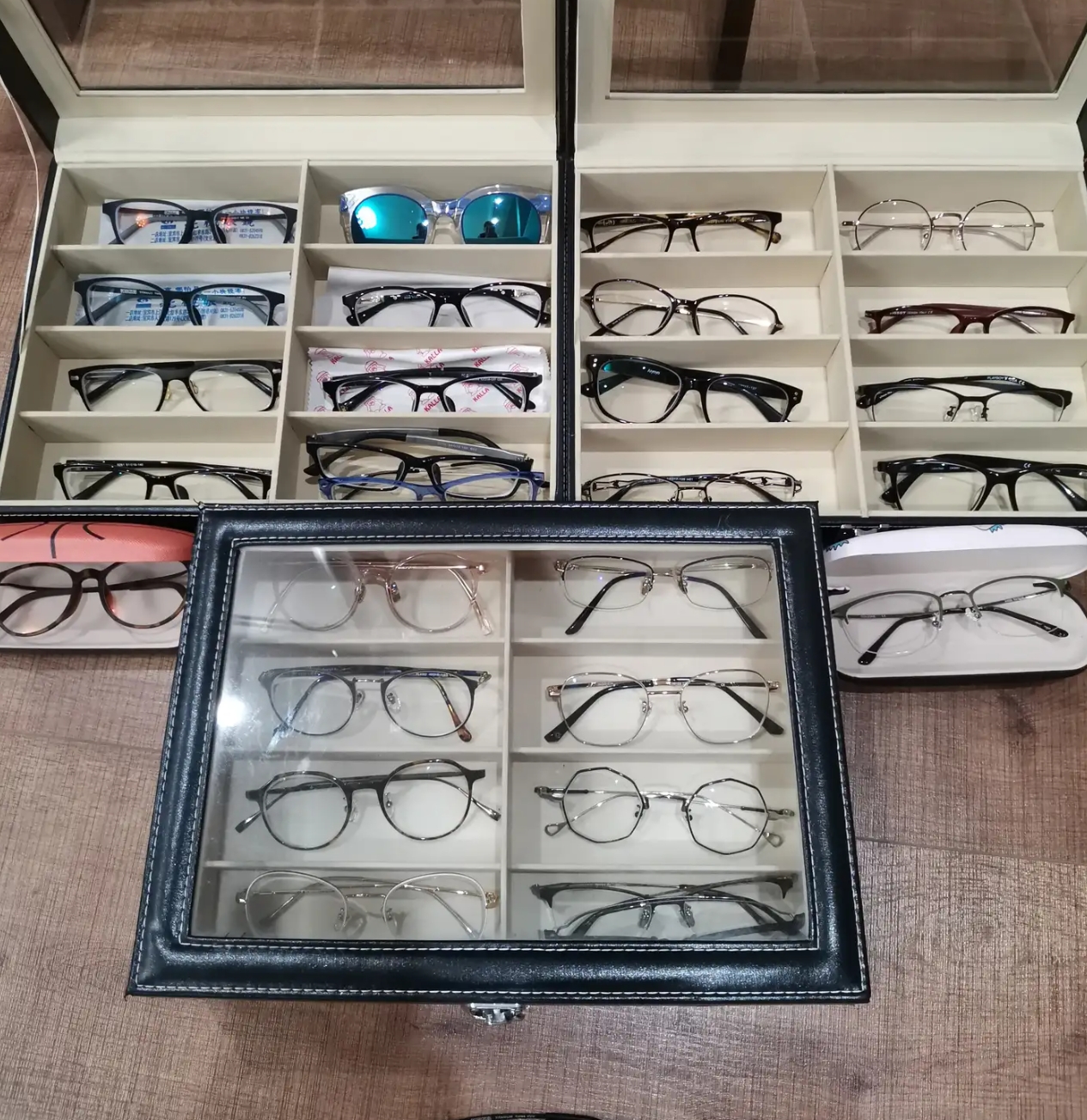
Some of the glasses I'm currently wearing.
When it comes to losses, I've seen so many cases of people getting the short end of the stick. And because I've been in this industry for years, I can share various stories within the industry with you.
I. Pitfalls in Optometry
1. Using Machine - generated Optometry Sheets for Glasses Fitting
With the rise of online shopping, some people buy lenses online. Since glasses are considered "optical pharmaceuticals," there is a high demand for prescriptions. Some online sellers, in order to make a sale, accommodate customers by using machine - printed optometry sheets for glasses fitting, which is extremely harmful. Machine - printed optometry sheets not only may not reflect the customer's true prescription for glasses, but sometimes they can even be wrong.
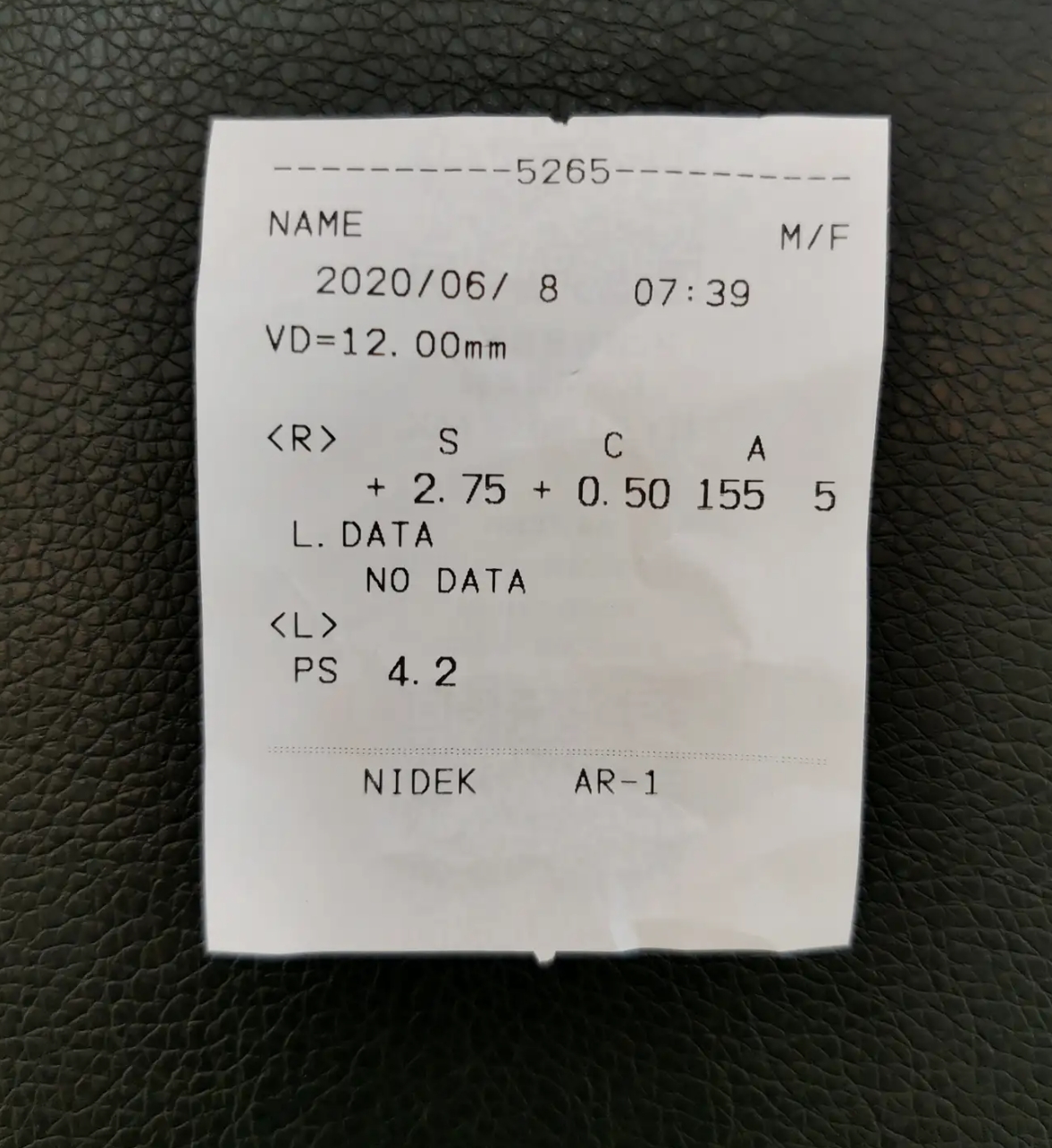
Never use such machine - printed optometry sheets for glasses fitting.
Now, there is an improper phenomenon in the industry. Once a customer feels uncomfortable wearing the glasses, they are told to wear them for a few weeks to get used to it. Usually, the discomfort caused by wearing new glasses will ease within two weeks. Whether it's online or in physical stores, if after one or two weeks, without checking for problems, ruling out factors such as optometry errors, assembly qualification, and frame adjustment, and still asking you to keep getting used to it, this is very irresponsible.
The human eye has a large tolerance. The tolerance and flexibility of the human eye are also very high. It's possible that the eyes will actively adapt to the wrong glasses parameters over time. So, if the glasses you're wearing make you uncomfortable next time, you should first re - check the optometry degrees and processing parameters. Only after ensuring there are no problems should you try to get used to them. And don't exceed two weeks.
If you're still uncomfortable after two weeks, consider the possibility of optometry or processing errors. Sometimes, you may need to adjust the prescription or change the glasses - fitting plan. At this point, be bold and ask to change the frame or lenses. No matter how professional or convincing the merchant sounds, don't believe them anymore and don't try to get used to it. Re - optometry, re - process, and re - select the frame, and your problem will be solved quickly.
How high is the tolerance of the human eye? I've even seen cases where the left and right eye degrees were reversed, and the merchant didn't detect it. Maybe to reduce their own losses, they asked the customer to keep getting used to it. As a result, the customer endured it for two years until the glasses broke and they had to get new ones to find out.
I've also seen many cases where the pupillary distance was unqualified, but the customer didn't notice. The customer was told to go back and get used to it, and after getting used to it, they really felt better and did adapt. The most exaggerated case I saw was a customer with reversed left and right eye prescriptions, and the merchant strongly insisted that the customer keep getting used to it. What happened? He actually got used to it in the end. But the damage to the eyes was already irreparable.
So, if you want to buy glasses online, you must have a very detailed glasses - fitting prescription. Machine - generated data is not suitable for glasses fitting, and diagnostic optometry data is also not suitable. Think about it, when buying glasses online, many parameters are difficult to measure, and it's hard to grasp the frame parameters.
If you don't accurately measure the basic glasses - fitting parameters, you'll have to get used to the ill - fitting glasses later. A detailed glasses - fitting prescription should at least include myopia/hyperopia degrees, astigmatism magnitude, axis, monocular pupillary distance, and dominant eye. When it comes to specific frame parameters, there are also monocular pupillary height and front tilt angle.
If you plan to buy glasses online, to reduce the discomfort caused by errors, be sure to find an optometry institution that can provide an accurate glasses - fitting prescription.
Be sure to pay for optometry. Optometry is a technical job and it's truly valuable. Don't be penny - wise.
Before buying glasses, it's best to ask the merchant about the after - sales policy. If you're buying glasses in a physical store, once you find that you need to get used to the glasses for a long time, more than two weeks, go back to the store immediately.
Don't force yourself to get used to uncomfortable glasses. Be bold and ask for a re - optometry and re - fitting. If there are problems, demand after - sales service. If it can't be solved, you can ask for a refund. This is why more and more people like to buy glasses online now, because the online service has long surpassed that of offline physical stores. Don't sacrifice your eye health to force yourself to adapt to inaccurate glasses fitting. Believe me, the human eye can really adapt. But if you wear glasses that don't suit you for a long time, it can cause eye fatigue at the least, affect normal eye visual function at worst, and even lead to an increase in myopia.
My advice: It's best to find an optometrist with an optometry qualification for optometry. The higher the level, the better. Choose a professional glasses store with a good reputation or a hospital with its own optometry center. Be sure to try on the glasses - fitting prescription repeatedly, including looking far and near. Confirm the clarity and comfort. If you find any problems during the try - on period, raise them immediately. Be bold to make demands, and try to describe your eye - using environment and vision needs in detail. Don't be afraid to ask the optometrist questions.
2. Objectively Viewing the Halo of Hospitals
Don't misunderstand me. I'm not saying that the optometry results from hospitals are inaccurate. I'm just teaching you how to tell if the optometry data you get is precise. Many people don't know that treating eye diseases and optometry are two different things. A director who is good at treating eye diseases may not be proficient in optometry.
As a result, many people get a glasses - fitting prescription from the hospital that is a combination of machine optometry and quickly - done procedures with a stick pointing up, down, left, and right in a batch. Even for people with astigmatism, the JCC (Jackson Cross Cylinder) fine - tuning may not be done. The axis is directly taken from the data printed by the optometry machine and placed on the trial frame, making it difficult to accurately measure the astigmatism.
It is recommended that if you want to go to the hospital for optometry, try to choose an ophthalmic hospital with its own optometry center. Remember not to go during peak hours, as you may be rushed through in a few minutes.
The optometry center is specifically designed to solve optical problems. In many ophthalmic hospitals without an optometry center, nurses are often asked to do the optometry. Coupled with the busy work in the hospital, the optometry process is often abbreviated. I'm not saying this applies to all hospitals, so you need to be careful to distinguish.
If we don't have enough professional ability to distinguish hospitals with precise optometry, then we should at least be able to tell which hospitals have abbreviated optometry. If the hospital's optometry only involves using a machine and a vision chart with a stick pointing up, down, left, and right, don't begrudge a few dozen yuan. Try another hospital.
There are quite a few hospitals that optometry like this, and they issue dozens or even hundreds of such prescriptions for glasses fitting every day. Surely, smaller hospitals and those in smaller cities may also optometry in this way. The larger the city, the more high - quality optometry resources there are, while in smaller places, the options are much fewer.
I've recently been to many hospitals for optometry experiences. My personal experience: The final optometry results were 25 degrees higher for each of my left and right eyes compared to my actual degrees, and the astigmatism axis differed by more than 15 degrees.
In fact, they could have been more accurate, and the hospital also has very professional comprehensive optometry equipment. But unfortunately, I saw that they had left these equipment unused, well - protected. It's really a pity. If the hospital could use the comprehensive optometry table, I believe they could measure the magnitude and axis of my astigmatism more accurately.
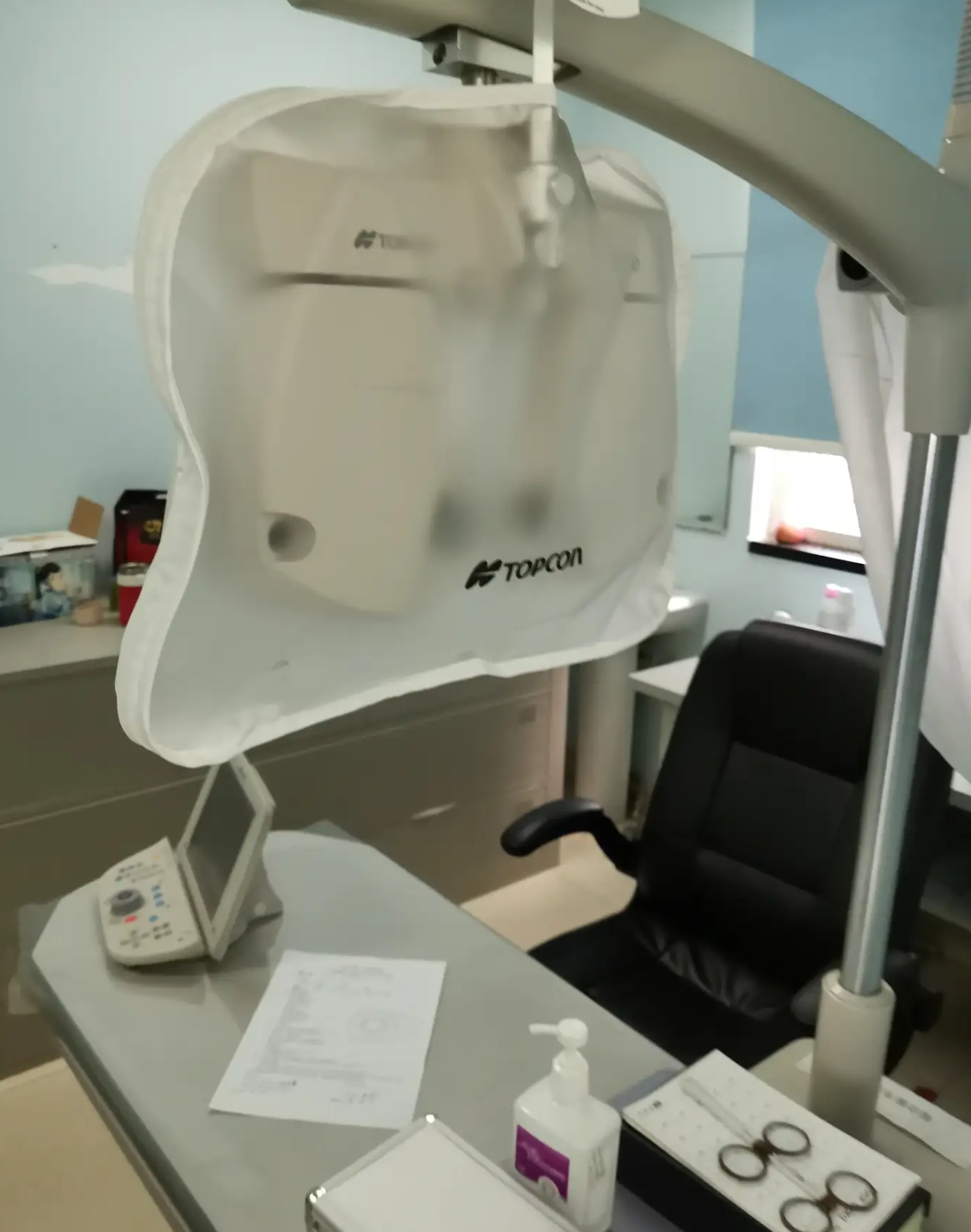
Suggestion: Don't overly trust the halo of hospitals. You should learn some knowledge to be able to tell which hospitals are abbreviating the optometry process. Especially during peak seasons like the start of the school year, many hospitals finish an optometry in less than 5 minutes, and many steps will be omitted, even in well - known hospitals because there are too many people!
It is recommended that you optometry at off - peak times or change to another optometry institution for cross - checking. Measuring multiple times will increase the probability of getting accurate results.
I've written an article about optometry. Although it's a bit subjective, it can at least let you know what items a professional optometry generally checks, helping you judge whether the optometry is abbreviated and giving you a better understanding.
How should a good optometry process be?
What should a good optometry process be like? Besides learning some optometry knowledge, regarding the business secrets of the industry, I'll reveal a bit to you. At least 80% of the glasses - fitting centers in hospitals are contracted by external glasses companies.
If you think the hospital prices are too high sometimes, it is recommended that you visit several places and compare. However, for friends with strabismus and amblyopia, I suggest you can get glasses in the hospital. If you think the price is too high, you can take the hospital's prescription to get glasses outside, but do visual stimulation training, treatment, and re - examination in the hospital.
Why? Because the field of strabismus and amblyopia is a bit chaotic outside. The essence of amblyopia training is glasses - fitting + training + stimulation, but this doesn't make much money. So, some institutions will add other profit - making projects, such as acupuncture, massage, various nutritional health products, and find ways to generate income.
Hospitals, at least mostly, won't induce you to buy various massage courses, all kinds of so - called magical moxibustion treatments, meridian treatments, magnetic therapies, or visual systems that are hyped up.
In fact, strabismus and amblyopia are just about glasses - fitting + visual stimulation training. Many of these additional projects are just for making money. For the rest of the myopic friends without eye diseases, getting glasses in the hospital may not be the best choice. Go to the hospital if you have eye diseases.
3. Don't Cheat for Degrees if You Don't Plan to Buy Glasses
Many people want to buy glasses online but don't have a glasses prescription, so they try to cheat for degrees at a glasses store. Yes, you read that right, not to get an optometry, but to cheat for degrees. They pretend to want to buy glasses to get an optometry, and then slip away as soon as they get their optometry degrees. Because many glasses stores now offer free optometry and will do an optometry to understand your eyes before selling you glasses.
Do you think you're smart? I advise you not to do this. The people in the glasses store have seen all kinds of customers. The moment you enter the store, even if you don't say a word, the salesperson can tell whether you're a real buyer or just browsing. As for customers trying to get degrees, any optometrist can see it clearly. If you were in their shoes, would you seriously finish the optometry?
How reliable is the optometry result? Would you still dare to use this optometry prescription to buy glasses? You originally wanted to save some money by buying glasses online and by getting a free optometry, but in the end, you sacrificed your health because of the rough optometry prescription. And what if some people get a wrong prescription? Wouldn't you have wasted both time and money?
Note: Now, some stores may not write down the complete optometry data for customers who don't buy glasses. There may even be some bosses who feel unbalanced, thinking that online shopping has taken their business, and deliberately write the prescription wrong, such as reversing the left and right eyes, confusing the optometry prescription with the glasses - fitting prescription, not writing the astigmatism, or using the cross - marking method.
I've found that many contracted - out hospitals or optometrists deliberately use the cross - marking method to mark the degrees. The same marking method can represent two completely different degrees.
To avoid losses during optometry, here are some suggestions for you: If you go to a glasses store for optometry, directly ask the store staff if you can pay for the optometry. You must pay for it. Now, some optometrists in stores have clear price tags.
You can pay for just the optometry, and I suggest you don't be penny - wise. Choose the more expensive option. The current charging standards for paid optometry in stores are often based on the qualifications of the optometry staff. For example, an intermediate optometrist may charge 30, and a first - class optometry technician may charge 100 - 200. The optometry experience of an intermediate and a senior optometrist may differ by more than 10 years.
It's definitely right to choose someone with a higher level. Although some people say that some certificates are easy to get by just paying money, which is indeed true. But those who have reached a senior level or above, at least one thing is certain. Their working years are basically more than three years, and those at the technician level have been in the industry for seven or eight years or more, and many are veterans with over ten years of experience.
Their optometry skills are definitely reliable. In the glasses industry, especially optometry, it requires time and the gradual accumulation of experience. If you go to the hospital for optometry, it's best to choose a hospital with its own optometry center. The general cost is from tens to a few hundred yuan, usually not exceeding 200 yuan. The same principle applies.
The more expensive it is, the more inspection items there are, the clearer your eye refractive state will be, and the more accurate the prescription will be for glasses fitting. As I said before, if you encounter a hospital that only does a quick machine - optometry and uses a stick to point up, down, left, and right for the optometry, I suggest you change to another hospital and have another optometry.
4. Don't Believe Salespeople Who Say You Don't Need an Optometry if Your Old Degree Still Works
Personally, I think the biggest advantage of offline physical stores is that they can issue a glasses - fitting prescription based on the customer's latest eye condition, just like eating watermelons. Each time, it's freshly picked from the field, and the stem is still fresh, ensuring the best and freshest taste.
However, sometimes some stores, for the sake of convenience, will directly ask if your old degree still works and if you can still see clearly. If you can still see clearly, they may say to just use the old degree for glasses fitting without making any changes.
In fact, the reason many salespeople say this is not that this degree is the best for you, but that they are too lazy to fine - tune the degree. And if the degree doesn't change, there is basically no need for an adaptation period in the early stage, so the complaint rate will be the lowest. In fact, when buying glasses, you must re - check the degree.
No one's degree remains the same forever. Even if the degree doesn't change, wearing different frames may require appropriate adjustments. Some people may have an unchanged degree, but the axis of astigmatism may change.
If you just use the old degree for glasses fitting, you'll miss the opportunity to get a more accurate degree and the best visual experience. Many store staff like to hear customers say to use the old degree for glasses fitting because they can do less work. People are naturally lazy. Of course, there are also many very responsible optometrists who will take the initiative to re - fine - tune the degree.
5. Don't Believe That Low Astigmatism Doesn't Need to Be Corrected or Can Be Under - corrected
Based on my usual observations, a large number of people are both afraid and reluctant to deal with astigmatism. When they hear salespeople say not to add astigmatism correction, they quickly nod in agreement. Salespeople may also tell you that your astigmatism is low and you don't need to correct it, and that it will be more difficult to adapt if you do.
In fact, the salespeople are just afraid that you may be uncomfortable at the beginning when wearing astigmatic glasses and that you may file a complaint. Moreover, optometry for astigmatic lenses takes more time, the processing of astigmatic lenses is a bit more complicated, and the probability of scrapping is higher. Many salespeople prefer to do things that are risk - free and simple. They are, of course, happy if you don't correct your astigmatism.
My advice: As long as you don't feel significantly uncomfortable, astigmatism should be fully corrected. Don't believe some salespeople who say that low astigmatism doesn't need to be corrected. Because when we do optometry, we not only need to ensure a visual acuity of 1.0, but also consider the clarity and sharpness when looking near, as well as the visual quality in poor light conditions, especially night vision, as many people drive at night.
Don't be afraid of astigmatism. Don't believe salespeople who say that astigmatism can be uncorrected or under - corrected. Correct it fully if you can adapt.


The night - time visual effect when astigmatism is uncorrected or under - corrected.
If you think what I wrote is good, remember to subscribe to our website! So that you can enjoy the latest discount information.