
First, let's talk about myopia.
It can be classified into high myopia, moderate myopia, and low myopia. Generally speaking, for moderate and low myopia (below 600 degrees), I don't think there's too much to worry about, and there's no need to have a psychological burden. Because for those with moderate and low myopia, the physiology and functions of the eyeball don't change too much, the corrected visual acuity is normal, and generally there won't be any too serious complications. Of course, the risks of retinal detachment and vitreous opacity are still slightly higher than those of normal people.
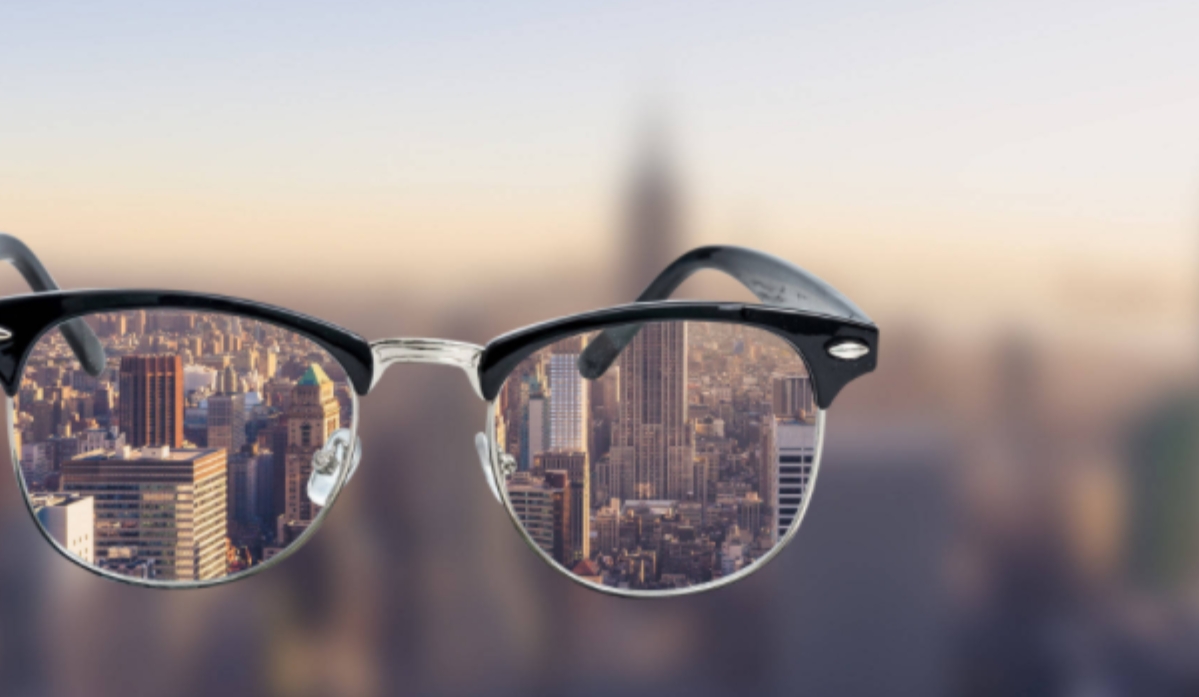
Low myopia, say around two or three hundred degrees, isn't entirely a bad thing in my opinion. Because when people get old, the degree of myopia can offset the degree of presbyopia. You may have heard the saying that "people with myopia won't get presbyopia." Of course, this isn't accurate, but there is indeed some connection.
Presbyopia is a physiological phenomenon. Just like people's skin loses its elasticity when they get old, the "elasticity" of the eye's accommodation decreases. When you can't focus on nearby objects, that's presbyopia (medically called presbyopia). For people with myopia, the focus is on nearby objects, so they can see nearby things clearly (but distant objects are blurry). Even when they have presbyopia, when looking at nearby objects like mobile phones, the objects are just on the focus, so of course they can see clearly without wearing glasses.
If there is no myopia, the focus is on distant objects, so distant objects can be seen clearly, and when looking at nearby objects, "accommodation" is needed to adjust the focus to nearby areas to see clearly. When people are young, the eye's accommodation ability is relatively strong. Without accommodation, they can see distant objects clearly, and in the accommodated state, they can see nearby objects clearly, just like a camera's automatic focusing.
As people get older, the accommodation elasticity of the eyes decreases or even disappears completely. At this time, when looking at nearby objects, presbyopia glasses (convex lenses) are needed for assistance to move the distant focus to the nearby area so that nearby objects can be seen clearly.
So it's not that people with myopia won't get presbyopia, nor that people with hyperopia will get presbyopia faster. However, for people with myopia, the symptoms of presbyopia are alleviated because of myopia. Or we can say that "taking off myopia glasses is equivalent to putting on presbyopia glasses".
The degree of presbyopia depends on the existing accommodation ability of the eyes (generally inversely proportional to age). The younger you are, the higher the accommodation ability is, and the less the degree of presbyopia you need, and vice versa. There is a formula in ophthalmology that can roughly estimate the degree of presbyopia corresponding to a certain age.
Now let's talk about high myopia.
Although it is also a type of myopia, the problems are much more serious. Most people's myopia is mainly "axial" myopia (myopia caused by the elongation of the eye axis). Generally speaking, high myopia refers to those with an eye axis exceeding 26 millimeters and a myopia degree exceeding 600 degrees (-6.00DS). For normal people, the eye axis is about 24mm. For every 1 millimeter increase in the axis length, the myopia degree increases by about 300 degrees. The longer the eye axis is, the higher the myopia degree is, the more obvious the pathological changes are, and the more complications there are. So high myopia is also called "pathological myopia".
The changes in the eyeball of high myopia can be compared to blowing up a balloon. The volume of the eyeball becomes larger (the axis length becomes longer, and the anteroposterior diameter of the eyeball becomes longer). The same amount of retinal tissue has to be spread on a larger inner surface area, so of course it will become thinner and is prone to diseases.
To make it easier to understand, you can also imagine making pancakes. For the same piece of dough, when it is made into a small pancake, it is thick and not easy to break, but when it is made into a large pancake, it is thin and easy to break. You can also think of it as clothing fabric. For normal people, the quality is good and not easy to break; for people with high myopia, the quality of the clothing is not good, and the fabric is very thin, so it is easy to break. These poor-quality changes in the retina are generally located in the peripheral part and the macula of the eyeball.
If we compare the retina to a target, the macula is at the center of the target. The posterior pole is roughly at the 8 - 10 rings, the equatorial part is at the 5 - 7 rings, the peripheral part is at the 2 - 4 rings, and there is no retina at the 1 ring. The lesions of high myopia are mainly in the peripheral part (2 - 4 rings) and the macula (the center of the target). The lesions in the peripheral part are generally degenerative lesions or holes, just like the pancake is broken.
Degenerative lesions can further develop into retinal holes. When the intraocular fluid flows into the subretinal space through the holes, retinal detachment will occur. Retinal detachment is like the wallpaper at home getting soaked and floating up. Even if the retina is repositioned after surgery, the retinal function cannot be fully restored, just like the wallpaper is wrinkled after drying. The main reason for the formation of holes is as mentioned before: the eyeball becomes larger → the retina becomes thinner and degenerates → degenerative lesions appear → retinal holes form → retinal detachment.
Since many lesions of high myopia are in the peripheral part, if the pupil is not dilated for examination, the peripheral part cannot be seen under a small pupil. So it is recommended that people with high myopia must have their pupils dilated when they go for regular eye examinations.
When it comes to macular changes, many patients will say to the doctor in the outpatient clinic, "Doctor, my fundus is not good. There is a macula. Please check it for me." Doctors will be quite speechless. The macula itself is not a disease. It is a position on the retina, the center of the retina mentioned before, and the most important position of the retina. Whether the visual acuity is good or bad mainly depends on whether the macular function is normal.
Similarly, using the balloon-blowing analogy before, as the wall of the balloon becomes larger, the retina becomes thinner to adapt to the changes of the wall of the balloon. The macula at the center of the target also becomes thinner, resulting in macular degeneration, macular neovascularization, macular splitting, macular holes, and so on. Because the macula is the most critical part for vision, macular lesions have a very great impact on vision. The macula is particularly delicate, and most of the pathological changes are irreversible, so the treatment effect is not good. In many cases, surgery or intravitreal injection of anti-VEGF drugs is needed for treatment.
Here are a few knowledge points to share with friends with high myopia:
- Try to avoid eye injuries as much as possible. Your eyeballs are much more fragile than those of normal people.
- Have your pupils dilated and have your fundus examined regularly (every six months to one year) in the ophthalmology department. Dilating the pupils is a must.
- Usually pay attention to whether there are black shadows blocking your vision, distorted vision, or a sense of flashing light. If there are, go to the ophthalmology department for medical treatment immediately.
- If a pregnant woman plans to have a natural delivery, it is recommended to have her pupils dilated and her fundus examined before giving birth.
When it comes to myopia, we still need to mention the issue of myopia laser surgery.
Many people ask why ophthalmologists still wear glasses. Some people think that if doctors can't even cure their own diseases, how can they treat patients? They think it's not reliable. Others think that since doctors choose to wear glasses instead of having myopia surgery, they speculate that this surgery must be unreliable.
Regarding ophthalmologists having myopia, I can only say that generally, ophthalmologists have at least studied hard for 20 years from primary school to master's degree. By the time they really become clinical doctors, those who are not myopic are really lucky with good genes. Just because you study ophthalmology doesn't mean you won't get ophthalmic diseases. All ophthalmologists will get presbyopia and cataracts when they get old, so it's really normal for ophthalmologists to be myopic.
As for myopia laser surgery, I myself have low myopia but haven't had the surgery. The reasons why each myopic doctor doesn't have the surgery may not be the same. For me personally, since I don't have a need to get rid of glasses, I'm used to wearing frame glasses and contact lenses, so I haven't thought about having myopia surgery. Besides, I also have dry eye syndrome, and my dry eye syndrome may get worse after the surgery. Another point is that my corneal curvature is particularly flat. Although it's not that I can't have the surgery, it's really not that suitable.
In addition, after myopia laser surgery, fine vision and night vision may be affected. For professions like ours that perform surgeries under microscopes and spotlights, this is a big problem. So overall, I haven't considered it.
But these are just my personal reasons. It doesn't mean that myopia laser surgery is bad. Some of my colleagues and classmates have had the surgery, and they still think it's okay even after 10 years.
For people who have a need to get rid of glasses, myopia laser surgery is currently the best choice. There are hardly any serious complications. It's definitely not as exaggerated as some people think that "you'll go blind after having the surgery".
Myopia laser surgery has been around for decades. Currently, the surgical methods and instruments are still developing rapidly, and the replacement is very fast, indicating that this surgery has a good development prospect. If it were really bad, it would have been eliminated long ago. A laser doctor in Taiwan once claimed to stop performing surgeries. She used to be a leading expert, but now her reputation has been ruined in the industry (this is what the current chairman of the National Ophthalmology Association said). The current development of laser surgery has proved that her idea was wrong.
The currently popular surgical methods are LASIK and femtosecond laser, and the latter includes half-femtosecond and full-femtosecond. The surgical principles are slightly different. Femtosecond laser has better controllability and fewer postoperative complications such as dry eye syndrome. Although it's not always true that the more expensive one is better, the more expensive one does have its own advantages. In terms of safety and effectiveness, both are safe and effective.
However, nothing is absolute. Clinically, we do encounter serious complications caused by myopia surgery, but the incidence is extremely low.
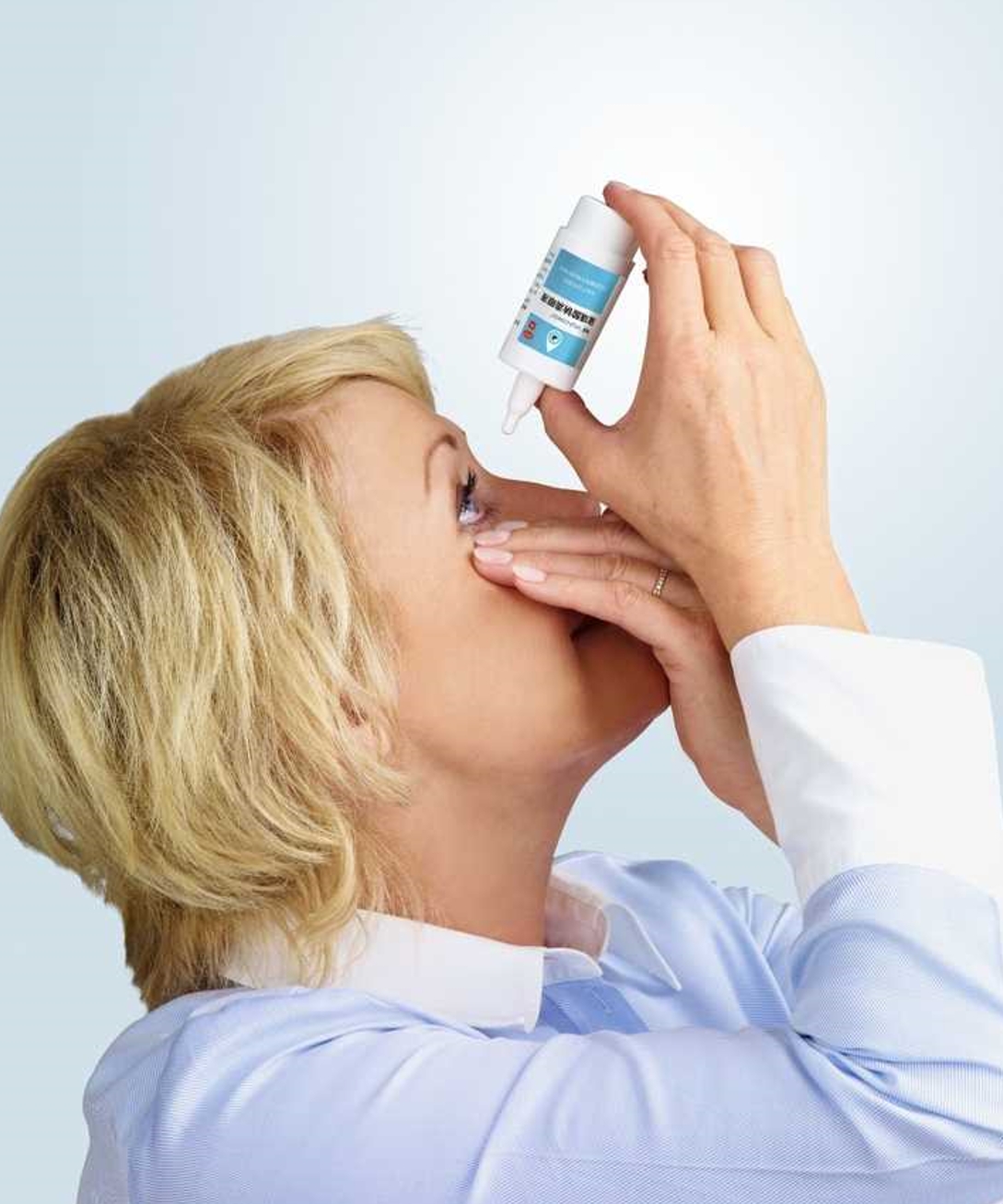
The most common adverse reaction after laser surgery is eye dryness. Especially young people are a high-risk group for VDT (video display terminal syndrome). The damage to the corneal nerve fibers after surgery will aggravate dry eye syndrome. So doctors will prescribe moisturizing eye drops (artificial tears) after surgery. For refractive surgery, doctors' first choice is artificial tears without preservatives. These eye drops have no preservatives, are very safe, and have no side effects. People who often use mobile phones and computers can also use them for a long time.
In fact, many ophthalmologists also have one in hand because doctors are also a high-risk group for dry eyes.
The symptoms of dry eyes after refractive surgery generally recover in about half a year, but this recovery time is closely related to personal eye-using habits, work nature, etc., and it's not absolute.
The surgical effect is affected by many factors, such as the degree of myopia, the degree of astigmatism, the degree of preoperative dry eyes, the size of the pupil, the surgical method, and personal personality.
If the degree is high, the possibility of regression is large; if the astigmatism is high and the pupil is large, postoperative glare will be relatively obvious; if the preoperative dry eye is severe, the uncomfortable symptoms in the early postoperative period will be more obvious, and may even be unbearable, and the duration of postoperative dry eyes will also be relatively long.
As for the surgical methods, half-femtosecond and full-femtosecond have relatively fewer complications and higher visual quality. Personality factors are also very important. Patients with an anxious personality will have a lot of complaints about various discomforts after surgery, and the complaints may be seriously inconsistent with the examination results. So doctors are really afraid to encounter anxious patients.
Tips: If you usually wear contact lenses and want to have myopia laser surgery, it is recommended that you stop wearing them for at least one week before going to the hospital for examination.
Let's briefly talk about dry eye syndrome.
Ordinary dry eye syndrome is mainly determined by many factors such as eye-using habits, work nature, environment, endocrine, and eye conditions. In terms of treatment, artificial tears, improvement of eye-using habits, and physical therapy are usually used. Physical therapy refers to cleaning the eyelids, applying hot compresses, and massaging the eyelids, which are very effective. As for artificial tears, for those who use them for a long time, it is recommended to use those without preservatives. If it's not for frequent use, regular eye drops are okay. A small amount of preservatives won't cause too much impact.
Regarding eye-using habits, everyone should know: reduce the time of using computers and mobile phones. People who wear contact lenses can change to wearing rigid gas permeable contact lenses (RGP). In terms of the environment, wind and air conditioning have the greatest impact.
It should be noted that if in addition to dry eyes, there are also symptoms such as dry throat, dry mouth, and joint pain, it is recommended to go to the ophthalmology department and the rheumatology and immunology department for medical treatment to rule out Sjogren's syndrome.
If you think what I wrote is good, remember to subscribe to our website! So that you can enjoy the latest discount information.